

















- 8th June 2026
Table of Contents
- The Brain Requires Continuous Energy and Metabolic Support
- Why Poor Sleep Is One of the Most Common Causes of Brain Fog
- Why Chronic Stress Can Affect Focus and Mental Clarity
- Why Blood Sugar Imbalance Can Cause Brain Fog
- Why Nutritional Deficiencies Can Affect Cognitive Function
- Why Thyroid Disorders Can Cause Mental Slowness
- Why Brain Fog Often Appears Alongside Fatigue
- Why Brain Fog Should Not Always Be Dismissed as Aging
- Why Chronic Inflammation Can Affect Mental Clarity
- Why Fatty Liver and Brain Fog Often Occur Together
- Why Digital Overload Is Becoming a Modern Cognitive Problem
- Why Sedentary Lifestyles Affect Brain Function
- Why Modern Adults Feel Mentally Exhausted Even Without Physical Work
- Why Brain Fog Can Sometimes Signal an Underlying Medical Issue
- Why Brain Fog Frequently Develops Gradually
- Why Brain Health Reflects Overall Health
- How to Improve Mental Clarity Naturally
- Why Sleep Recovery Is Often the Most Powerful Intervention
- Why Nutrition Matters for Cognitive Performance
- Why Hydration Affects Concentration
- Why Exercise Supports Brain Function
- Why Managing Stress Improves Concentration
- Why Reducing Digital Overload Can Improve Focus
- When Should Brain Fog Be Evaluated?
- Why Brain Health and Metabolic Health Are Closely Connected
- Key Takeaways: What You Should Remember
Many adults describe a frustrating experience that is becoming increasingly common in modern life. They are physically present at work, in meetings, or at home, yet mentally they do not feel as sharp as they once did.
Tasks that previously required little effort now seem more difficult. Concentration fades quickly. Simple decisions take longer. Names are forgotten. Focus drifts repeatedly during conversations or while reading. Many people refer to this feeling as "brain fog."

Although brain fog is not a formal medical diagnosis, it is a term commonly used to describe symptoms such as:
- Mental fatigue
- Poor concentration
- Reduced focus
- Forgetfulness
- Slower thinking
- Difficulty processing information
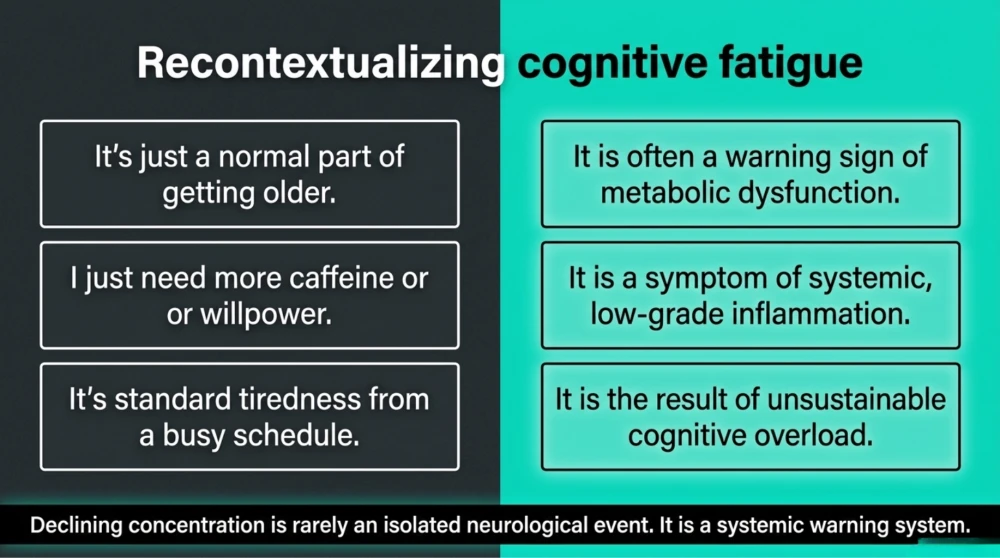
Because these symptoms often develop gradually, many individuals simply accept them as a normal consequence of aging, stress, or a busy lifestyle. However, persistent brain fog should not always be dismissed so easily.
This is exactly why understanding why brain fog and low concentration should not be ignored has become increasingly important in modern healthcare.
The Brain Requires Continuous Energy and Metabolic Support
The human brain represents only a small percentage of total body weight, yet it consumes a remarkably large proportion of the body's energy.
To function efficiently, the brain depends on:
- Stable blood sugar regulation
- Adequate oxygen delivery
- Healthy sleep
- Proper nutrition
- Hormonal balance
- Efficient circulation
When any of these systems becomes disrupted, mental performance often suffers. Initially, the symptoms may be subtle. A person may simply notice occasional forgetfulness or reduced focus.
Over time, however, the symptoms may become increasingly noticeable and begin affecting work performance, productivity, and quality of life.
Why Poor Sleep Is One of the Most Common Causes of Brain Fog
One of the biggest contributors to poor concentration is inadequate sleep.
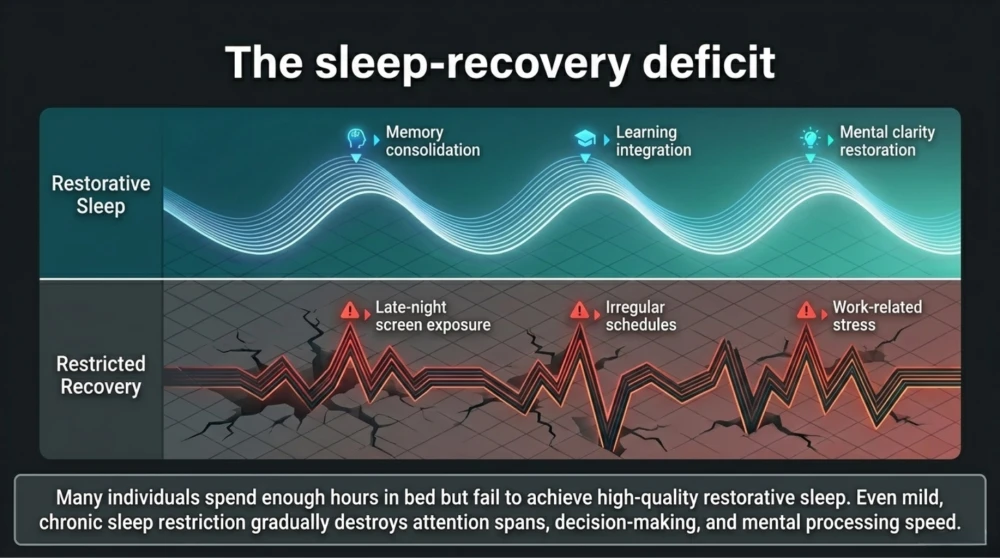
Modern lifestyles frequently involve:
- Late-night screen exposure
- Irregular sleep schedules
- Work-related stress
- Chronic sleep restriction
Many individuals technically spend enough hours in bed but still fail to achieve high-quality restorative sleep.
During healthy sleep, the brain performs essential recovery functions that support:
- Memory consolidation
- Learning
- Attention
- Mental clarity
When sleep becomes inadequate, people often experience:
- Mental fatigue
- Reduced concentration
- Forgetfulness
- Slower decision-making
This is one reason brain fog frequently improves when sleep quality improves.
If you want to understand this relationship further, you may also explore why poor sleep can make weight loss more difficult.
Why Chronic Stress Can Affect Focus and Mental Clarity
The human brain performs best when periods of work are balanced with periods of recovery. Unfortunately, many adults now live in a state of near-constant mental stimulation.
Work deadlines, financial concerns, family responsibilities, notifications, emails, and social media create continuous cognitive demand. Initially, stress hormones help maintain alertness.
However, when stress becomes chronic, many people begin experiencing:
- Mental exhaustion
- Poor concentration
- Reduced memory
- Difficulty focusing
- Emotional fatigue
Many individuals mistakenly believe they need greater effort or motivation when, in reality, their brain may simply be struggling to recover from prolonged stress exposure.
Why Blood Sugar Imbalance Can Cause Brain Fog
The brain relies heavily on a steady supply of glucose for energy. When blood sugar regulation becomes unstable, mental performance often suffers.
Many individuals with insulin resistance or prediabetes report symptoms such as:
- Brain fog after meals
- Difficulty concentrating
- Mental fatigue
- Energy crashes
- Reduced productivity
These symptoms often occur long before diabetes is formally diagnosed. As metabolic health declines, the brain may struggle to maintain optimal energy utilization throughout the day.
This is one reason persistent brain fog sometimes reflects deeper metabolic dysfunction rather than simply mental tiredness.
Why Nutritional Deficiencies Can Affect Cognitive Function
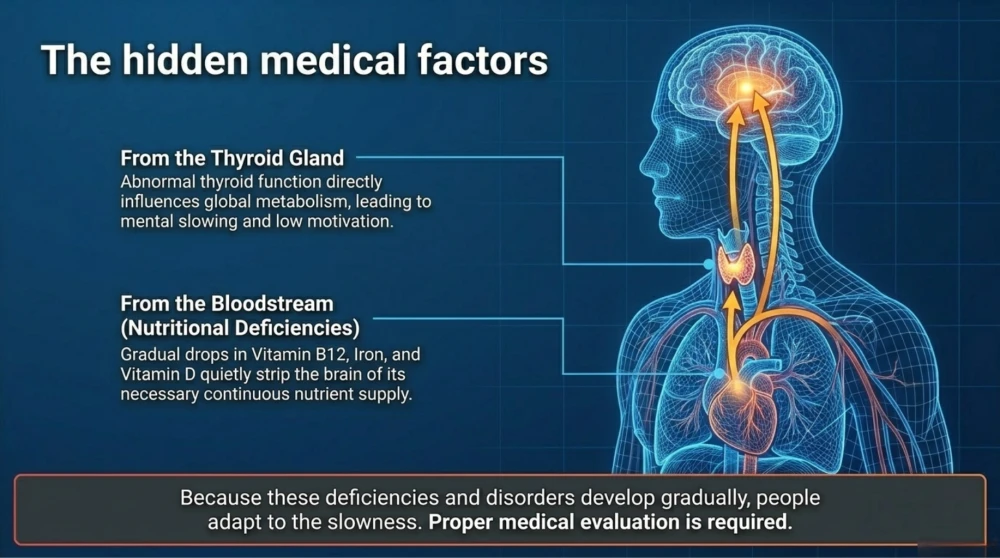
The brain requires a continuous supply of nutrients to function properly. Deficiencies involving certain vitamins and minerals can influence concentration, memory, and mental performance.
Common examples include:
- Vitamin B12 deficiency
- Iron deficiency
- Vitamin D deficiency
When these deficiencies develop gradually, symptoms may initially be subtle.
Many individuals simply feel:
- Less focused
- More forgetful
- Mentally tired
- Unable to sustain attention
Because these symptoms overlap with stress and fatigue, deficiencies are often overlooked unless properly evaluated.
Why Thyroid Disorders Can Cause Mental Slowness
The thyroid gland influences metabolism throughout the entire body, including the brain.
When thyroid function becomes abnormal, many individuals report:
- Brain fog
- Poor concentration
- Mental slowing
- Fatigue
- Reduced motivation
Because thyroid disorders often develop gradually, many people adapt to the symptoms without recognizing that a medical issue may be contributing.
This is one reason persistent cognitive symptoms deserve proper evaluation rather than automatic dismissal.
If you want to understand this connection more deeply, you may also explore why thyroid imbalance can affect multiple body systems.
Why Brain Fog Often Appears Alongside Fatigue
Brain fog rarely occurs in isolation.
Many individuals experiencing low concentration also report:
- Persistent tiredness
- Poor sleep
- Low stamina
- Reduced motivation
- Mental exhaustion
This overlap occurs because many of the same factors that reduce physical energy also affect mental performance.
Sleep deprivation, stress, insulin resistance, nutritional deficiencies, and chronic inflammation can all influence both physical and cognitive function simultaneously.
This is why persistent brain fog often reflects a broader health issue rather than a problem affecting only the brain.
Why Brain Fog Should Not Always Be Dismissed as Aging
One of the biggest mistakes many adults make is assuming that declining concentration is simply a normal part of getting older.
While some changes in cognition can occur with age, persistent brain fog is not something that should automatically be accepted without question.
In many cases, the symptoms are influenced by modifiable factors such as:
- Poor sleep
- Stress overload
- Metabolic dysfunction
- Nutritional deficiencies
- Hormonal imbalance
Identifying and addressing these contributors often leads to significant improvement in mental clarity and overall well-being.
Why Chronic Inflammation Can Affect Mental Clarity
One increasingly recognized contributor to brain fog is chronic low-grade inflammation. Inflammation is often discussed in relation to obesity, diabetes, heart disease, and fatty liver. However, its effects are not limited to the body alone.
The brain and immune system communicate continuously. When inflammatory activity remains elevated for prolonged periods, many individuals begin experiencing symptoms such as:
- Mental fatigue
- Poor concentration
- Reduced attention span
- Slower thinking
- Difficulty processing information
Unlike acute illness, chronic inflammation often develops gradually and silently. Individuals may not feel obviously unwell, yet their cognitive performance slowly declines over time.
This is one reason brain fog frequently overlaps with other metabolic conditions such as obesity, insulin resistance, and fatty liver disease.
Why Fatty Liver and Brain Fog Often Occur Together
Many people are surprised to learn that liver health can influence cognitive function. The liver plays a major role in metabolic regulation, nutrient processing, hormone metabolism, and energy management.
When fatty liver develops, it often reflects broader metabolic dysfunction throughout the body.
Many individuals with fatty liver also report:
- Persistent fatigue
- Mental sluggishness
- Poor concentration
- Reduced productivity
- Low motivation
This does not necessarily mean the liver directly causes brain fog. Instead, both conditions frequently arise from similar underlying factors such as insulin resistance, chronic inflammation, poor sleep, and sedentary lifestyles.
If you want to understand this connection more deeply, you may also explore why liver health is closely linked to metabolic health.
Why Digital Overload Is Becoming a Modern Cognitive Problem
The human brain evolved to process information in a very different environment from the one most people experience today.
Modern adults are exposed to an almost continuous stream of stimulation through:
- Emails
- Notifications
- Social media
- News updates
- Messaging platforms
- Streaming content
Many individuals switch between tasks dozens or even hundreds of times throughout the day. While this may create the illusion of productivity, constant task switching places significant demands on attention and mental resources.
Over time, many people notice:
- Shorter attention spans
- Difficulty concentrating deeply
- Mental exhaustion
- Reduced memory retention
What appears to be poor concentration may sometimes be the result of continuous cognitive overload rather than a lack of intelligence or motivation.
Why Sedentary Lifestyles Affect Brain Function
Most people recognize that physical inactivity affects body weight and cardiovascular health. However, fewer people realize that movement also influences brain function.
Regular physical activity supports:
- Healthy circulation
- Blood sugar regulation
- Stress management
- Brain oxygen delivery
- Cognitive performance
When daily activity levels become extremely low, many individuals report:
- Mental sluggishness
- Poor concentration
- Reduced energy
- Lower productivity
This is one reason prolonged sitting frequently overlaps with both metabolic dysfunction and cognitive complaints.
Many adults spend the majority of their waking hours sitting, which can gradually influence both physical and mental health.
Why Modern Adults Feel Mentally Exhausted Even Without Physical Work
One of the defining characteristics of modern life is that many people perform far more mental work than physical work.
Unlike previous generations, today's adults often spend entire days making decisions, processing information, solving problems, responding to messages, and managing multiple responsibilities simultaneously.
Although this type of work may not cause physical exhaustion, it creates significant cognitive fatigue.
Many individuals therefore feel:
- Mentally drained
- Unable to focus
- Emotionally exhausted
- Less productive than before
This is why brain fog has become increasingly common among professionals, business owners, students, and office workers.
The brain is being asked to process more information than ever before while often receiving less recovery than it needs.
Why Brain Fog Can Sometimes Signal an Underlying Medical Issue
Although lifestyle factors account for many cases of brain fog, persistent symptoms should not always be attributed solely to stress or poor sleep.
Several medical conditions may contribute to cognitive symptoms, including:
- Thyroid disorders
- Vitamin deficiencies
- Anemia
- Prediabetes
- Diabetes
- Sleep disorders
- Chronic inflammatory conditions
Because the symptoms often overlap, proper evaluation may be necessary when brain fog becomes persistent, progressive, or disruptive to daily life.
Simply assuming the symptoms are "normal" can delay identification of treatable causes.
Why Brain Fog Frequently Develops Gradually
One reason brain fog is often ignored is that it rarely appears suddenly. Instead, many people experience a slow decline in cognitive performance over months or years.
Initially, the symptoms may be minor:
- Occasional forgetfulness
- Difficulty remembering names
- Reduced focus during meetings
- Needing more effort to complete tasks
Because the changes are gradual, people adapt to them and begin viewing them as normal. Only later do they realize how much their concentration, memory, and productivity have changed.
This gradual progression is one reason brain fog deserves attention rather than dismissal.
Why Brain Health Reflects Overall Health
Perhaps the most important concept to understand is that the brain does not function independently from the rest of the body.
Cognitive performance is influenced by:
- Sleep quality
- Metabolic health
- Nutrition
- Stress levels
- Physical activity
- Hormonal balance
When these systems function well, mental clarity often improves naturally.
When they become disrupted, brain fog frequently emerges as one of the earliest warning signs that the body's overall health may need attention.
How to Improve Mental Clarity Naturally
When people experience brain fog, their first instinct is often to search for a supplement, memory booster, or quick solution.
While certain medical conditions may require specific treatment, most cases of brain fog improve when the underlying contributors are addressed.
The brain functions best when it receives consistent support from healthy sleep, proper nutrition, physical activity, stress management, and good metabolic health.
Because brain fog is often a symptom rather than a disease itself, long-term improvement usually comes from identifying and correcting the factors affecting cognitive performance.
Why Sleep Recovery Is Often the Most Powerful Intervention
If there is one lifestyle factor that consistently influences concentration, memory, attention, and mental performance, it is sleep. Many individuals underestimate the cumulative impact of sleeping poorly for months or years.
Even mild sleep deprivation can gradually affect:
- Attention span
- Decision-making ability
- Memory retention
- Mental processing speed
- Productivity
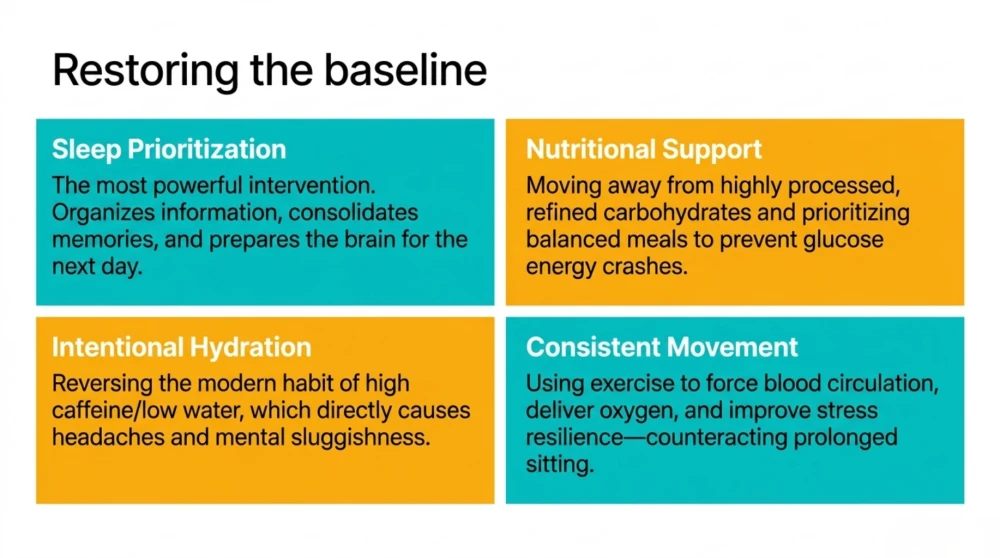
The brain uses sleep as an opportunity to recover, organize information, consolidate memories, and prepare for the next day.
When sleep quality improves, many people notice significant improvements in mental clarity without making any other major changes.
This is one reason sleep should always be considered when evaluating persistent brain fog.
Why Nutrition Matters for Cognitive Performance
The brain requires a continuous supply of nutrients to function efficiently. Highly processed dietary patterns often provide large amounts of calories while supplying relatively poor nutritional support.
Many adults regularly consume foods that are:
- High in refined carbohydrates
- Low in fiber
- Low in protein
- Poor in micronutrients
Over time, this pattern may contribute to fluctuations in energy levels and mental performance. In contrast, balanced meals that support stable energy regulation often help individuals maintain better concentration throughout the day.
Many people are surprised to discover that improving food quality affects not only physical health but also mental clarity and productivity.
Why Hydration Affects Concentration
Hydration is another frequently overlooked factor. Many adults consume inadequate amounts of water while simultaneously increasing intake of caffeinated beverages.
Even mild dehydration can contribute to:
- Headaches
- Fatigue
- Poor concentration
- Mental sluggishness
Because these symptoms often overlap with stress and sleep deprivation, hydration is rarely considered as a contributing factor.
Maintaining adequate fluid intake remains one of the simplest ways to support overall cognitive performance.
Why Exercise Supports Brain Function
Physical activity benefits far more than muscles and cardiovascular health. Regular movement also supports healthy brain function.
Exercise helps improve:
- Blood circulation
- Blood sugar regulation
- Stress resilience
- Energy levels
- Mental performance
Many individuals notice improved focus and mental clarity after becoming more physically active. This is particularly important because modern lifestyles often involve prolonged sitting and limited movement.
Even moderate activity performed consistently can positively influence cognitive function over time.
If you want to understand this relationship further, you may also explore Why Constant Weakness and Low Energy Should Be Properly Evaluated.
Why Managing Stress Improves Concentration
Many adults attempt to improve focus without addressing the stress that is overwhelming their mental capacity. The brain functions poorly when it remains in a constant state of pressure.
Chronic stress often creates:
- Mental fatigue
- Poor concentration
- Forgetfulness
- Reduced productivity
- Difficulty completing tasks
Creating opportunities for recovery is therefore just as important as increasing productivity.
Many individuals experience significant improvement in mental clarity when they prioritize:
- Stress management
- Relaxation time
- Physical activity
- Healthy sleep
- Reduced digital overload
The goal is not eliminating stress completely. The goal is improving the body's ability to recover from it.
Why Reducing Digital Overload Can Improve Focus
Modern technology provides tremendous convenience, but it also creates constant competition for attention.
Many people spend their day switching repeatedly between:
- Emails
- Messages
- Social media
- Work tasks
- News updates
This continual interruption reduces the brain's ability to maintain deep focus. Over time, many individuals begin feeling mentally scattered and unable to concentrate for extended periods.
Simple strategies such as reducing unnecessary notifications, limiting multitasking, and creating distraction-free work periods may help improve concentration significantly.
When Should Brain Fog Be Evaluated?
Occasional mental fatigue is normal, especially during periods of stress, illness, or poor sleep. However, persistent brain fog deserves attention when it begins affecting daily life.
Medical evaluation may be appropriate when symptoms are:
- Persistent
- Progressively worsening
- Interfering with work performance
- Affecting memory significantly
- Associated with fatigue or other symptoms
Because brain fog can sometimes reflect underlying medical conditions, identifying the cause is often more important than simply treating the symptom.
Why Brain Health and Metabolic Health Are Closely Connected
One important lesson emerging from modern healthcare is that brain health and metabolic health are deeply interconnected.
Conditions such as:
- Insulin resistance
- Prediabetes
- Diabetes
- Fatty liver
- Obesity
- Chronic inflammation
often influence both physical and cognitive function. This is why persistent brain fog should not always be viewed as a purely neurological issue.
In many cases, improving overall metabolic health leads to improvements in concentration, energy, and mental clarity.
Key Takeaways: What You Should Remember
- Brain fog is a common symptom characterized by poor concentration, forgetfulness, and mental fatigue.
- Poor sleep is one of the most common causes of reduced mental clarity.
- Stress, digital overload, and sedentary lifestyles frequently contribute to concentration problems.
- Blood sugar imbalance, thyroid disorders, anemia, and vitamin deficiencies may also affect cognitive performance.
- Fatty liver, insulin resistance, and chronic inflammation often overlap with brain fog.
- Regular exercise, healthy nutrition, adequate hydration, and quality sleep support brain function.
- Persistent brain fog deserves proper evaluation rather than being dismissed as normal aging.
You can book a consultation here:
Book Appointment
Written by Dr. Pankaj Kumar, General & Lifestyle Physician, Dwarka, New Delhi