

















- 26th May 2026
Table of Contents
- Bloating Is a Symptom, Not a Disease Itself
- Why Modern Eating Patterns Commonly Trigger Bloating
- How Stress Quietly Affects Digestion
- Why Eating Speed Matters More Than People Think
- Why Some Carbohydrates Increase Gas Formation
- Why Bloating and Insulin Resistance Often Occur Together
- Why Fatty Liver Can Also Contribute to Digestive Discomfort
- The Biggest Mistake: Normalizing Persistent Bloating
- Why This Matters in Modern Metabolic Healthcare
- Why Food Intolerance Is Often Mistaken for “Weak Digestion”
- Why Gut Motility Matters More Than Many People Realize
- Constipation and Bloating Commonly Occur Together
- Why Sedentary Lifestyle Quietly Worsens Bloating
- Why Poor Sleep Can Affect Digestion
- Why Late-Night Eating Frequently Triggers Bloating
- Why Bloating Sometimes Signals Broader Metabolic Imbalance
- When Bloating Deserves Medical Attention
- What Actually Helps Reduce Bloating After Meals
- Why Meal Timing Matters for Digestion
- Why Slower Eating Improves Digestive Comfort
- Movement Is Important for Digestive Health Too
- Why Stress Reduction Helps Digestion
- Why Sleep Quality Affects Bloating
- Why Ultra-Processed Foods Commonly Worsen Bloating
- Why Crash Diets Sometimes Worsen Digestive Symptoms
- Why Digestive Symptoms Should Be Viewed Holistically
- Why Sustainable Lifestyle Correction Matters Most
- Key Takeaways: What You Should Remember
- When Should You Consider Medical Evaluation?
Almost everyone experiences bloating occasionally. After a heavy meal, festive overeating, or eating too quickly, temporary fullness and abdominal tightness can happen normally.
But one important problem in modern healthcare is that many individuals have started normalizing persistent bloating even when it occurs repeatedly after routine meals. This is exactly why understanding why bloating after meals should not always be ignored has become increasingly important.
In clinical practice, many patients describe symptoms such as:
- Abdominal heaviness after eating
- Visible stomach swelling
- Excess gas formation
- Post-meal discomfort
- Feeling unusually “full” after normal meals
Initially, most people dismiss these symptoms casually. They assume: “Maybe it’s just gas." Or: “My digestion is weak today.”
But when bloating becomes frequent, repetitive, or persistent, the body may actually be signaling deeper digestive or metabolic imbalance underneath.
Bloating Is a Symptom, Not a Disease Itself
One of the most important things patients should understand is that bloating itself is not usually the main disease. It is a symptom. The challenge is that bloating can occur due to multiple different mechanisms inside the body.
For some individuals, the issue may mainly involve:
- Eating habits
- Food composition
- Rapid eating speed
- Excess air swallowing
But in other cases, bloating may reflect:
- Poor digestive efficiency
- Gut motility problems
- Food intolerance
- Insulin resistance
- Fatty liver
- Stress-related digestive dysfunction
This is why repetitive post-meal bloating should not always be ignored casually.
Why Modern Eating Patterns Commonly Trigger Bloating
One major reason bloating has become increasingly common is the dramatic change in modern eating behavior. Many individuals today eat under conditions that are biologically unfavorable for digestion.
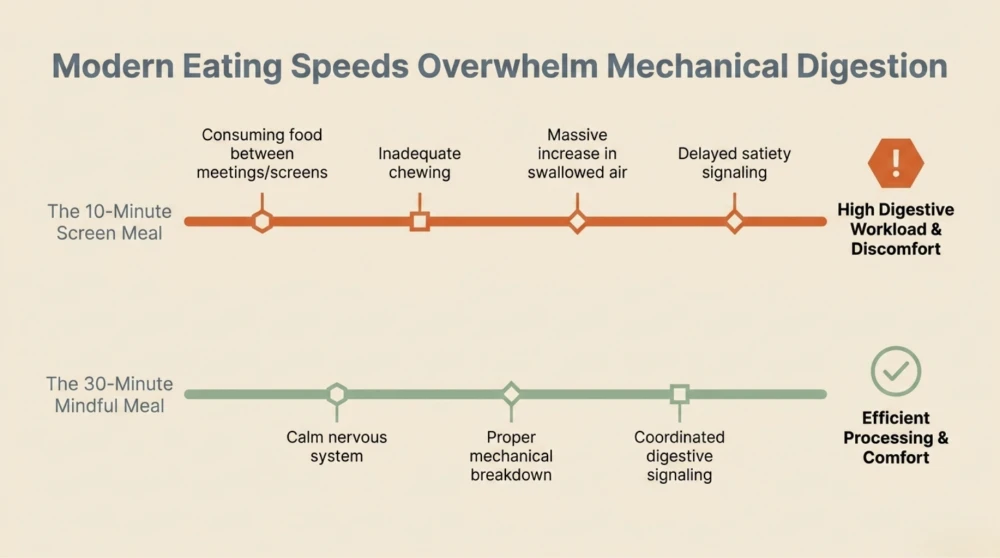
For example:
- Eating too quickly
- Eating while stressed
- Late-night meals
- Large portion sizes
- Frequent ultra-processed food intake
Digestion is not simply about food entering the stomach. The digestive system functions best when the nervous system is relatively calm and parasympathetic (“rest and digest”) pathways remain active.
But modern work culture often creates meals that occur during:
- Mental stress
- Screen exposure
- Rushed schedules
- Continuous multitasking
This affects digestion more than many people realize.
How Stress Quietly Affects Digestion
One of the most underestimated causes of recurrent bloating is chronic stress. The digestive system is strongly connected with the nervous system. When stress levels remain elevated, the body prioritizes survival and alertness rather than efficient digestion.
This can affect:
- Stomach emptying
- Gut motility
- Digestive enzyme activity
- Gut sensitivity
As a result, many individuals under chronic stress begin experiencing:
- Post-meal heaviness
- Gas formation
- Abdominal tightness
- Irregular bowel patterns
This is one reason bloating often worsens during periods of:
- Work stress
- Poor sleep
- Anxiety
- Mental exhaustion
Why Eating Speed Matters More Than People Think
Another extremely common but overlooked trigger is eating too fast.
When meals are consumed rapidly:
- More air is swallowed
- Satiety signaling becomes delayed
- Food reaches the stomach less mechanically processed
This increases the digestive workload significantly.
Many busy professionals eat meals in:
- 5 to 10 minutes
- Front of screens
- Stressful office environments
- Between meetings
Over time, this pattern contributes to repetitive post-meal discomfort and bloating. The digestive system functions much more efficiently when eating is slower and more mindful.
Why Some Carbohydrates Increase Gas Formation
Not all bloating occurs because of “bad digestion.” Some foods naturally produce more fermentation inside the gut. Certain carbohydrates reach intestinal bacteria where fermentation generates gas.
For sensitive individuals, this can produce:
- Abdominal swelling
- Excess gas
- Heaviness
- Discomfort after meals
Common triggers may include:
- Overeating refined carbohydrates
- Highly processed foods
- Excess sugary foods
- Large late-night meals
Importantly, this does not mean carbohydrates are automatically “bad.”
The issue is often related to:
- Quantity
- Food quality
- Meal timing
- Digestive tolerance
Why Bloating and Insulin Resistance Often Occur Together
One important metabolic connection many patients do not realize is the overlap between bloating and insulin resistance.
When metabolism becomes less flexible:
- Digestive efficiency may decline
- Fat accumulation around abdominal organs may increase
- Inflammation may worsen
- Gut motility may become slower
This creates a situation where individuals experience:
- Belly fat
- Post-meal heaviness
- Fatigue after eating
- Bloating
- Cravings
Many patients treat these symptoms separately without recognizing the deeper metabolic connection.
Why Fatty Liver Can Also Contribute to Digestive Discomfort
Another important but under-recognized association is fatty liver.
Fatty liver frequently overlaps with:
- Insulin resistance
- Abdominal obesity
- Poor metabolic flexibility
- Digestive heaviness
Many patients with fatty liver describe:
- Post-meal fullness
- Bloating
- Reduced digestive comfort
- Fatigue after eating
This does not mean fatty liver directly “causes gas,” but it reflects broader metabolic dysfunction affecting digestion and energy handling.
The Biggest Mistake: Normalizing Persistent Bloating
One of the biggest problems today is that many individuals normalize frequent bloating for years. Because symptoms fluctuate, patients often delay proper evaluation until discomfort becomes severe.
Meanwhile, underlying metabolic or digestive imbalance may continue progressing gradually underneath. This is exactly why repetitive post-meal bloating deserves attention instead of being dismissed automatically as “just gas.”
Why This Matters in Modern Metabolic Healthcare
Digestive symptoms frequently overlap with broader metabolic health. Bloating, heaviness after meals, irregular appetite, insulin resistance, fatty liver, stress, and sedentary lifestyle often interact together.
This is why structured metabolic approaches like the Lifestyle Modification Program focus not only on symptoms, but also on identifying the deeper lifestyle and metabolic contributors affecting digestion.
Why Food Intolerance Is Often Mistaken for “Weak Digestion”
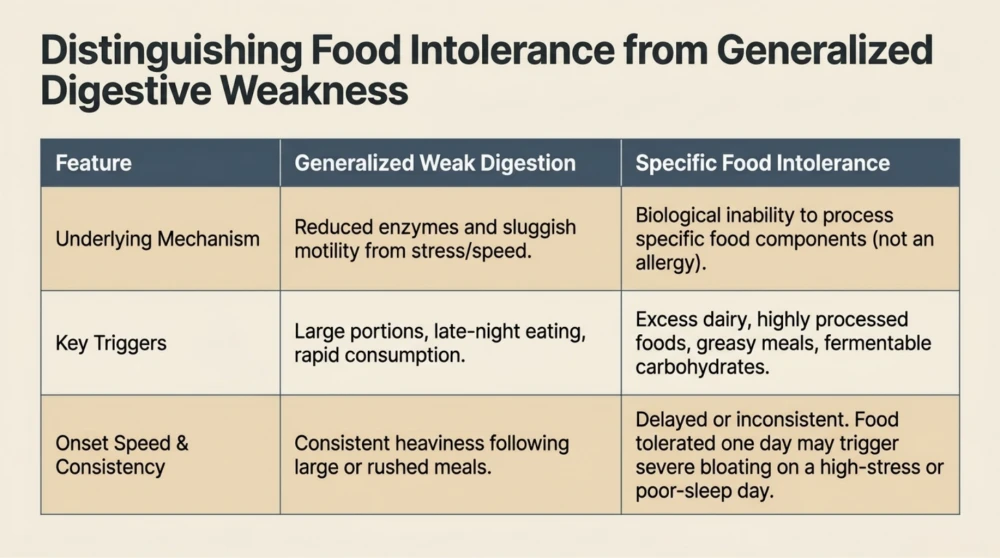
One important reason recurrent bloating should not be ignored is because some individuals may actually be reacting poorly to specific foods rather than having generalized “gas problems.” Food intolerance is different from food allergy.
In food intolerance, the body usually struggles to properly process or tolerate certain food components, leading to digestive discomfort after eating.
Common examples include difficulty tolerating:
- Excess dairy products
- Highly processed foods
- Very greasy meals
- Certain fermentable carbohydrates
What makes this confusing is that symptoms are often delayed or inconsistent. A person may tolerate a food comfortably on one day and feel bloated after the same food during another period of stress, poor sleep, or overeating.
This creates the impression that bloating is “random,” when in reality digestion is being influenced by multiple overlapping factors.
Why Gut Motility Matters More Than Many People Realize
Another important but under-recognized reason for bloating is altered gut motility. Gut motility refers to how efficiently food moves through the digestive tract.
When digestive movement becomes slower:
- Food remains longer inside the gut
- Fermentation increases
- Gas accumulation worsens
- Abdominal heaviness becomes more noticeable
Modern lifestyles strongly affect motility.
Factors such as:
- Stress
- Poor sleep
- Sedentary behavior
- Irregular meal timing
can gradually slow digestive efficiency. This is one reason many individuals experience worsening bloating during periods of mental exhaustion or prolonged inactivity.
Constipation and Bloating Commonly Occur Together
One major connection patients frequently overlook is the relationship between constipation and bloating. When bowel movements become irregular or incomplete, gas and digestive contents remain trapped for longer durations.
This often creates:
- Abdominal pressure
- Visible stomach distension
- Post-meal discomfort
- Heaviness throughout the day
Importantly, constipation does not always mean “not passing stool for many days.” Some individuals pass stool daily but still experience incomplete bowel emptying or sluggish gut movement.
In such situations, bloating may continue repeatedly despite apparently “normal” bowel habits.
Why Sedentary Lifestyle Quietly Worsens Bloating
Movement plays a surprisingly important role in digestive function. The digestive system functions more efficiently when the body remains physically active throughout the day.
But modern lifestyles often involve:
- Long sitting hours
- Minimal walking
- Continuous screen exposure
- Poor posture after meals
Prolonged inactivity can reduce:
- Gut motility
- Circulation
- Digestive efficiency
This is one reason many individuals feel more bloated during:
- Office-heavy workdays
- Travel periods
- Sedentary weekends
- Long sitting schedules
Even light movement after meals often improves digestive comfort significantly.
Why Poor Sleep Can Affect Digestion
Many people do not realize how strongly sleep affects digestive health. The nervous system, hormones, metabolism, and gut function are deeply interconnected.
When sleep becomes poor or irregular:
- Stress hormones increase
- Digestive recovery declines
- Gut sensitivity may worsen
- Appetite regulation becomes unstable
This creates a situation where bloating becomes more frequent, especially after heavy or irregular meals.
Many individuals notice worsening digestive symptoms during periods of:
- Late-night sleeping
- Sleep deprivation
- Mental burnout
- High work stress
This is why digestive health cannot always be separated from overall lifestyle rhythm.
Why Late-Night Eating Frequently Triggers Bloating
One of the most common modern digestive patterns is eating large meals late at night. After long workdays, many individuals consume their heaviest meal very close to bedtime. This creates multiple digestive challenges simultaneously.
At night:
- Physical activity decreases
- Digestion becomes slower
- The body prepares for sleep rather than active metabolism
Large late-night meals therefore frequently lead to:
- Post-meal heaviness
- Acidity
- Bloating
- Disturbed sleep
Over time, repeated late-night overeating can worsen broader metabolic dysfunction as well.
Why Bloating Sometimes Signals Broader Metabolic Imbalance
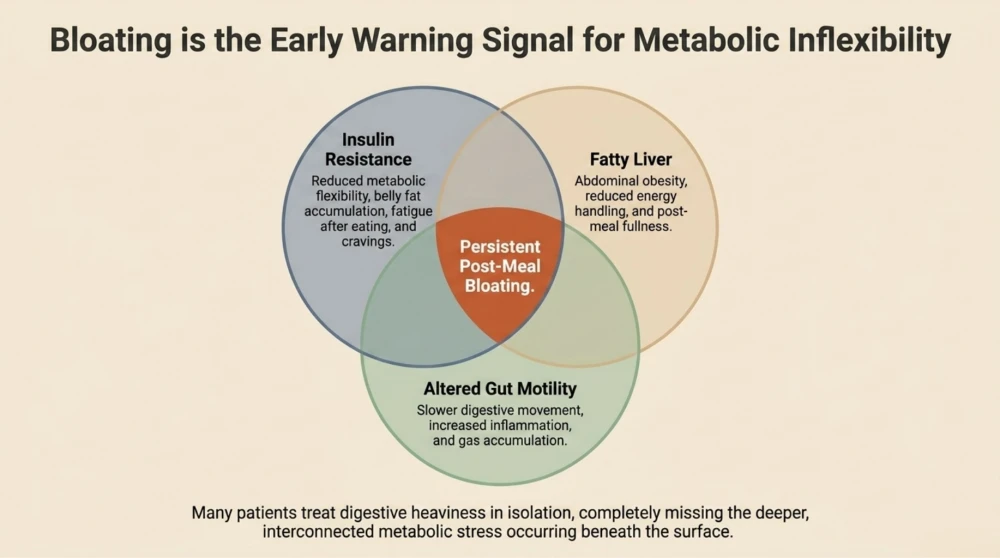
One important clinical observation is that recurrent bloating often overlaps with broader metabolic symptoms.
Patients frequently describe combinations such as:
- Belly fat
- Fatigue after meals
- Cravings
- Poor sleep
- Post-meal bloating
This combination often reflects deeper metabolic stress involving:
- Insulin resistance
- Sedentary lifestyle
- Poor sleep quality
- Stress-related hormonal imbalance
This is why treating bloating alone without addressing overall lifestyle patterns often provides only temporary relief.
When Bloating Deserves Medical Attention
Occasional mild bloating after overeating is common.
But repeated or persistent bloating deserves proper evaluation, especially if associated with:
- Persistent abdominal discomfort
- Significant bowel habit changes
- Unexplained weight changes
- Frequent post-meal heaviness
- Progressive digestive symptoms
The goal is not creating fear. The goal is recognizing that repetitive symptoms may indicate deeper digestive or metabolic imbalance rather than dismissing everything casually as “gas.”
What Actually Helps Reduce Bloating After Meals
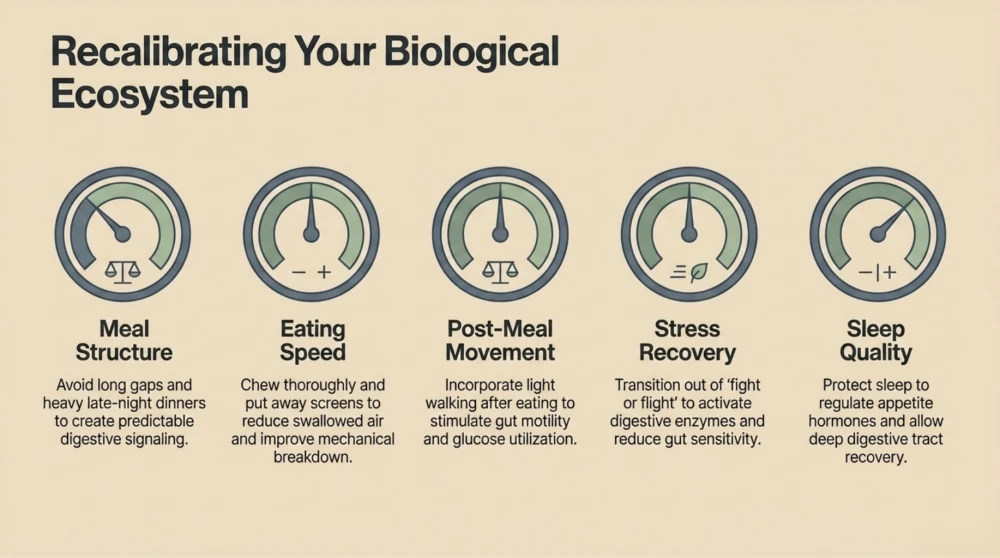
Once people understand that bloating after meals can reflect deeper digestive and metabolic imbalance, the next important question becomes: “What should I actually do to improve digestion realistically?”
The answer usually does not involve extreme detox programs, aggressive restrictions, or blindly eliminating large food groups. In many cases, digestion improves significantly when the body’s overall lifestyle rhythm becomes more stable.
This includes improving:
- Meal structure
- Eating speed
- Sleep quality
- Stress management
- Physical movement
Digestive recovery is often more about reducing physiological chaos than following temporary internet trends.
Why Meal Timing Matters for Digestion
One of the most overlooked digestive factors is meal timing consistency. The digestive system functions best when meals occur within relatively predictable patterns.
But modern lifestyles often involve:
- Skipping meals
- Long gaps without eating
- Heavy late-night dinners
- Irregular eating schedules
This creates inconsistent digestive signaling.
Over time, irregular eating patterns may contribute to:
- Post-meal heaviness
- Gas formation
- Overeating episodes
- Digestive sluggishness
Many individuals notice significant improvement simply by:
- Avoiding excessive meal delays
- Reducing very heavy late-night meals
- Maintaining more stable meal timing
The goal is not rigid perfection.
The goal is improving digestive predictability.
Why Slower Eating Improves Digestive Comfort
One simple but highly effective change is slowing down meal speed.
Many professionals eat while:
- Using phones
- Working on laptops
- Attending meetings
- Feeling mentally stressed
As a result, food is often consumed rapidly with inadequate chewing.
This increases:
- Air swallowing
- Digestive workload
- Overeating tendency
- Post-meal discomfort
Slower eating improves:
- Mechanical food breakdown
- Satiety signaling
- Digestive coordination
Many individuals experience noticeable reduction in bloating simply by eating more calmly and chewing properly.
Movement Is Important for Digestive Health Too
Digestive health is strongly influenced by physical movement.
Light movement after meals helps stimulate:
- Gut motility
- Circulation
- Digestive efficiency
- Glucose utilization
This is why complete inactivity after heavy meals often worsens:
- Bloating
- Post-meal heaviness
- Acidity
- Sleepiness
Even light walking after meals can significantly improve digestive comfort compared to lying down immediately after eating.
This becomes especially important for individuals with:
- Sedentary office routines
- Fatty liver
- Insulin resistance
- Abdominal obesity
Why Stress Reduction Helps Digestion
The digestive system functions best when the nervous system feels relatively safe and relaxed. Under chronic stress, digestion often becomes less efficient. This is because the body shifts toward “fight or flight” physiology rather than “rest and digest” physiology.
As stress increases:
- Gut sensitivity may worsen
- Motility may become irregular
- Digestive comfort decreases
- Bloating becomes more frequent
This is one reason many patients notice digestive symptoms worsening during:
- Work pressure
- Poor sleep
- Mental exhaustion
- Emotional stress
Improving stress recovery often improves digestion more than people expect.
Why Sleep Quality Affects Bloating
Sleep and digestion are deeply interconnected.
Poor sleep affects:
- Stress hormone balance
- Appetite regulation
- Digestive recovery
- Inflammatory pathways
When sleep becomes chronically poor, the digestive system often becomes more sensitive and less efficient.
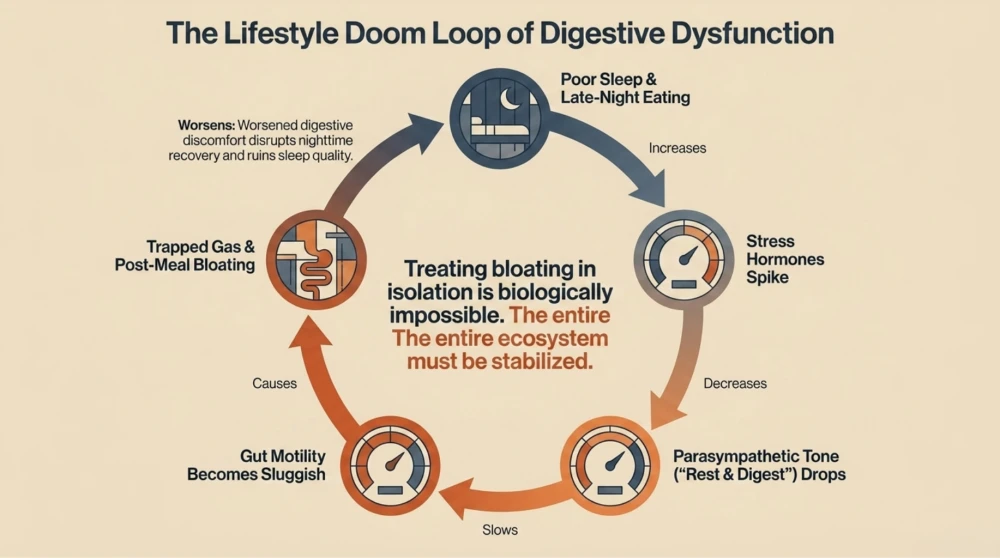
This creates a cycle where:
- Stress worsens sleep
- Poor sleep worsens digestion
- Digestive discomfort increases stress further
Over time, this repeated physiological stress contributes to broader metabolic dysfunction as well.
Why Ultra-Processed Foods Commonly Worsen Bloating
Another important modern contributor is excessive intake of ultra-processed foods.
Many packaged foods contain combinations of:
- Refined carbohydrates
- Excess sugar
- Artificial additives
- Poor-quality fats
These foods often promote:
- Overeating
- Poor satiety
- Digestive discomfort
- Excess fermentation
In sensitive individuals, highly processed dietary patterns frequently worsen:
- Bloating
- Gas
- Post-meal heaviness
- Metabolic instability
The issue is usually not one single food alone. It is often the cumulative effect of modern dietary patterns.
Why Crash Diets Sometimes Worsen Digestive Symptoms
Many individuals experiencing bloating suddenly attempt extreme dietary restriction. But highly aggressive dieting can sometimes worsen digestive comfort further.
Very restrictive eating patterns may increase:
- Stress hormones
- Digestive irregularity
- Cravings
- Binge eating cycles
This is why sustainable digestive recovery usually works better with balanced, realistic lifestyle correction rather than temporary extreme diets.
Why Digestive Symptoms Should Be Viewed Holistically
One major problem in modern healthcare is treating digestive symptoms in isolation.
In reality, digestion is deeply connected with:
- Sleep
- Stress
- Movement
- Metabolism
- Meal rhythm
This is why recurrent bloating often improves only when broader lifestyle patterns improve simultaneously.
Addressing only “gas” while ignoring:
- Poor sleep
- Sedentary behavior
- Stress overload
- Irregular eating
usually provides incomplete long-term improvement.
Why Sustainable Lifestyle Correction Matters Most
The digestive system responds remarkably well to consistency.
In many patients, digestive comfort improves gradually when daily routines become:
- More structured
- Less stressful
- More movement-oriented
- More metabolically stable
This is exactly why structured approaches focusing on long-term metabolic correction often improve digestive symptoms more effectively than temporary symptom-focused strategies alone.
You can explore this broader approach through the Lifestyle Modification Program.
Key Takeaways: What You Should Remember
- Persistent bloating after meals should not always be dismissed as “just gas”
- Stress, poor sleep, sedentary lifestyle, and irregular meals commonly affect digestion
- Eating too quickly frequently worsens post-meal bloating
- Late-night heavy meals often increase digestive discomfort
- Movement helps improve gut motility and digestive efficiency
- Bloating frequently overlaps with insulin resistance and metabolic dysfunction
- Sustainable lifestyle correction usually works better than extreme dieting approachestest
When Should You Consider Medical Evaluation?
You should consider proper evaluation if bloating becomes:
- Frequent
- Persistent
- Progressively worsening
- Associated with bowel habit changes
- Accompanied by unexplained weight changes or significant discomfort
Early identification of digestive and metabolic imbalance often improves long-term outcomes significantly.
You can book a consultation here:
Book Appointment
Written by Dr. Pankaj Kumar, General & Lifestyle Physician, Dwarka, New Delhi