

















- 27th May 2026
Table of Contents
- The Body Interprets Poor Sleep as Stress
- Why Poor Sleep Quietly Increases Hunger
- Why Belly Fat Commonly Increases With Poor Sleep
- Why Sleep Deprivation Reduces Energy and Movement
- Why Late-Night Wakefulness Commonly Leads to Overeating
- Why Poor Sleep Affects Insulin Sensitivity
- Why Poor Sleep Quietly Slows Fat Loss
- Why Sleep-Deprived Individuals Often Feel Hungry All Day
- The Relationship Between Poor Sleep and Fatty Liver
- Why Weekend “Recovery Sleep” Usually Does Not Fully Fix the Problem
- Why Sleep Quality Matters as Much as Sleep Duration
- Why Poor Sleep Commonly Reduces Exercise Consistency
- Why Modern Digital Habits Have Become a Major Sleep Problem
- What Actually Helps When Poor Sleep Is Blocking Weight Loss
- Why Consistent Sleep Timing Matters So Much
- Why Late-Night Eating Commonly Worsens Both Sleep and Weight Gain
- Why Movement Improves Sleep and Metabolism Together
- Why Stress Reduction Is Essential for Sustainable Weight Loss
- Why Crash Diets Often Fail in Sleep-Deprived Individuals
- Why Weight Loss Must Be Viewed Metabolically, Not Just Through Calories
- Why Sustainable Lifestyle Structure Matters Most
- Key Takeaways: What You Should Remember
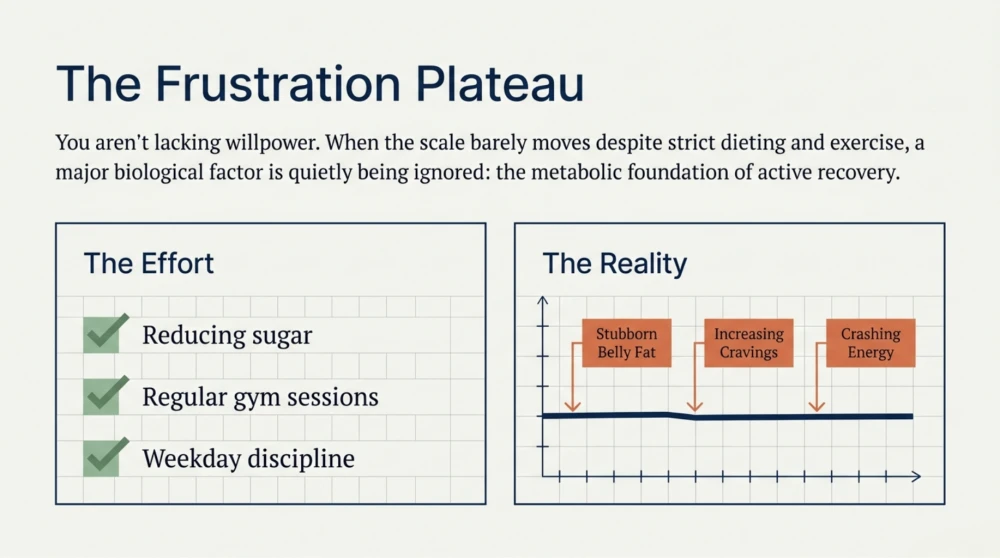
One of the most frustrating experiences for many people trying to lose weight is feeling like they are “doing everything right” but still not seeing meaningful progress.
They reduce sugar, start walking regularly, join gyms, avoid junk food during weekdays, and try repeatedly to stay disciplined. Yet the weighing scale barely moves, belly fat remains stubborn, cravings continue increasing, and energy levels often feel worse instead of better. In many such situations, one major factor quietly gets ignored completely — sleep.
Most people still think of sleep as passive rest. But biologically, sleep is actually one of the body’s most active recovery periods. During healthy sleep, the body continuously regulates hormones, repairs metabolic pathways, resets appetite signaling, improves insulin sensitivity, and restores nervous system balance.
When sleep quality starts declining repeatedly, the body slowly shifts into a metabolically stressed state where fat loss becomes significantly more difficult. This is exactly why understanding why poor sleep can make weight loss more difficult has become increasingly important in modern metabolic healthcare.
The Body Interprets Poor Sleep as Stress
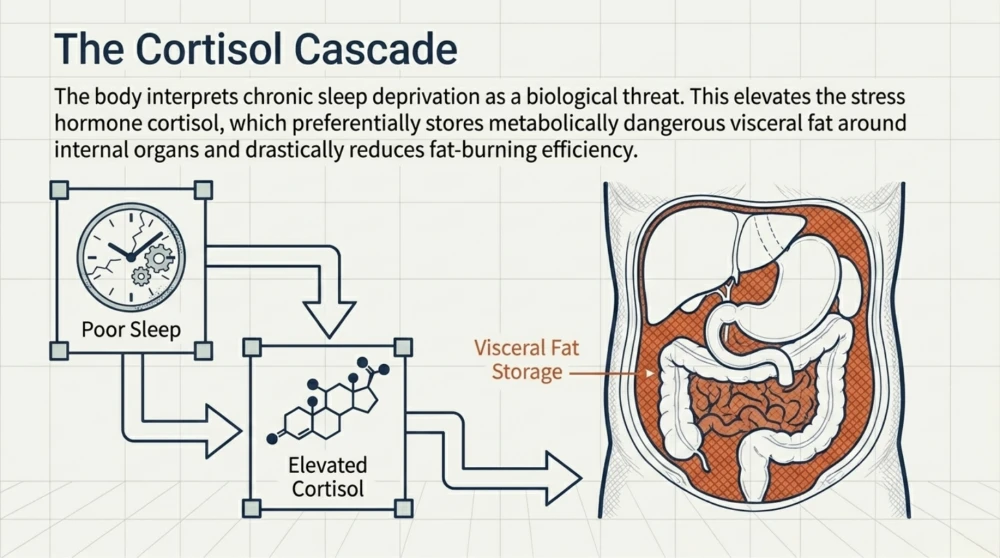
One of the most important concepts people need to understand is that the body treats chronic sleep deprivation as a form of physiological stress. Even if someone feels mentally “used to” sleeping late or functioning on short sleep, the body still responds hormonally.
When sleep becomes inadequate or irregular, stress hormones such as cortisol remain elevated for longer durations. Initially, this may only produce subtle symptoms like:
- Morning fatigue
- Low energy
- Brain fog
- Increased irritability
- Reduced motivation
But over time, this repeated hormonal stress gradually starts affecting metabolism itself. The body becomes more likely to conserve energy, increase cravings, store abdominal fat, and reduce metabolic flexibility. This is one reason many people with chronic poor sleep slowly develop stubborn belly fat even without dramatic overeating.
Why Poor Sleep Quietly Increases Hunger
One of the strongest biological effects of sleep deprivation is disruption of appetite-regulating hormones. Healthy sleep helps regulate hormones such as ghrelin and leptin. Ghrelin stimulates hunger, while leptin helps the brain recognize fullness and satiety.
When sleep quality declines repeatedly, this balance gradually shifts. Ghrelin levels tend to rise, increasing hunger signals throughout the day. At the same time, leptin signaling becomes weaker, making the body feel less satisfied even after eating.
This creates a situation where individuals naturally begin:
- Feeling hungrier more frequently
- Craving calorie-dense foods
- Snacking more often
- Struggling with portion control
Importantly, this is not simply a “willpower problem.” The body itself is biologically pushing appetite upward.
This is one reason sleep-deprived individuals commonly crave:
- Sweets
- Refined carbohydrates
- Processed snacks
- Late-night comfort foods
Over time, this repeated pattern gradually increases calorie intake while simultaneously worsening metabolic regulation.
Why Belly Fat Commonly Increases With Poor Sleep
One of the clearest physical effects of chronic sleep deprivation is increasing visceral fat accumulation. Visceral fat is the fat stored around internal abdominal organs. This type of fat behaves very differently from simple subcutaneous fat under the skin.
Visceral fat is metabolically active and strongly associated with:
- Insulin resistance
- Fatty liver
- Inflammation
- High triglycerides
- Cardiovascular risk
When sleep quality remains poor for long durations, cortisol regulation becomes increasingly abnormal. Elevated cortisol promotes fat storage tendency, especially around the abdominal region.
At the same time, poor sleep increases cravings and reduces physical activity motivation. This creates a powerful metabolic combination where:
- Calorie intake gradually increases
- Movement decreases
- Fat storage becomes easier
- Fat burning efficiency declines
Many individuals therefore notice that despite trying multiple diets, waist circumference remains difficult to reduce as long as sleep remains poor.
Why Sleep Deprivation Reduces Energy and Movement
Another major reason poor sleep affects body weight is reduced daily energy expenditure. Sleep-deprived individuals naturally become more fatigued during the day. This affects movement patterns far more than most people realize.
Many individuals begin:
- Sitting longer
- Skipping workouts
- Avoiding stairs
- Reducing spontaneous movement
- Feeling mentally exhausted after work
This gradual reduction in movement significantly lowers overall calorie expenditure. At the same time, hunger and cravings continue increasing. This creates a dangerous metabolic imbalance where the body starts consuming more energy while burning less.
Over months and years, this pattern strongly contributes to:
- Weight gain
- Belly fat accumulation
- Insulin resistance
- Poor metabolic flexibility
Why Late-Night Wakefulness Commonly Leads to Overeating
Modern lifestyles frequently combine poor sleep with late-night screen exposure and irregular meal timing.
Many individuals remain awake until very late because of:
- Work pressure
- Social media scrolling
- Streaming platforms
- Late-night office work
- Mental overstimulation
During these late hours, the brain often seeks quick dopamine stimulation and energy support. This commonly increases cravings for:
- Sugary foods
- Chips and snacks
- Late-night meals
- Sweet beverages
At night, physical activity remains minimal while insulin sensitivity also becomes less efficient compared to daytime metabolism.
Repeated nighttime overeating therefore strongly promotes:
- Fat storage
- Belly fat accumulation
- Poor glucose handling
- Weight gain
This is one reason poor sleep and unhealthy eating patterns frequently reinforce each other.
Why Poor Sleep Affects Insulin Sensitivity
One of the most important metabolic consequences of poor sleep is worsening insulin sensitivity.
Insulin helps move glucose from the bloodstream into cells where it can be used for energy. But when sleep becomes chronically disrupted, the body gradually becomes less responsive to insulin signals. This means blood sugar regulation becomes less efficient.
Initially, the pancreas compensates by producing more insulin. During this stage, blood sugar reports may still appear “normal,” even though metabolic dysfunction has already started developing underneath.
Over time, however, this compensation becomes less effective. The body gradually shifts toward:
- Insulin resistance
- Prediabetes
- Fatty liver
- Abdominal obesity
This is why poor sleep frequently overlaps with stubborn weight loss resistance and increasing metabolic dysfunction.
Why Poor Sleep Quietly Slows Fat Loss
One of the most frustrating experiences during weight loss is noticing that despite dieting consistently, the body stops responding the way people expect.
Many individuals initially lose a few kilograms and then suddenly hit a plateau where fat loss becomes extremely slow. Others feel they are eating reasonably well but continue struggling with persistent abdominal fat, cravings, fatigue, and lack of metabolic progress. In many of these situations, poor sleep quietly continues interfering with fat metabolism in the background.
The body does not simply “count calories.” It continuously evaluates whether the internal environment feels safe, stable, and energy-efficient. When sleep becomes chronically poor, the body gradually shifts into a physiologically stressed state where preserving energy becomes easier than burning stored fat. This is one reason poor sleep commonly reduces metabolic flexibility.
Metabolic flexibility refers to the body’s ability to efficiently switch between using glucose and stored fat for energy. Healthy sleep supports this process. But chronic sleep deprivation gradually makes this transition less efficient. As stress hormones remain elevated and insulin sensitivity worsens, the body becomes increasingly resistant to efficient fat utilization.
Many individuals therefore notice:
- Weight loss plateaus
- Difficulty reducing waist circumference
- Persistent belly fat
- Fatigue despite dieting
- Increased hunger during calorie restriction
These are not always signs of “lack of discipline.” In many cases, the body itself is metabolically stressed and struggling to regulate energy balance properly.
Why Sleep-Deprived Individuals Often Feel Hungry All Day
Another major issue with chronic poor sleep is that appetite control gradually becomes increasingly unstable. Many people assume cravings happen only because of emotional weakness or poor food habits. But biologically, sleep deprivation directly affects how the brain responds to food.
When the brain becomes sleep-deprived, it naturally starts seeking quick energy and reward signals. This increases preference for foods that are:
- High in sugar
- Highly processed
- Rich in refined carbohydrates
- Calorie dense
At the same time, mental fatigue reduces decision-making quality and impulse control.
This is why many sleep-deprived individuals repeatedly experience patterns such as:
- Late-night snacking
- Emotional eating
- Stress cravings
- Difficulty maintaining dietary consistency
Over time, this repeated cycle gradually increases calorie intake while also worsening insulin resistance and metabolic instability.
The Relationship Between Poor Sleep and Fatty Liver
One increasingly important metabolic connection is the overlap between poor sleep and fatty liver disease.
Fatty liver is strongly associated with:
- Insulin resistance
- Visceral fat accumulation
- High triglycerides
- Metabolic dysfunction
Interestingly, chronic sleep disruption contributes to many of the same biological pathways.
When sleep becomes irregular or insufficient, individuals often begin experiencing:
- Late-night eating
- Poor appetite regulation
- Reduced physical activity
- Increasing abdominal fat
Over time, these repeated metabolic disturbances gradually promote fat accumulation inside the liver.
Many patients with fatty liver also describe long-standing patterns of:
- Sleeping late
- Poor sleep quality
- Work stress
- Chronic fatigue
This is why sleep quality is now increasingly recognized as an important component of metabolic health rather than simply a “lifestyle preference.”
Why Weekend “Recovery Sleep” Usually Does Not Fully Fix the Problem
One extremely common modern pattern is weekday sleep deprivation followed by weekend oversleeping.
Many individuals sleep:
- 5 to 6 hours during workdays
- 9 to 10 hours on weekends
while hoping the body will simply “catch up.” While extra sleep certainly provides temporary recovery, it usually does not completely reverse chronic metabolic disruption caused by repeated poor sleep during the week.
The body functions best with relatively stable circadian rhythm and consistent recovery patterns.
Frequent cycles of:
- Sleep deprivation
- Late-night wakefulness
- Irregular bedtime timing
- Weekend oversleeping
continue disrupting hormonal regulation and metabolic rhythm.
This is one reason many individuals continue experiencing:
- Fatigue
- Cravings
- Poor appetite control
- Weight gain
- Reduced exercise motivation
despite trying to “recover” during weekends.
Why Sleep Quality Matters as Much as Sleep Duration
Another important misunderstanding is assuming that simply spending more time in bed automatically means healthy sleep.
Many individuals technically sleep for several hours but still experience poor-quality sleep because of:
- Late-night screen exposure
- Mental stress
- Frequent awakenings
- Poor sleep timing
- Irregular routines
In such situations, the nervous system may never fully enter deep restorative recovery phases properly.
As a result, people wake up feeling:
- Tired
- Mentally foggy
- Low in energy
- More hungry
despite technically “sleeping enough hours.”
This is why healthy sleep depends not only on quantity, but also on recovery quality and biological consistency.
Why Poor Sleep Commonly Reduces Exercise Consistency
One major consequence of sleep deprivation is declining physical activity. When the body remains chronically tired, movement naturally becomes harder.
Many sleep-deprived individuals begin:
- Skipping workouts
- Sitting more
- Avoiding physical activity
- Feeling mentally exhausted after work
This gradual reduction in movement significantly lowers total daily calorie expenditure. At the same time, cravings and appetite continue increasing.
This creates a metabolic situation where:
- Calorie intake rises
- Movement decreases
- Fat storage becomes easier
Over months and years, this pattern strongly promotes weight gain and metabolic dysfunction.
Why Modern Digital Habits Have Become a Major Sleep Problem
One of the biggest reasons sleep quality has deteriorated globally is continuous digital stimulation.
Many individuals remain mentally activated late into the night because of:
- Social media scrolling
- Streaming platforms
- Late-night work
- Phone notifications
- Continuous screen exposure
This keeps the brain in a partially stimulated state when it should normally begin slowing down for recovery.
Over time, this pattern contributes to:
- Delayed sleep timing
- Poor sleep quality
- Mental fatigue
- Hormonal imbalance
This is one reason modern weight gain patterns are increasingly linked with digital lifestyle disruption and chronic sleep deprivation.
What Actually Helps When Poor Sleep Is Blocking Weight Loss
Once people understand that sleep plays a major metabolic role, the next question naturally becomes: “What should I realistically change to improve both sleep and weight loss?”
The answer is usually not found in extreme hacks, sleeping pills, crash diets, or unrealistic “perfect lifestyle” routines. In most cases, sustainable improvement happens gradually when the body starts experiencing more biological stability.
The nervous system, hormones, metabolism, appetite, and energy regulation all work best when daily life becomes more consistent and recovery-oriented. This is why meaningful metabolic recovery often begins with improving the overall rhythm of life rather than focusing only on calorie counting.
Why Consistent Sleep Timing Matters So Much
One of the biggest modern problems is irregular sleep timing.
Many individuals sleep at completely different hours every day depending on:
- Work schedules
- Screen exposure
- Social media use
- Weekend habits
- Stress levels
The body, however, functions through circadian rhythm — an internal biological clock that regulates hormones, metabolism, appetite, recovery, and energy balance. When sleep timing constantly shifts, this internal rhythm gradually becomes unstable.
As a result, individuals often begin experiencing:
- Morning fatigue
- Low energy
- Late-night cravings
- Poor appetite control
- Difficulty maintaining healthy routines
Many people are surprised that simply stabilizing sleep timing can significantly improve:
- Energy levels
- Exercise consistency
- Craving control
- Mental clarity
- Weight management
The body prefers consistency far more than occasional “perfect days.”
Why Late-Night Eating Commonly Worsens Both Sleep and Weight Gain
One extremely common pattern in modern lifestyles is eating large meals very late at night. Many professionals finish work late, remain mentally overstimulated, and eventually eat their heaviest meal close to bedtime. This creates multiple metabolic problems simultaneously.
At night, the body naturally shifts toward recovery mode rather than active digestion and energy utilization. Heavy late-night meals therefore frequently worsen:
- Acidity
- Bloating
- Poor sleep quality
- Nighttime glucose spikes
- Fat storage tendency
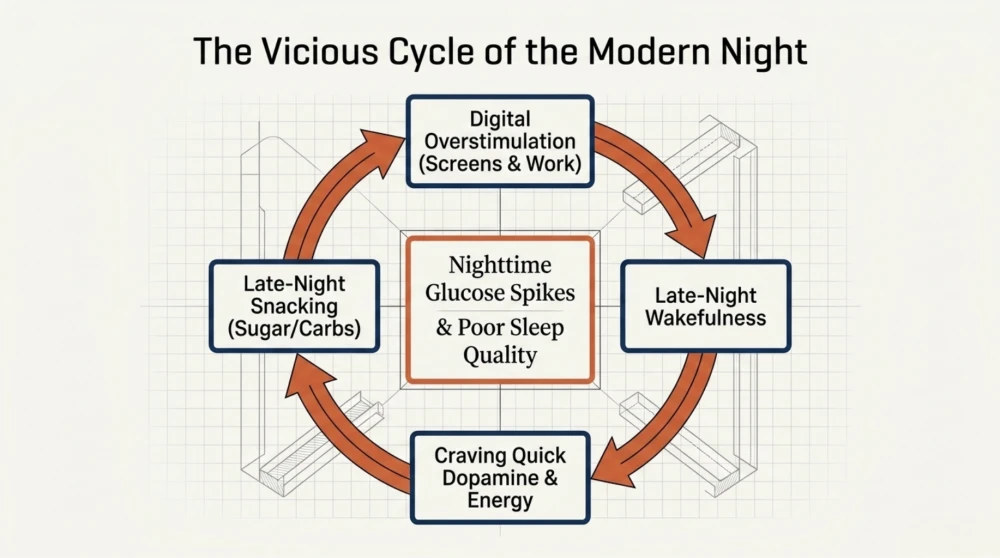
Many individuals also notice that poor sleep itself increases late-night cravings, creating a repeating cycle where:
- Poor sleep increases overeating
- Late-night overeating worsens sleep further
- Metabolic dysfunction gradually increases
Over time, this pattern strongly contributes to:
- Belly fat accumulation
- Insulin resistance
- Weight gain
- Fatty liver
Why Movement Improves Sleep and Metabolism Together
Many people think exercise helps only because it burns calories. But biologically, movement improves much more than calorie expenditure alone.
Regular physical activity improves:
- Insulin sensitivity
- Stress regulation
- Sleep quality
- Mood stability
- Metabolic flexibility
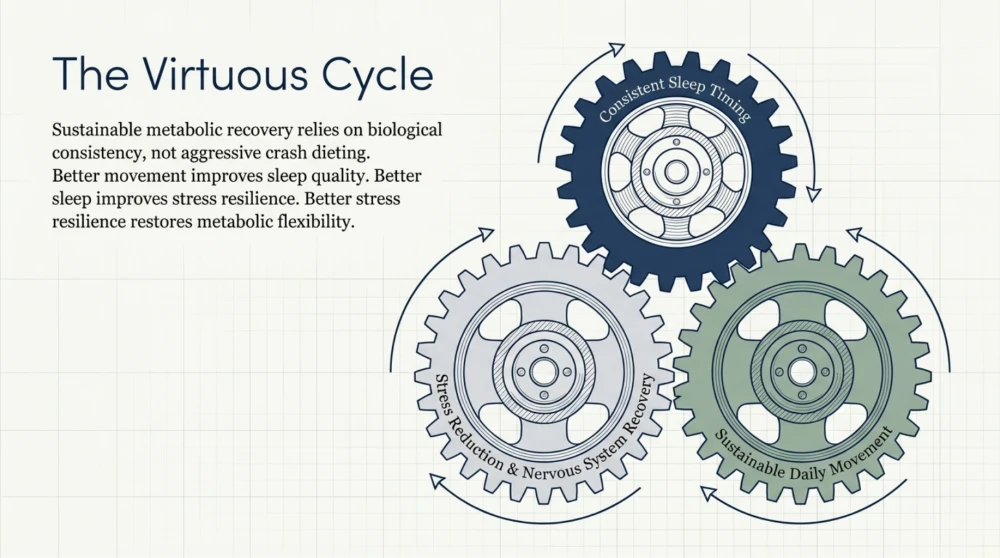
This creates a powerful positive cycle. Better movement improves sleep, and better sleep improves exercise consistency further.
Importantly, the body usually responds best to sustainable movement rather than extreme temporary effort. Many individuals fail because they attempt highly aggressive workout plans that quickly become difficult to maintain alongside stressful modern schedules.
But consistent moderate movement often produces much better long-term results.
Examples include:
- Walking regularly
- Strength training
- Cycling
- Home workouts
- Post-meal movement
The goal is not perfection. The goal is building a body that remains metabolically active and recovery-supportive consistently.
Why Stress Reduction Is Essential for Sustainable Weight Loss
One major reason poor sleep affects weight loss is chronic stress physiology.
Modern lifestyles frequently combine:
- Mental overload
- Long working hours
- Screen fatigue
- Sedentary routines
- Poor recovery
This creates a nervous system that remains continuously overstimulated.
As stress hormones remain elevated:
- Cravings worsen
- Fat storage increases
- Sleep quality declines
- Appetite control becomes unstable
This is one reason many people feel trapped in a cycle where stress worsens sleep, poor sleep worsens eating behavior, and weight gain further increases emotional stress.
Why Crash Diets Often Fail in Sleep-Deprived Individuals
Many individuals respond to weight gain by aggressively cutting calories. But extreme dieting while remaining chronically sleep-deprived often backfires metabolically.
In such situations, the body is already experiencing:
- Stress overload
- Hormonal imbalance
- Poor recovery
- Reduced metabolic flexibility
Very restrictive diets may further worsen:
- Fatigue
- Cravings
- Binge eating tendency
- Stress hormone imbalance
This is why sustainable metabolic correction usually works better than temporary aggressive restriction. The body responds far better to realistic long-term improvement than repeated cycles of extreme dieting and burnout.
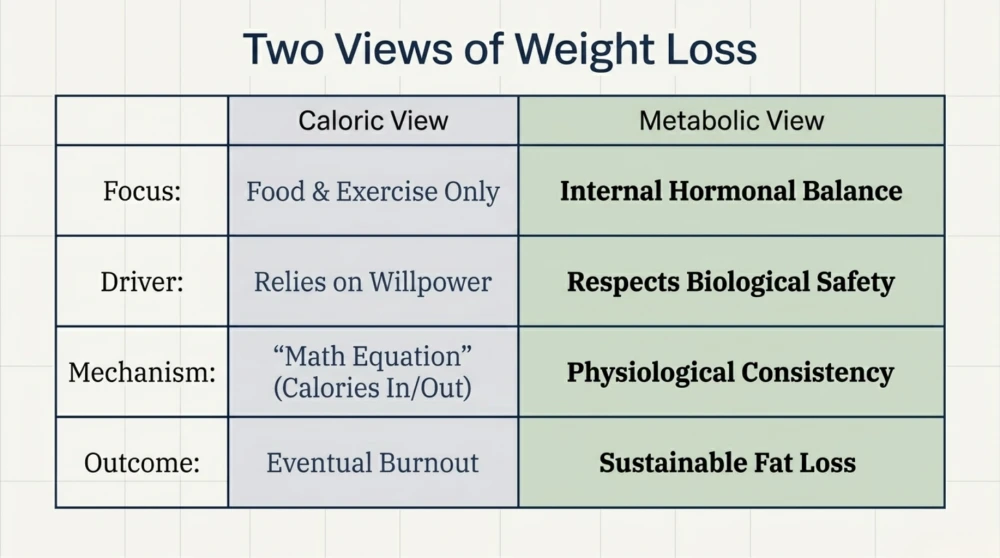
Why Weight Loss Must Be Viewed Metabolically, Not Just Through Calories
One major problem in modern weight loss culture is oversimplification. Many people still believe body weight depends only on eating less and exercising more.
But metabolism is influenced by multiple interconnected systems including:
- Sleep quality
- Stress regulation
- Hormonal balance
- Movement patterns
- Insulin sensitivity
- Recovery quality
This is why two individuals eating similar calories may still experience very different weight loss outcomes depending on sleep and lifestyle rhythm. Weight management therefore needs a broader metabolic approach rather than focusing only on food restriction.
Why Sustainable Lifestyle Structure Matters Most
The human body responds remarkably well to biological consistency.
In many patients, meaningful improvement begins when life becomes:
- More structured
- Less chaotic
- More recovery-oriented
- More movement-supportive
This is exactly why structured metabolic approaches often focus on rebuilding:
- Sleep quality
- Meal rhythm
- Stress recovery
- Movement consistency
- Metabolic flexibility
rather than depending only on temporary dieting intensity.
You can explore this broader sustainable approach through the Lifestyle Modification Program.
Key Takeaways: What You Should Remember
- Poor sleep increases hunger, cravings, and fat storage tendency
- Sleep deprivation worsens insulin resistance and metabolic flexibility
- Late-night eating commonly worsens both sleep and weight gain
- Sleep quality matters as much as sleep duration
- Stress and poor sleep frequently reinforce each other metabolically
- Regular movement improves both sleep quality and metabolic health
- Sustainable routines work better than extreme short-term dieting
You can book a consultation here:
Book Appointment
Written by Dr. Pankaj Kumar, General & Lifestyle Physician, Dwarka, New Delhi