









- 25th April 2026
Table of Contents
- Why Fatty Liver Does Not Happen Overnight
- The Liver’s Role in Fat Metabolism
- How Fat Starts Accumulating in the Liver
- 1. Excess Carbohydrate Intake Over Time
- 2. Insulin Resistance Develops Gradually
- 3. Low Physical Activity and Energy Imbalance
- Why There Are No Early Symptoms
- The Early Warning Signs You Should Not Ignore
- Why This Matters in Clinical Practice
- 4. Fat Export Imbalance: When the Liver Cannot Keep Up
- 5. Chronic Low-Grade Inflammation
- 6. Hormonal Imbalance Over Time
- 7. Repeated Dietary Patterns, Not Single Events
- 8. Why Weight Gain Is Not Always Required
- 9. Why Blood Reports May Still Appear Normal
- Connecting the Dots: A Slow but Progressive Process
- What Actually Works: How to Reverse Fat Accumulation in the Liver
- 1. Correct the Diet Pattern, Not Just Calories
- 2. Increase Protein Intake for Better Metabolic Control
- 3. Focus on Gradual Weight Reduction
- 4. Improve Physical Activity Consistently
- 5. Optimize Sleep and Reduce Stress
- 6. Avoid Repeated Small Mistakes
- 7. Follow a Structured Approach
- Expected Timeline: How Long Does It Take to Improve?
- Real-Life Clinical Insight
- Key Takeaways: What You Should Remember
- When Should You Take Action?
Why Fatty Liver Does Not Happen Overnight
Many patients are surprised when an ultrasound shows fatty liver. The common reaction is: “Doctor, this must have happened recently.”
But the reality is very different.
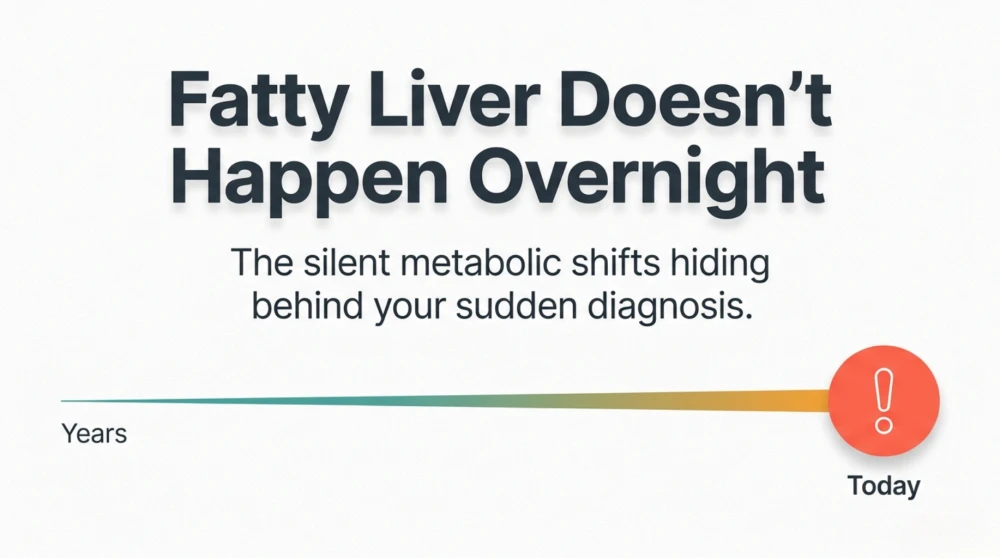
Fat accumulation in the liver develops slowly, often over months or years, without clear symptoms. By the time it appears on reports, the process has usually been ongoing for a long time.
This is why understanding why fat accumulates in the liver slowly is critical. It helps you recognize early signals and take action before the condition progresses.
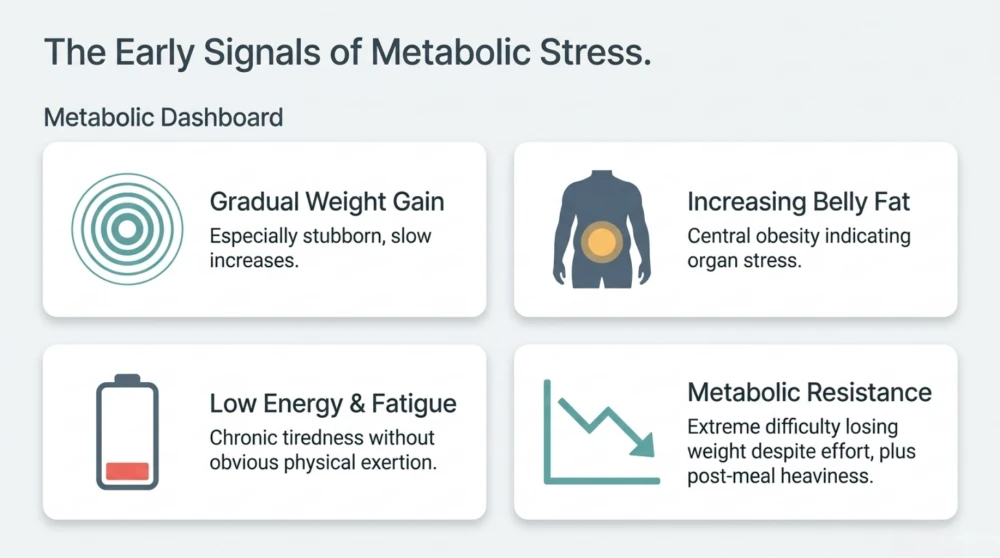
In clinical practice, I often see patients with:
- Normal or slightly abnormal reports
- Gradual weight gain
- Increasing belly fat
- Fatigue and low energy
- Difficulty losing weight
These are not isolated issues. They are early indicators of metabolic changes happening silently, with the liver at the center.
The Liver’s Role in Fat Metabolism
To understand why fat builds up slowly, you first need to understand what the liver does.
The liver plays a central role in:
- Converting excess carbohydrates into fat
- Storing and releasing energy
- Processing fats for use or storage
Under normal conditions, there is a balance between fat entering and leaving the liver. But when this balance is disturbed over time, fat starts accumulating.
How Fat Starts Accumulating in the Liver
The process usually begins subtly. Excess calories—especially from refined carbohydrates and sugars—are converted into fat through a process called de novo lipogenesis.
Initially, this fat is handled efficiently. But with continuous excess intake, the liver starts storing more fat than it can process.
This creates a gradual imbalance:
- More fat entering the liver
- Less fat being burned or exported
Over time, this leads to fat accumulation within liver cells.
1. Excess Carbohydrate Intake Over Time
One of the most important reasons for slow fat accumulation in the liver is chronic excess carbohydrate intake, especially refined carbohydrates.
Common sources include:
- Sugary beverages
- Bakery products
- Refined flour (maida-based foods)
When these are consumed regularly, even in moderate amounts, the liver continuously converts excess glucose into fat.
Why This Happens Slowly
The body does not store all excess fat immediately. Instead, it accumulates gradually with repeated exposure.
This is why patients often say:
“I don’t eat much junk, then how did I get fatty liver?”
The answer lies in long-term patterns, not single events.
2. Insulin Resistance Develops Gradually
Another key factor is insulin resistance, which develops slowly over time.
When the body becomes less responsive to insulin, the liver starts producing more glucose and also increases fat production.
This leads to:
- Increased fat synthesis in the liver
- Reduced fat breakdown
- Progressive fat accumulation
This process may begin even when blood sugar levels are still within the normal range.
3. Low Physical Activity and Energy Imbalance
Physical activity plays a crucial role in maintaining metabolic balance.
When activity levels are low:
- Energy expenditure decreases
- Fat oxidation reduces
- Excess calories are more likely to be stored
This contributes to gradual fat buildup in the liver.
Why This Is Often Missed
Many individuals are not completely inactive but still have insufficient activity relative to their calorie intake.
This subtle imbalance over time leads to slow metabolic changes.
Why There Are No Early Symptoms
One of the biggest challenges with fatty liver is that it develops silently.
In early stages, most people do not experience:
- Pain
- Severe fatigue
- Noticeable digestive issues
This is why the condition often goes unnoticed until detected on imaging or routine tests. By this stage, fat accumulation has already been occurring for a long time.
The Early Warning Signs You Should Not Ignore
Even though symptoms are subtle, some early indicators may include:
- Gradual increase in belly fat
- Low energy levels
- Post-meal heaviness
- Difficulty losing weight
These signs often reflect early metabolic stress involving the liver.
Why This Matters in Clinical Practice
The slow development of fatty liver is both a challenge and an opportunity. It is a challenge because patients often ignore early signs.
But it is also an opportunity because early-stage fatty liver is reversible.
With timely intervention, you can:
- Reduce liver fat
- Improve metabolism
- Prevent progression to serious liver disease
This is why structured approaches like the Lifestyle Modification Program focus on early correction and long-term sustainability.
4. Fat Export Imbalance: When the Liver Cannot Keep Up
The liver does not just store fat; it also exports fat in the form of lipoproteins (mainly VLDL - very low density lipoproteins). Under healthy conditions, there is a balance between fat coming into the liver and fat being exported out.
However, when fat production increases over time, the liver’s capacity to export fat becomes insufficient.
What Happens Next?
- Fat starts accumulating within liver cells
- Liver cells become enlarged and stressed
- Metabolic efficiency decreases
This process is gradual, which is why fat accumulation in the liver develops slowly rather than suddenly.
Patients often do not notice any change during this phase, but internally, the metabolic imbalance is increasing.
5. Chronic Low-Grade Inflammation
Another key contributor to slow fat accumulation is chronic low-grade inflammation.
This type of inflammation is not obvious like infection or injury. It develops silently, especially in individuals with:
- Excess body fat
- High sugar intake
- Poor lifestyle habits
Impact on the Liver
Inflammation affects liver cells by:
- Increasing oxidative stress
- Reducing fat metabolism efficiency
- Promoting fat storage
Over time, this contributes to progressive fat buildup. This is also one of the reasons why patients feel tired even when reports are only mildly abnormal.
6. Hormonal Imbalance Over Time
Hormones play a major role in regulating metabolism. Even small imbalances, when persistent, can gradually affect liver function.
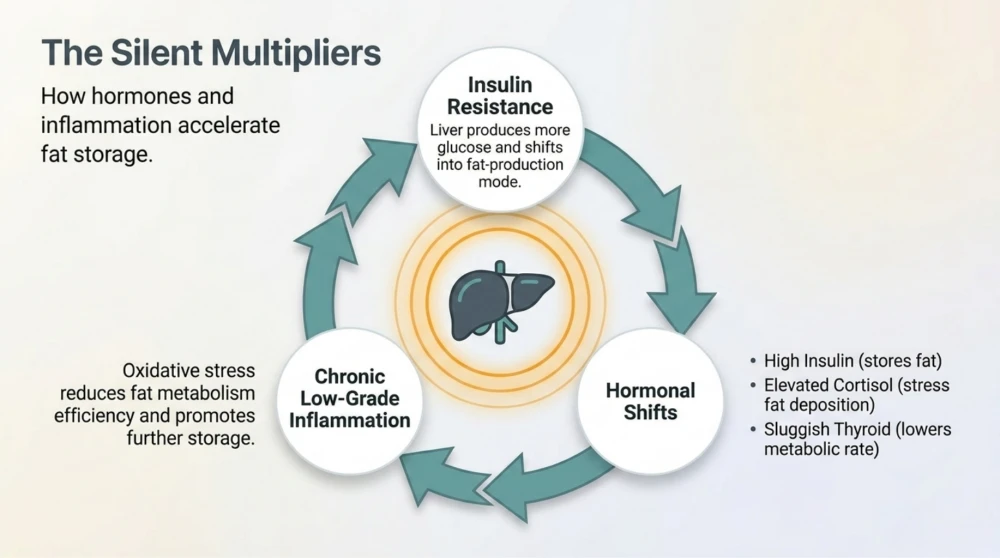
Key Hormonal Factors
- Insulin – promotes fat storage when levels remain high
- Cortisol – increases fat deposition, especially during stress
- Thyroid hormones – affect metabolic rate and fat utilization
These changes do not occur overnight. They develop slowly, which explains the gradual nature of fatty liver development.
7. Repeated Dietary Patterns, Not Single Events
One of the biggest misconceptions is that fatty liver develops due to occasional unhealthy eating. In reality, it is the repetition of small dietary imbalances over time that leads to fat accumulation.
Examples of Common Patterns
- Daily consumption of sugary tea or coffee
- Frequent snacking
- Late-night eating habits
- Regular intake of processed foods
Individually, these may seem harmless. But when repeated over months or years, they create a continuous metabolic load.
This is why patients often underestimate the impact of their routine habits.
8. Why Weight Gain Is Not Always Required
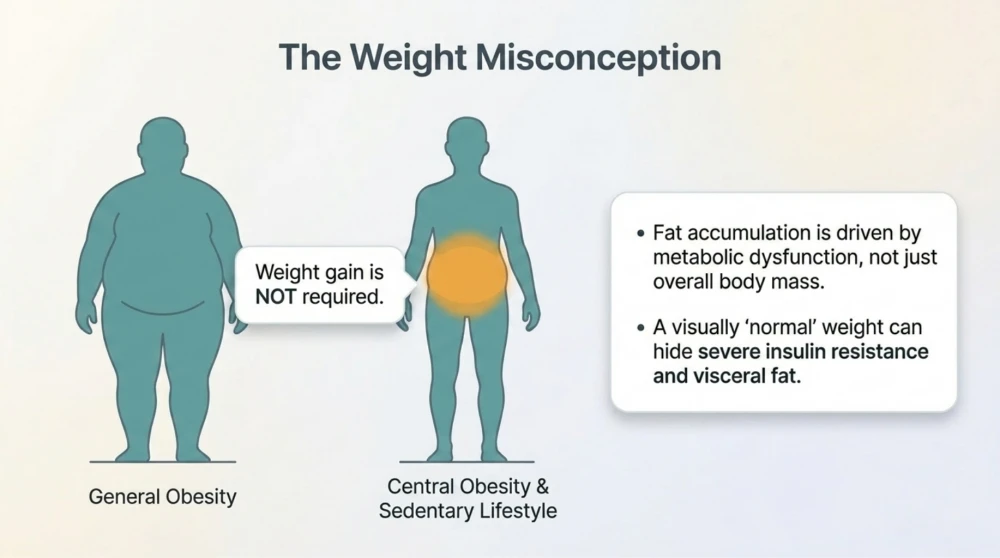
Another important point is that fatty liver can develop even without significant weight gain.
This is particularly seen in individuals with:
- Central obesity (belly fat)
- Normal body weight but poor metabolic health
- Sedentary lifestyle
In such cases, fat accumulation is more related to metabolic dysfunction rather than overall body weight.
9. Why Blood Reports May Still Appear Normal
One of the most confusing aspects for patients is that fatty liver can develop even when blood tests are normal.
Why This Happens
- Liver enzymes may remain within range in early stages
- Metabolic changes occur before lab abnormalities
- The body compensates for a long time
This is why relying only on reports can be misleading.
Many patients say:
“My reports are normal, so everything should be fine.” But in reality, early metabolic dysfunction may already be present.
To understand this better, you can explore why symptoms can exist even with normal reports.
Connecting the Dots: A Slow but Progressive Process
If you look at all these factors together, a clear pattern emerges.
Fat accumulation in the liver is not caused by a single factor. It is the result of multiple small imbalances acting over time:
- Excess calorie intake
- Insulin resistance
- Low physical activity
- Hormonal changes
- Inflammation
Each factor contributes a small effect, but together they create a gradual and progressive buildup of fat in the liver.
This is why the condition often goes unnoticed until it reaches a more advanced stage.
What Actually Works: How to Reverse Fat Accumulation in the Liver
The most important question patients ask is: “If fat builds up slowly, can it also be reduced?” The answer is yes.
Fat accumulation in the liver is reversible, especially in the early and moderate stages. But just like it develops slowly, reversal also requires consistent and structured effort.
In clinical practice, the goal is not just reducing liver fat but correcting the underlying metabolic imbalance.
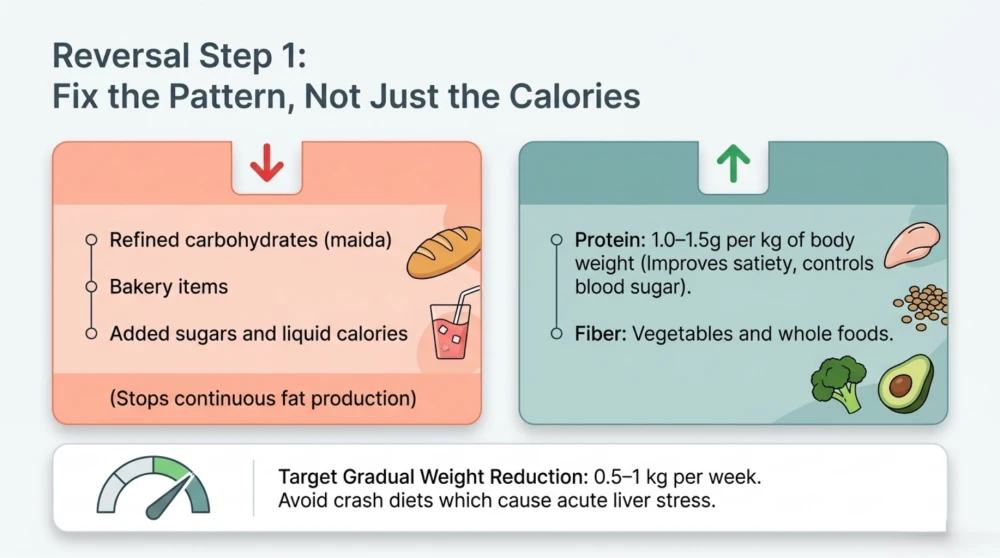
1. Correct the Diet Pattern, Not Just Calories
The liver responds more to diet quality than just calorie numbers.
Key dietary principles include:
- Reduce refined carbohydrates (maida, bakery items, sugary foods)
- Limit added sugar, especially liquid calories
- Increase fiber intake through vegetables and whole foods
- Maintain balanced meals with protein, fats, and controlled carbohydrates
This helps reduce continuous fat production in the liver.
2. Increase Protein Intake for Better Metabolic Control
Protein supports both fat loss and metabolic stability.
Benefits include:
- Improved satiety
- Reduced cravings
- Better blood sugar control
A practical target is 1.0–1.5 g protein per kg body weight, adjusted according to individual needs.
3. Focus on Gradual Weight Reduction
Even a small reduction in body weight can significantly reduce liver fat.
Recommended approach:
- 0.5–1 kg weight loss per week
- Avoid crash diets
Rapid weight loss can sometimes increase liver stress temporarily, so gradual change is more effective.
4. Improve Physical Activity Consistently
Exercise helps improve insulin sensitivity and increases fat utilization.
Simple routine:
- 30–40 minutes brisk walking daily
- Strength training 3–4 times per week
This combination helps shift the body from fat storage to fat burning.
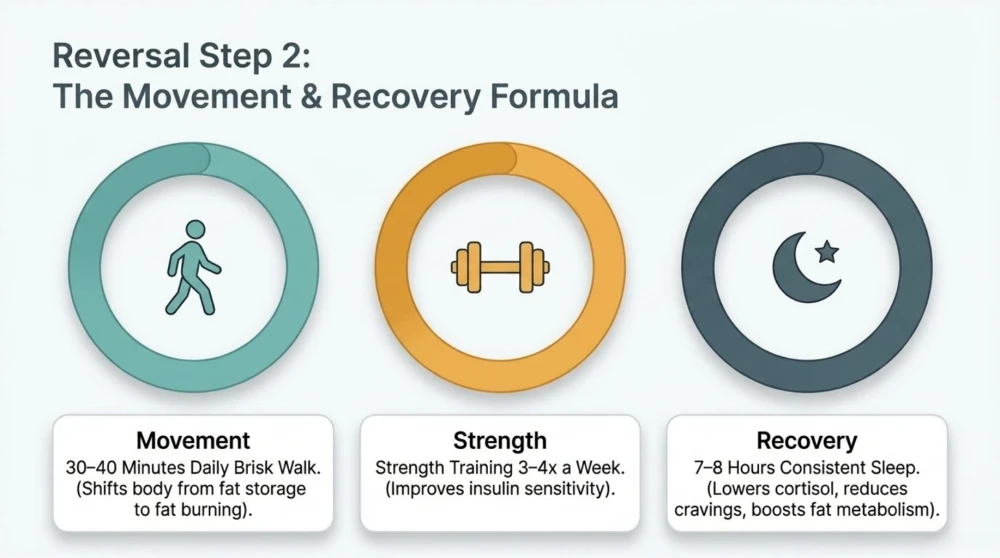
5. Optimize Sleep and Reduce Stress
Sleep and stress have a direct impact on metabolic health.
Poor sleep leads to:
- Increased cortisol levels
- Higher cravings
- Reduced fat metabolism
Key targets:
- 7–8 hours of sleep
- Consistent sleep timing
6. Avoid Repeated Small Mistakes
Since fatty liver develops slowly due to repeated patterns, reversing it also requires correcting those patterns.
Common habits to address:
- Frequent snacking
- Late-night eating
- Daily sugary beverages
Small improvements in these areas can produce significant long-term results.
7. Follow a Structured Approach
Random diet plans often fail because they do not address underlying metabolic issues.
A structured approach focuses on:
- Individualized diet planning
- Lifestyle correction
- Long-term sustainability
You can explore this approach through the Lifestyle Modification Program.
Expected Timeline: How Long Does It Take to Improve?
Since fat accumulation develops slowly, improvement also takes time.
Typical timeline:
- 4–8 weeks for early improvement
- 3–6 months for significant reduction
Consistency is the most important factor.
Real-Life Clinical Insight
Many patients expect quick results. But once they understand the gradual nature of the condition, they become more consistent with lifestyle changes.
Over time, they notice:
- Improved energy levels
- Reduced bloating
- Better fat loss
- More stable metabolic health
This reinforces the importance of a long-term approach.
Key Takeaways: What You Should Remember
- Fat accumulation in the liver develops slowly over time
- It is driven by repeated small metabolic imbalances
- Early stages are often silent and go unnoticed
- Weight gain is not always required for fatty liver
- Gradual lifestyle correction can reverse the condition
- Consistency is more important than intensity
- Early intervention prevents long-term complications
When Should You Take Action?
You should focus on liver health if you have:
- Fatty liver on ultrasound
- Difficulty losing weight
- Increasing belly fat
- Low energy levels
- Borderline metabolic parameters
Early action can prevent progression to more serious conditions.
You can book a consultation here: Book Appointment
Written by Dr. Pankaj Kumar, General & Lifestyle Physician, Dwarka, New Delhi