













- 27th April 2026
Table of Contents
- I Was Fine… Then Suddenly Fatty Liver?
- Why Fatty Liver Remains Asymptomatic Initially
- 1. Gradual Fat Accumulation Over Time
- 2. Normal Reports Do Not Always Mean Normal Health
- 3. Lack of Specific Symptoms
- 4. Routine Checkups Are Becoming More Common
- Why This Matters in Clinical Practice
- 5. Lifestyle Patterns That Quietly Drive Fatty Liver
- 6. Insulin Resistance: The Silent Metabolic Trigger
- 7. Belly Fat and Liver Fat Are Closely Connected
- 8. Sedentary Lifestyle: The Missing Link
- 9. Why Weight Alone Does Not Explain Fatty Liver
- 10. Routine Ultrasound Reveals What Blood Tests Miss
- Connecting the Dots: Why It Feels Sudden but Is Not
- What Should You Do After Fatty Liver Is Detected?
- What Actually Works: A Practical Strategy
- 1. Improve Diet Quality Gradually
- 2. Increase Protein Intake
- 3. Focus on Gradual Weight Loss
- 4. Increase Physical Activity
- 5. Improve Sleep and Stress Management
- 6. Avoid Quick Fixes and Detox Trends
- 7. Follow a Structured Program
- Expected Timeline: When Will Fatty Liver Improve?
- Real-Life Clinical Insight
- Key Takeaways: What You Should Remember
- When Should You Take It Seriously?
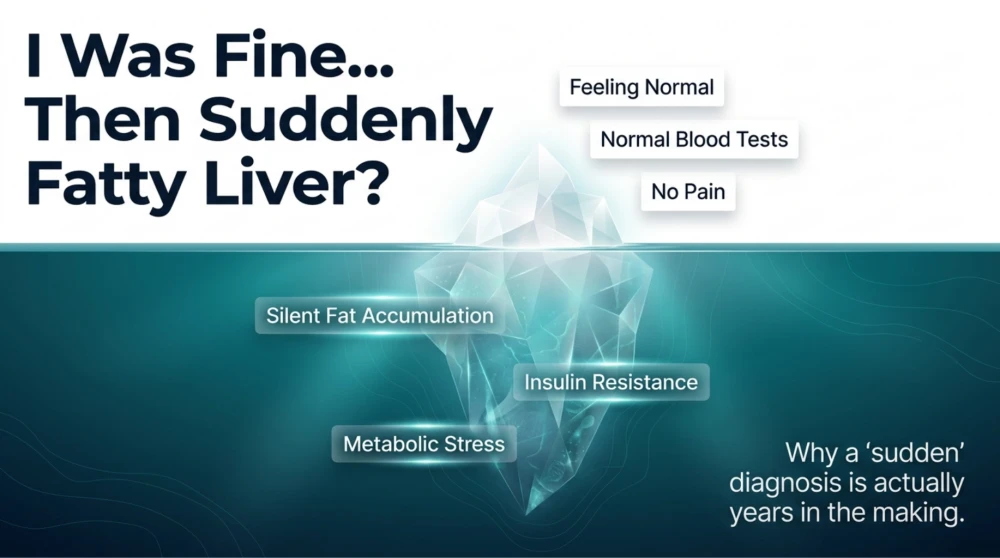
I Was Fine… Then Suddenly Fatty Liver?
One of the most common situations I see in clinical practice is this: a patient comes with routine health checkup reports and says, “Doctor, everything was fine, but the ultrasound shows fatty liver. How did this happen?”
This confusion is very understandable.
Fatty liver is often discovered during routine checkups because it develops silently over time. Most people do not experience clear symptoms in the early stages, so the condition remains unnoticed until it appears on imaging or blood reports.
This is why understanding why fatty liver is detected during routine checkups is important. It helps you recognize that the problem did not start suddenly—it has been developing gradually.
In many cases, patients also report:
- Gradual weight gain
- Increasing belly fat
- Fatigue or low energy
- Difficulty losing weight
- Normal or borderline blood reports
These are early signs of metabolic stress, with the liver playing a central role.
Why Fatty Liver Remains Asymptomatic Initially
The liver is a resilient organ. It can tolerate a significant amount of stress before producing noticeable symptoms.
In the early stages of fatty liver:
- There is no pain because the liver has very few pain-sensitive nerves
- Function remains largely preserved
- The body compensates for metabolic changes
This is why most individuals feel completely normal. By the time fatty liver is detected, the process has usually been ongoing for months or even years.
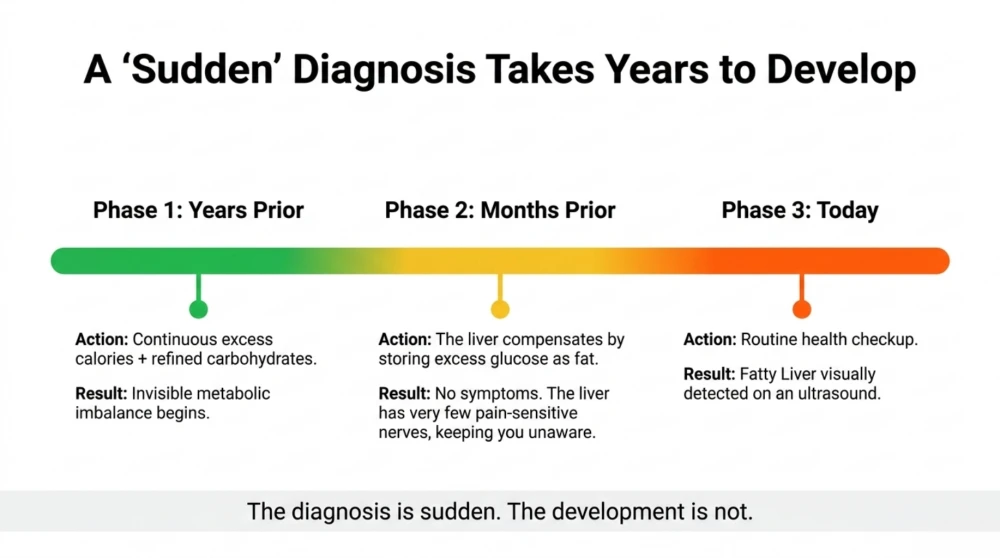
1. Gradual Fat Accumulation Over Time
The most important reason fatty liver is discovered during routine checkups is that fat accumulation in the liver develops slowly.
This process involves:
- Continuous excess calorie intake
- Conversion of carbohydrates into fat
- Gradual storage of fat in liver cells
This is not a sudden event. It is a long-term metabolic imbalance.
2. Normal Reports Do Not Always Mean Normal Health
Another key reason fatty liver is detected unexpectedly is that routine blood tests may remain normal in early stages.
Why This Happens
- Liver enzymes may still be within normal limits
- Metabolic dysfunction starts before lab abnormalities
- The body compensates for a long time
This leads to a false sense of reassurance.
Many patients say: “My reports were always normal, so I never thought something was wrong.” But in reality, early metabolic changes are already present.
To understand this better, you can explore why symptoms can exist even with normal reports.
3. Lack of Specific Symptoms
Fatty liver does not produce specific or alarming symptoms in its early stages.
Common complaints, if present, are often mild and nonspecific:
- General fatigue
- Heaviness after meals
- Low energy levels
These symptoms are easily ignored or attributed to lifestyle factors.
Why This Is a Problem
Because there are no clear warning signs, individuals do not seek medical evaluation until a routine checkup reveals the condition.
4. Routine Checkups Are Becoming More Common
With increasing awareness, more people are undergoing routine health checkups, including:
- Blood tests
- Ultrasound imaging
This has led to increased detection of fatty liver. In many cases, the condition was already present but remained undiagnosed due to lack of testing.
Why This Matters in Clinical Practice
The fact that fatty liver is often detected during routine checkups is not just a coincidence—it reflects the silent nature of metabolic disease.
It also highlights an important opportunity: Early detection allows early intervention.
At this stage, fatty liver is usually reversible with proper lifestyle changes. This is why structured approaches like the Lifestyle Modification Program focus on early correction rather than waiting for symptoms to appear.
5. Lifestyle Patterns That Quietly Drive Fatty Liver
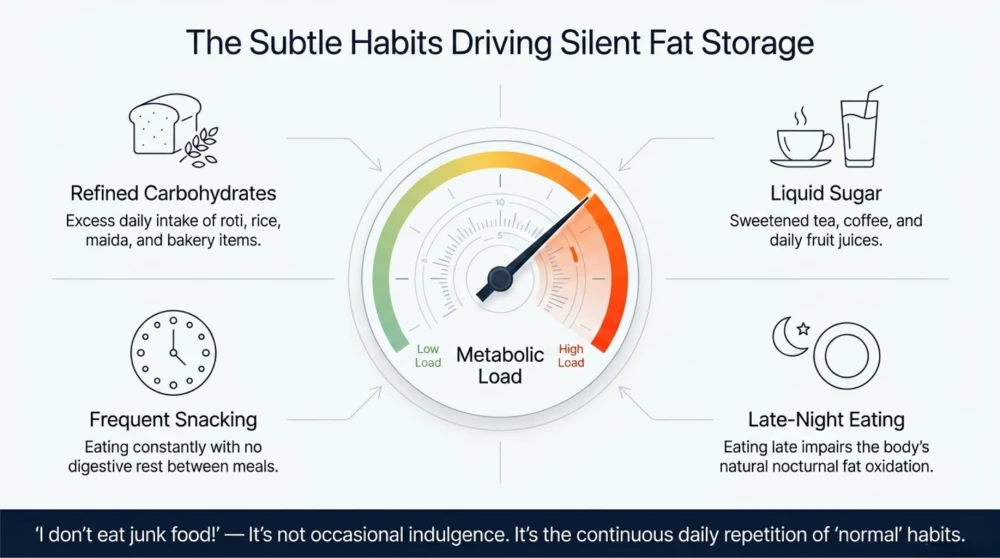
One of the biggest reasons fatty liver is discovered during routine checkups is that the underlying lifestyle patterns appear “normal” to most people.
Unlike obvious risk factors, these are subtle, everyday habits that slowly affect metabolism.
Common Patterns Seen in Patients
- Regular intake of refined carbohydrates (roti, rice, bakery items in excess)
- Daily consumption of sugary beverages (tea, coffee with sugar, juices)
- Frequent snacking between meals
- Late-night eating
Individually, these habits may not seem harmful. But when repeated daily, they create a continuous metabolic load on the liver.
This is why patients often say “I don’t eat junk food regularly, so how did I get fatty liver?”
The answer lies in long-term patterns, not occasional indulgence.
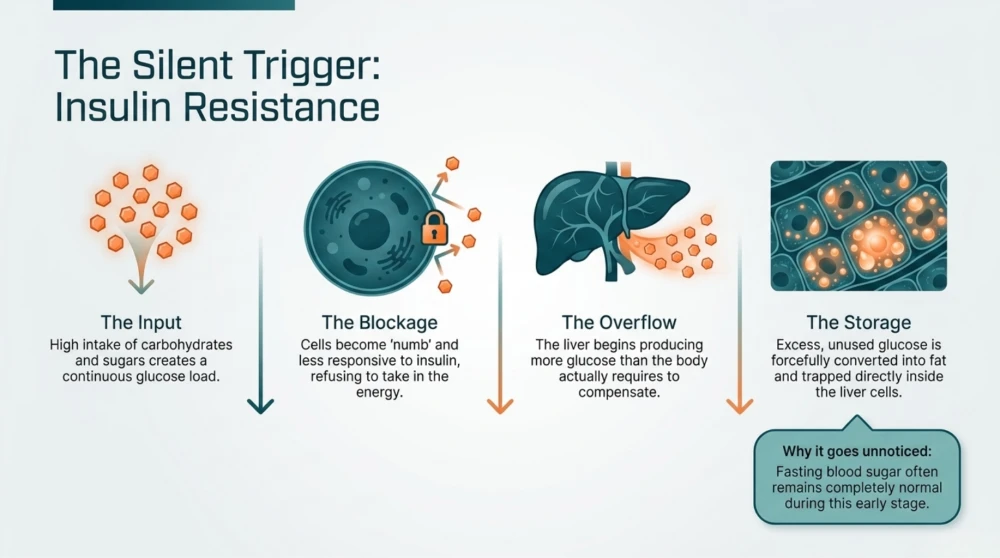
6. Insulin Resistance: The Silent Metabolic Trigger
Another major reason fatty liver is detected unexpectedly is insulin resistance.
This condition develops gradually and often without clear symptoms.
What Happens in the Body
- Cells become less responsive to insulin
- The liver produces more glucose than required
- Excess glucose is converted into fat
This leads to gradual fat accumulation in the liver.
Why It Goes Unnoticed
In early stages:
- Fasting blood sugar may remain normal
- No obvious symptoms are present
This is why many patients are surprised when fatty liver is detected.
7. Belly Fat and Liver Fat Are Closely Connected
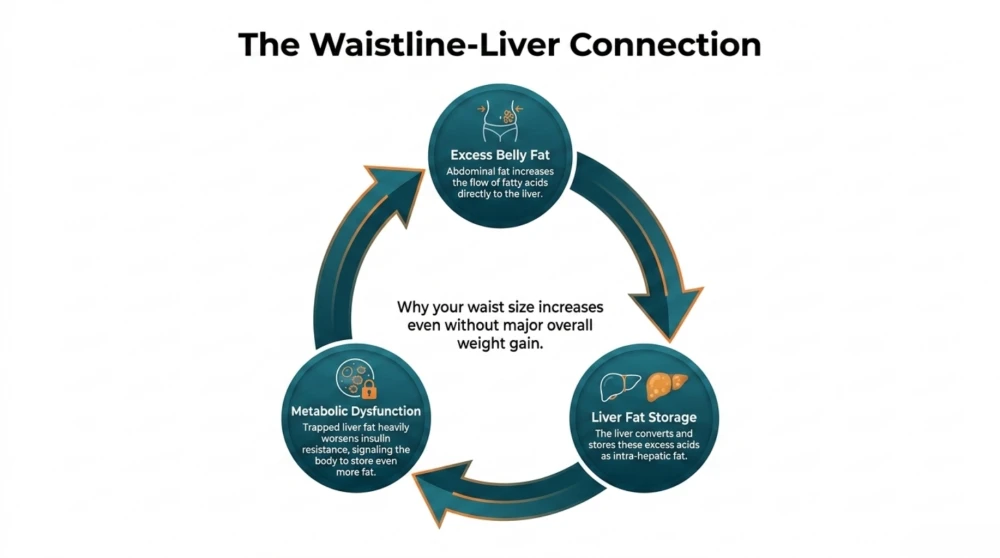
Abdominal fat (belly fat) and liver fat are strongly interconnected.
The Connection
- Excess abdominal fat increases fatty acid flow to the liver
- The liver converts this into stored fat
- This worsens insulin resistance further
This creates a cycle:
- Belly fat increases liver fat
- Liver fat worsens metabolic function
- Metabolic dysfunction increases fat storage
This is why many patients notice increasing waist size even without major weight gain.
8. Sedentary Lifestyle: The Missing Link
Modern lifestyle has significantly reduced daily physical activity. Even individuals who are not completely inactive may still have insufficient activity relative to their calorie intake.
Impact on the Liver
- Reduced fat oxidation
- Lower energy expenditure
- Increased fat storage
Over time, this contributes to fatty liver development. Since this process is gradual, it often goes unnoticed until detected on imaging.
9. Why Weight Alone Does Not Explain Fatty Liver
A common misconception is that fatty liver occurs only in overweight individuals. In reality, many patients with normal body weight also have fatty liver.
This Happens Due To:
- Poor metabolic health despite normal weight
- Higher visceral fat (fat around organs)
- Low muscle mass
This condition is sometimes referred to as “metabolically obese, normal weight”.
This is another reason why fatty liver is often detected unexpectedly during routine checkups.
10. Routine Ultrasound Reveals What Blood Tests Miss
Routine ultrasound plays a key role in detecting fatty liver.
Unlike blood tests, ultrasound can directly visualize fat accumulation in the liver.
Why This Is Important
- Liver enzymes may remain normal in early stages
- Ultrasound can detect fat before biochemical changes appear
This is why many patients discover fatty liver only after imaging.
Connecting the Dots: Why It Feels Sudden but Is Not
When patients discover fatty liver during routine checkups, it often feels like a sudden diagnosis.
But in reality, the condition has been developing silently over time due to:
- Dietary patterns
- Insulin resistance
- Low physical activity
- Gradual metabolic imbalance
The detection may be sudden, but the development is not.
This is why early lifestyle correction is so important.
What Should You Do After Fatty Liver Is Detected?
The moment fatty liver appears on a routine report, most patients ask: “Is this serious, and what should I do now?”
The important point is this:
Fatty liver detected during routine checkup is often an early-stage, reversible condition.
But ignoring it can allow progression toward more serious metabolic and liver-related problems.
The goal is not panic. The goal is timely and structured action.
What Actually Works: A Practical Strategy
Managing fatty liver is not about temporary diets or quick fixes. It requires correcting the underlying metabolic imbalance.
1. Improve Diet Quality Gradually
Instead of extreme dieting, focus on sustainable dietary changes:
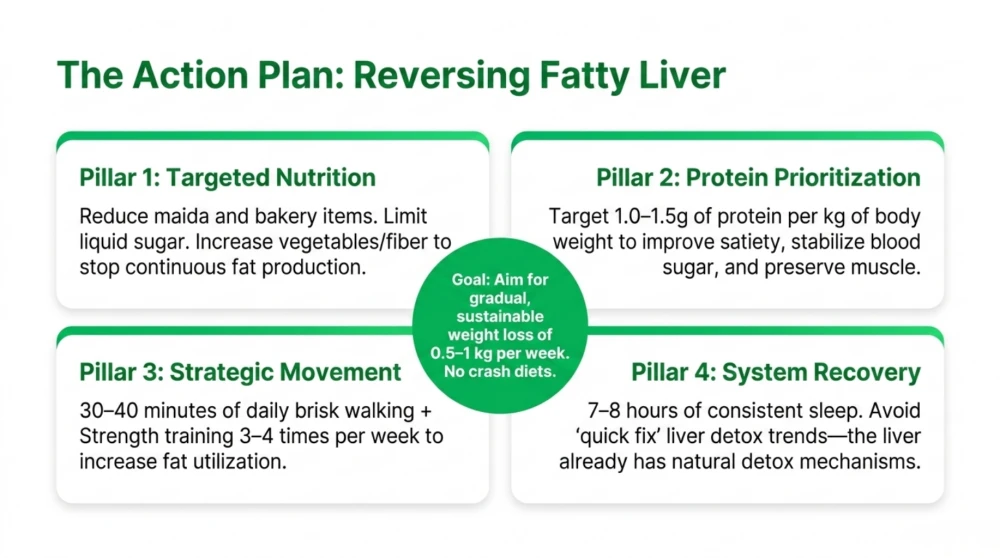
- Reduce refined carbohydrates (maida, bakery items)
- Limit sugar intake, especially sugary drinks
- Increase vegetables and fiber intake
- Ensure balanced meals with protein, fats, and controlled carbohydrates
This reduces continuous fat production in the liver.
2. Increase Protein Intake
Protein helps improve satiety and supports metabolic health.
Benefits include:
- Better appetite control
- Improved blood sugar stability
- Support for muscle preservation
A general target is 1.0–1.5 g protein per kg body weight, adjusted based on individual health status.
3. Focus on Gradual Weight Loss
Even a modest reduction in body weight can significantly reduce liver fat.
Recommended approach:
- 0.5–1 kg weight loss per week
- Avoid crash diets
Gradual reduction improves sustainability and prevents metabolic stress.
4. Increase Physical Activity
Exercise plays a critical role in reversing fatty liver.
Simple routine:
- 30–40 minutes brisk walking daily
- Strength training 3–4 times per week
This improves insulin sensitivity and increases fat utilization.
5. Improve Sleep and Stress Management
Poor sleep and chronic stress worsen metabolic health.
Key targets:
- 7–8 hours of sleep
- Consistent sleep schedule
- Stress reduction through routine activity
These factors directly influence liver metabolism.
6. Avoid Quick Fixes and Detox Trends
Many patients look for “liver detox” solutions after diagnosis.
In reality:
- The liver already has natural detox mechanisms
- Most detox products lack strong evidence
- Some may increase liver stress
The most effective approach is consistent lifestyle correction.
7. Follow a Structured Program
Random dietary changes often fail because they do not address individual metabolic needs.
A structured approach focuses on:
- Personalized diet planning
- Lifestyle correction
- Long-term sustainability
You can explore this through the Lifestyle Modification Program.
Expected Timeline: When Will Fatty Liver Improve?
Since fatty liver develops slowly, improvement also takes time.
Typical expectations:
- 4–8 weeks for early improvement
- 3–6 months for significant changes
Consistency is the most important factor.
Real-Life Clinical Insight
Many patients initially feel anxious after diagnosis. But once they understand the condition and follow a structured plan, they begin to see steady improvement.
They often report:
- Better energy levels
- Reduced bloating
- Improved weight control
- More stable metabolic parameters
This highlights the importance of early intervention and consistent effort.
Key Takeaways: What You Should Remember
- Fatty liver is often detected during routine checkups due to its silent nature
- The condition develops gradually over time
- Normal reports do not always mean normal metabolic health
- Early stages are usually reversible
- Lifestyle correction is the most effective treatment
- Quick fixes and detox trends are not reliable
- Consistency is the key to long-term success
When Should You Take It Seriously?
You should not ignore fatty liver if you have:
- Persistent fatigue
- Increasing belly fat
- Difficulty losing weight
- Borderline metabolic parameters
These are signs of underlying metabolic dysfunction.
You can book a consultation here: Book Appointment
Written by Dr. Pankaj Kumar, General & Lifestyle Physician, Dwarka, New Delhi