
















- 21st May 2026
Table of Contents
- The Human Stress Response Was Originally Designed for Survival
- Modern Stress Rarely Ends Completely
- How Chronic Stress Affects Metabolism
- Why Stress Commonly Increases Belly Fat
- The Stress-Sleep-Metabolism Connection
- Why Stress Changes Food Behavior
- The Body Slowly Adapts to Chronic Stress
- Why This Matters in Modern Metabolic Healthcare
- How Chronic Stress Gradually Creates Insulin Resistance
- Why Chronic Stress Promotes Inflammation Throughout the Body
- Why Blood Pressure Often Rises During Chronic Stress
- The Thyroid-Stress Connection Is Often Overlooked
- Why High Achievers Frequently Develop Burnout-Related Health Problems
- Emotional Exhaustion Changes Daily Behavior Quietly
- The Most Dangerous Part: Chronic Stress Starts Feeling “Normal”
- What Actually Helps: Breaking the Stress-Metabolic Disease Cycle
- Why Recovery Is More Important Than Most People Realize
- Sleep Restoration Is One of the Most Powerful Metabolic Interventions
- Why Physical Activity Improves Stress Resilience
- Why Nutrition Becomes More Important During Stressful Phases
- Why Nervous System Recovery Requires Boundaries
- Why Sustainable Structure Works Better Than Temporary Motivation
- Why Stress Management Is Actually Metabolic Medicine
- What I Commonly Observe in Clinical Practice
- Key Takeaways: What You Should Remember
- When Should You Pay Attention to Stress-Related Metabolic Changes?
One of the biggest changes in modern healthcare is the growing realization that stress does not affect only the mind.
For many years, stress was viewed mainly as an emotional or psychological problem. People associated stress with:
- Anxiety
- Overthinking
- Mental exhaustion
- Mood changes
But modern metabolic research and clinical observations now show something much deeper. Chronic stress gradually affects the entire body.
It influences metabolism, hormones, sleep quality, appetite regulation, inflammation, fat distribution, cardiovascular function, and even liver health. This is exactly why understanding why stress and lifestyle diseases often occur together has become extremely important in modern medical practice.
In clinical settings today, many patients with:
- Fatty liver
- Insulin resistance
- Weight gain
- High blood pressure
- Poor sleep
- High triglycerides
also describe prolonged periods of chronic stress, burnout, irregular routines, and mental overload. This overlap is not accidental.
The body responds to chronic stress biologically, not just emotionally.
The Human Stress Response Was Originally Designed for Survival
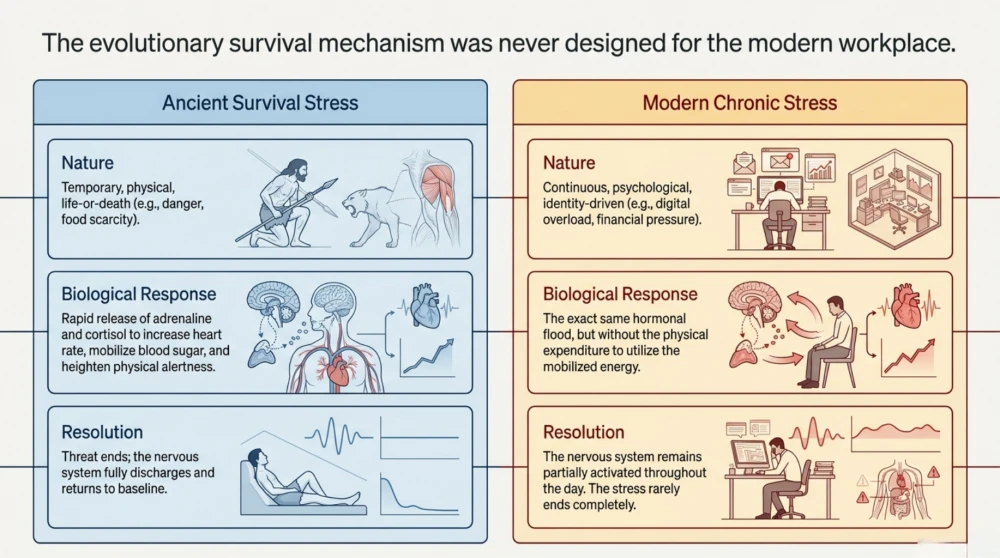
To understand the connection between stress and lifestyle disease, it is important to first understand how the stress response actually works. The human body evolved to handle short-term survival stress.
In ancient environments, stress usually occurred during temporary threats such as:
- Danger
- Physical conflict
- Food scarcity
- Environmental threats
During these situations, the body activated powerful survival mechanisms designed to improve immediate performance.
This included releasing stress hormones such as:
- Cortisol
- Adrenaline
- Noradrenaline
These hormones increased:
- Heart rate
- Blood sugar availability
- Mental alertness
- Energy mobilization
In short-term situations, this response was highly protective. The problem is that modern stress is very different.
Modern Stress Rarely Ends Completely
One of the biggest differences today is that stress has become continuous rather than temporary.
Modern professionals often experience prolonged low-grade stress from:
- Work pressure
- Financial concerns
- Digital overload
- Poor sleep
- Social pressure
- Continuous mental stimulation
Unlike ancient survival stress, modern stress often does not resolve fully. The nervous system remains partially activated throughout the day.
And when the body stays in prolonged stress mode, metabolic consequences gradually begin appearing.
How Chronic Stress Affects Metabolism
One of the most important effects of prolonged stress is disruption of metabolic regulation.
When cortisol remains elevated for long durations, the body starts changing how it handles:
- Energy production
- Appetite regulation
- Fat storage
- Blood sugar balance
Initially, these changes may feel subtle.
A person may simply notice:
- More cravings
- Reduced energy
- Poor sleep
- Increasing belly fat
But over time, these repeated physiological changes begin reshaping metabolism itself. This is one reason stress and lifestyle diseases frequently develop together.
Why Stress Commonly Increases Belly Fat
One of the clearest physical effects of chronic stress is increasing visceral fat accumulation. Visceral fat is the fat stored around internal abdominal organs.
This type of fat is metabolically active and strongly linked with:
- Insulin resistance
- Fatty liver
- High triglycerides
- Inflammation
- Cardiovascular risk
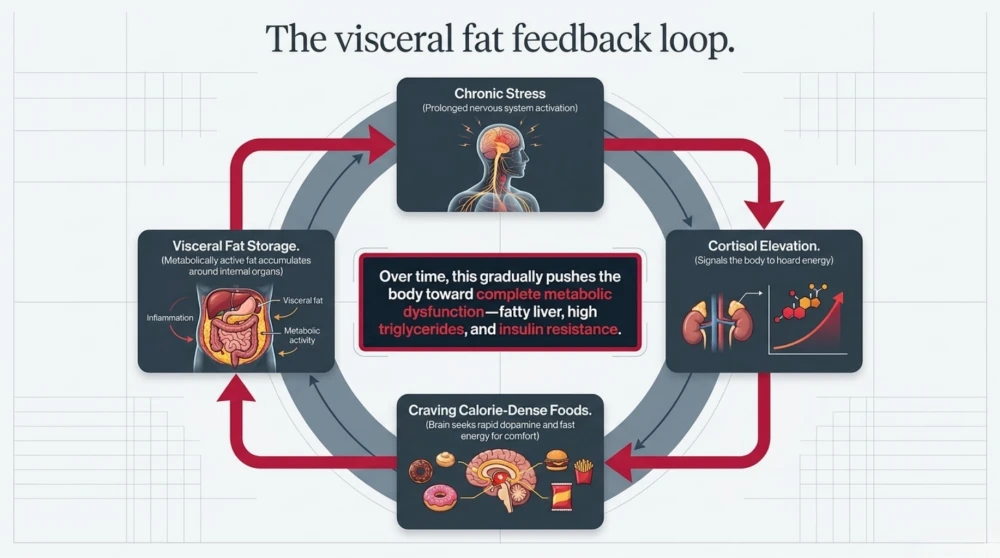
Cortisol plays an important role in this process. When stress hormones remain elevated repeatedly, the body becomes more likely to store fat around the abdominal region.
At the same time, stress also increases cravings for calorie-dense comfort foods.
This combination creates a powerful cycle:
- Stress increases cravings
- Eating patterns worsen
- Visceral fat increases
- Metabolic health declines further
Over time, this gradually pushes the body toward metabolic dysfunction.
The Stress-Sleep-Metabolism Connection
One of the most underestimated links in modern healthcare is the interaction between stress and sleep. Many individuals under chronic stress begin sleeping poorly without fully realizing the metabolic consequences.
Stress commonly affects:
- Sleep timing
- Sleep depth
- Recovery quality
- Nighttime nervous system relaxation
When sleep quality deteriorates, metabolism becomes even more unstable.
Poor sleep affects:
- Insulin sensitivity
- Appetite hormones
- Stress tolerance
- Energy regulation
- Craving behavior
This creates a dangerous feedback loop where stress worsens sleep, and poor sleep worsens metabolic health further.
Why Stress Changes Food Behavior
One of the biggest misconceptions about unhealthy eating is the belief that it is always caused by lack of discipline. In reality, stress biology strongly influences food choices.
When the brain becomes mentally exhausted, it naturally begins preferring foods that provide:
- Fast energy
- Comfort
- Rapid dopamine reward
This is why stressful periods often increase cravings for:
- Sugary foods
- Processed snacks
- Late-night eating
- Restaurant food
Over time, this pattern becomes biologically reinforced. The brain gradually starts associating food with emotional recovery.
This is why chronic stress frequently contributes to:
- Weight gain
- Fatty liver
- High triglycerides
- Insulin resistance
The Body Slowly Adapts to Chronic Stress
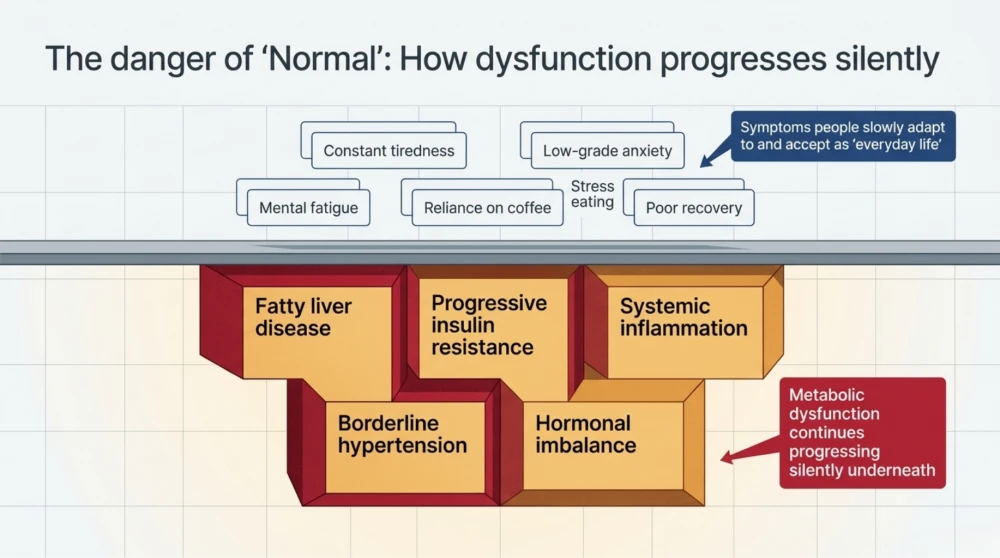
One reason stress-related metabolic dysfunction becomes dangerous is because the body gradually adapts to feeling unwell.
People begin normalizing:
- Constant tiredness
- Poor sleep
- Mental fatigue
- Low energy
- Stress eating
because these symptoms become part of everyday life. Meanwhile, lifestyle diseases slowly continue progressing underneath.
Why This Matters in Modern Metabolic Healthcare
Modern lifestyle diseases rarely develop because of one isolated unhealthy behavior.
Instead, they usually emerge through long-term interaction between:
- Stress
- Poor sleep
- Irregular eating
- Reduced physical activity
- Mental overload
This is why structured metabolic approaches like the Lifestyle Modification Program focus not only on food and exercise, but also on rebuilding recovery, routine stability, and long-term metabolic balance.
How Chronic Stress Gradually Creates Insulin Resistance
One of the strongest biological links between stress and lifestyle disease is insulin resistance. Many people assume insulin resistance develops only because of sugar intake or weight gain. While food habits certainly matter, chronic stress itself can significantly alter how the body handles glucose and energy.
When stress becomes prolonged, cortisol levels remain elevated for longer durations than the body was originally designed to tolerate. Cortisol is often called the “stress hormone,” but its effects go far beyond emotions.
It directly influences:
- Blood sugar regulation
- Fat storage
- Appetite behavior
- Energy availability
Under short-term stress, cortisol temporarily increases blood sugar availability to improve survival performance. But when stress becomes chronic, this mechanism starts becoming metabolically harmful.
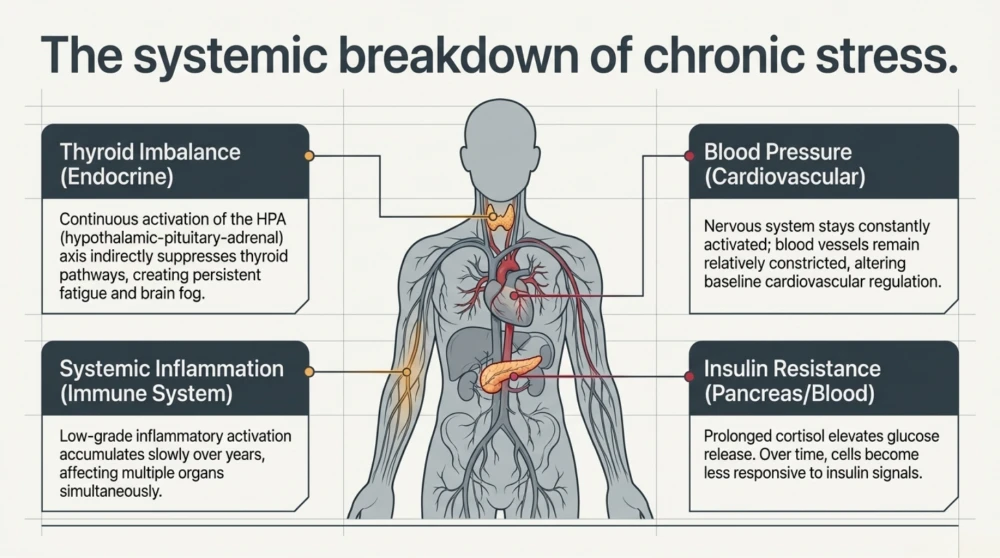
The body remains in a repeated state of elevated glucose release and energy mobilization even when there is no physical activity requiring that energy. Over time, cells gradually become less responsive to insulin signals. This is how chronic stress slowly contributes to insulin resistance.
Many professionals under prolonged stress eventually notice:
- Increasing belly fat
- Fatigue after meals
- Persistent cravings
- Difficulty losing weight
- Borderline blood sugar abnormalities
Often, these are early signs of worsening metabolic flexibility.
Why Chronic Stress Promotes Inflammation Throughout the Body
Another major reason stress and lifestyle diseases frequently occur together is inflammation. Modern chronic stress creates low-grade inflammatory activation throughout the body. Initially, this inflammation may remain silent.
The individual may simply feel:
- Tired
- Mentally exhausted
- Physically drained
- Less resilient
But internally, inflammatory pathways gradually begin affecting multiple systems simultaneously.
Over time, chronic inflammation contributes to:
- Insulin resistance
- Fatty liver
- Cardiovascular dysfunction
- Hormonal imbalance
- Metabolic slowing
This is one reason stress-related metabolic disease often develops gradually instead of dramatically. The inflammatory burden accumulates slowly over years.
Why Blood Pressure Often Rises During Chronic Stress
One of the most common physical effects of prolonged stress exposure is increasing blood pressure variability.
When the nervous system remains continuously activated:
- Heart rate increases more easily
- Blood vessels remain relatively constricted
- Stress hormones repeatedly stimulate cardiovascular activity
Initially, these changes may appear temporary. A person may only notice elevated readings during stressful periods. But over time, repeated activation gradually starts affecting baseline cardiovascular regulation itself.
This is why many individuals with demanding work schedules eventually develop:
- Borderline hypertension
- Morning blood pressure elevation
- Persistent cardiovascular strain
Importantly, stress-related blood pressure changes are rarely isolated.
They usually occur alongside:
- Poor sleep
- Weight gain
- Sedentary behavior
- Irregular eating
This combination significantly increases long-term cardiovascular risk.
The Thyroid-Stress Connection Is Often Overlooked
Another important hormonal system affected by chronic stress is thyroid regulation. The body’s endocrine system functions like an interconnected network.
When stress becomes prolonged, the hypothalamic-pituitary-adrenal (HPA) axis continuously remains activated. This indirectly affects other hormonal pathways, including thyroid regulation.
Many individuals under chronic stress gradually experience symptoms such as:
- Fatigue
- Brain fog
- Reduced motivation
- Weight gain
- Poor metabolic efficiency
These symptoms often overlap heavily with thyroid dysfunction. While stress itself may not directly “cause” thyroid disease in every individual, prolonged stress significantly worsens overall hormonal balance and metabolic resilience.
Why High Achievers Frequently Develop Burnout-Related Health Problems
One pattern commonly observed in modern clinical practice is that highly driven individuals often ignore early warning signs for long periods.
High achievers frequently continue functioning despite:
- Poor sleep
- Constant fatigue
- Mental overload
- Physical exhaustion
- Emotional depletion
Initially, this ability to “push through” may appear productive. But biologically, the body eventually begins paying the metabolic cost.
Many professionals normalize:
- Dependence on caffeine
- Late-night work
- Irregular meals
- Reduced exercise
- Continuous digital stimulation
because these behaviors become integrated into modern work identity.
Over time, however, this pattern gradually contributes to:
- Burnout
- Insulin resistance
- Fatty liver
- Hypertension
- Weight gain
- Sleep disruption
This is why stress-related metabolic disease is increasingly common even in relatively young professionals today.
Emotional Exhaustion Changes Daily Behavior Quietly
One important reason stress becomes metabolically harmful is that emotional exhaustion changes everyday behavior in subtle ways. As mental fatigue increases, the brain naturally starts preferring convenience over long-term health optimization.
This gradually affects:
- Meal preparation
- Exercise consistency
- Sleep discipline
- Recovery habits
Eventually, the individual may feel trapped in a cycle where:
- Stress reduces healthy behavior
- Metabolic health worsens
- Energy declines further
- Stress tolerance becomes even weaker
This cycle explains why stress and lifestyle diseases so commonly reinforce each other.
The Most Dangerous Part: Chronic Stress Starts Feeling “Normal”
Perhaps the biggest reason stress-related lifestyle disease becomes dangerous is gradual normalization.
People slowly adapt to:
- Constant tiredness
- Poor recovery
- Mental fatigue
- Low-grade anxiety
- Reduced metabolic energy
because these symptoms become part of everyday life. Meanwhile, metabolic dysfunction continues progressing silently underneath.
What Actually Helps: Breaking the Stress-Metabolic Disease Cycle
Once people understand that stress and lifestyle diseases often occur together, the next question naturally becomes: “What should I actually do to protect my metabolism in modern life?” The answer is not simply “avoid stress.”
Stress itself is an unavoidable part of human life. The real goal is improving the body’s ability to recover, regulate, and maintain metabolic balance despite modern demands. This requires a much broader approach than temporary relaxation techniques or short-term motivation.
In clinical practice, the individuals who improve most sustainably are usually the ones who gradually rebuild:
- Sleep quality
- Daily rhythm
- Movement consistency
- Recovery capacity
- Metabolic stability
rather than focusing only on symptom suppression.
Why Recovery Is More Important Than Most People Realize
One of the biggest problems in modern professional life is that many individuals remain physiologically activated for most of the day. Even when work technically ends, the nervous system often continues operating in “alert mode.”
People continue:
- Checking emails
- Responding to messages
- Thinking about pending tasks
- Scrolling through stimulating content
- Remaining mentally engaged late into the night
This creates prolonged nervous system activation without adequate recovery periods. Over time, the body loses its ability to fully relax and restore itself efficiently.
This is why stress-related metabolic dysfunction cannot improve unless recovery itself becomes intentional. Recovery is not laziness. Recovery is a biological requirement for hormonal balance, metabolic repair, nervous system regulation, and long-term resilience.
Sleep Restoration Is One of the Most Powerful Metabolic Interventions
One of the strongest tools for reducing stress-related metabolic dysfunction is improving sleep quality. Sleep affects almost every major system involved in lifestyle disease.
When sleep becomes inadequate or irregular:
- Cortisol regulation worsens
- Appetite hormones become unstable
- Insulin sensitivity declines
- Inflammation increases
- Mental recovery decreases
This creates a physiological environment where:
- Cravings become stronger
- Fatigue increases
- Weight regulation becomes harder
- Stress tolerance declines
Unfortunately, many professionals attempt to compensate for poor recovery through:
- Excess caffeine
- Sugar intake
- Energy drinks
- Late-night eating
while the real issue remains chronic sleep disruption. Even moderate improvements in sleep timing and duration often create noticeable changes in:
- Energy stability
- Mental clarity
- Appetite regulation
- Exercise consistency
- Emotional resilience
Why Physical Activity Improves Stress Resilience
Exercise is often viewed only as a weight-loss tool. But biologically, regular movement also improves the nervous system’s ability to handle stress.
Physical activity helps regulate:
- Stress hormone balance
- Insulin sensitivity
- Inflammatory pathways
- Sleep quality
- Mental recovery
This is one reason physically active individuals often tolerate psychological stress more effectively. Importantly, exercise does not need to be extreme to provide metabolic benefit.
Many busy professionals fail because they assume health improvement requires highly demanding routines. In reality, consistency matters much more than intensity.
Even moderate but regular activity such as:
- Walking
- Strength training
- Short home workouts
- Movement breaks during work
can significantly improve stress-related metabolic dysfunction over time.
Why Nutrition Becomes More Important During Stressful Phases
Many individuals assume unhealthy eating during stressful periods is purely emotional weakness. But chronic stress biologically changes appetite behavior.
Under prolonged mental exhaustion, the brain naturally begins preferring foods that provide:
- Rapid energy
- Comfort
- Quick dopamine reward
This is why stress often increases cravings for:
- Sugar
- Processed snacks
- Fast food
- Late-night eating
The problem is that these foods temporarily improve mood while worsening metabolic health long term.
This creates a cycle where:
- Stress increases cravings
- Food choices worsen
- Energy crashes become stronger
- Metabolic instability increases
- Stress tolerance weakens further
This is why stable meal structure becomes especially important during stressful work periods. The goal should not be perfection. The goal should be reducing metabolic chaos.
Why Nervous System Recovery Requires Boundaries
One of the most overlooked health strategies today is reducing unnecessary nervous system stimulation. Modern life continuously competes for attention. Notifications, screens, multitasking, social media, and constant information exposure keep the brain activated for prolonged durations.
This creates cognitive fatigue even in individuals who are not physically active.
Many professionals now experience a unique combination of:
- Mental exhaustion
- Physical inactivity
- Poor sleep
- Metabolic dysfunction
This combination strongly contributes to modern lifestyle disease patterns. Creating intentional recovery boundaries becomes increasingly important.
This may include:
- Reducing late-night screen exposure
- Creating digital-free recovery periods
- Protecting sleep timing
- Allowing periods of genuine mental disengagement
These adjustments significantly improve long-term nervous system resilience.
Why Sustainable Structure Works Better Than Temporary Motivation
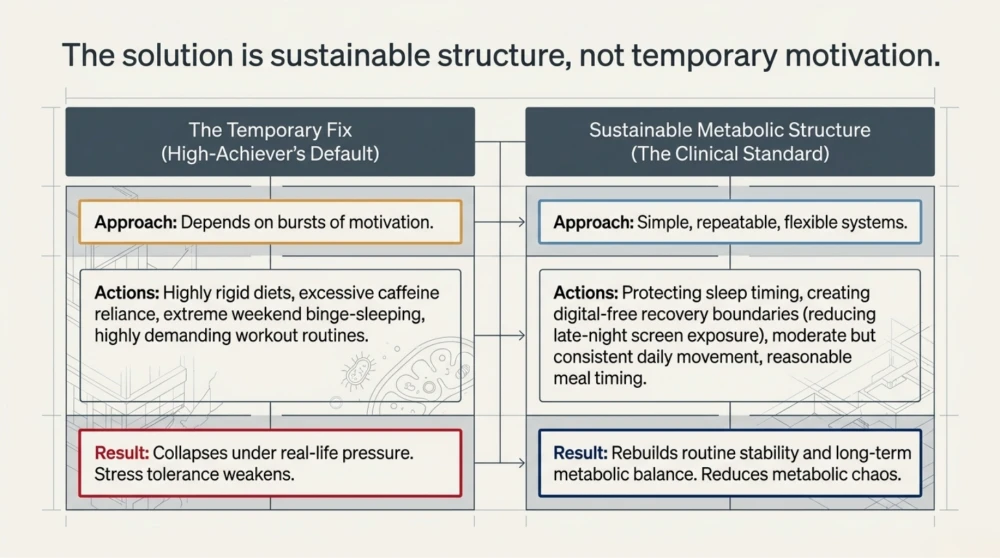
Many individuals repeatedly depend on bursts of motivation to improve their health. But motivation naturally fluctuates.
Stressful work periods eventually return, and highly rigid health plans often collapse under real-life pressure. This is why sustainable structure matters more than temporary intensity.
Long-term metabolic improvement usually becomes more successful when healthy behaviors are:
- Simple
- Repeatable
- Flexible
- Realistically maintainable
For example:
- Moderate exercise performed consistently
- Reasonable meal timing structure
- Sleep protection during busy weeks
- Reducing excessive lifestyle chaos
These systems produce much better long-term outcomes than extreme short-term efforts.
Why Stress Management Is Actually Metabolic Medicine
One of the biggest shifts in modern healthcare is recognizing that stress management is not simply about emotional comfort.
It is deeply connected with:
- Hormonal balance
- Metabolic regulation
- Inflammation control
- Cardiovascular health
- Insulin sensitivity
This is why chronic stress frequently appears alongside:
- Fatty liver
- Hypertension
- Weight gain
- Insulin resistance
- Poor sleep
The relationship is biological, not coincidental. This is exactly why structured metabolic approaches often focus on rebuilding recovery capacity and long-term routine stability rather than only prescribing temporary dietary restriction.
You can explore this broader and more sustainable approach through the Lifestyle Modification Program.
What I Commonly Observe in Clinical Practice
Many patients believe their health problems appeared suddenly. But when we carefully review their lifestyle history, the metabolic decline usually began gradually during prolonged periods of stress and lifestyle disruption.
Over time:
- Sleep reduced
- Stress increased
- Exercise became inconsistent
- Meal patterns became irregular
- Mental recovery disappeared
Eventually the body started showing visible consequences through:
- Weight gain
- Fatty liver
- High triglycerides
- Persistent fatigue
- High blood pressure
- Reduced metabolic flexibility
This is why early lifestyle correction matters far more than waiting for severe disease to appear first.
Key Takeaways: What You Should Remember
- Chronic stress affects metabolism, hormones, sleep, appetite, and inflammation
- Stress and lifestyle diseases often develop together gradually over time
- Prolonged cortisol elevation contributes to belly fat and insulin resistance
- Poor sleep significantly worsens stress-related metabolic dysfunction
- Stress changes appetite behavior and promotes unhealthy food choices
- Regular movement improves both metabolic health and stress resilience
- Sustainable recovery systems work better than temporary motivation
When Should You Pay Attention to Stress-Related Metabolic Changes?
You should take chronic stress seriously if you notice:
- Persistent fatigue
- Poor sleep quality
- Increasing belly fat
- Frequent cravings
- Reduced exercise consistency
- Abnormal metabolic health reports
Early correction can significantly reduce long-term metabolic and cardiovascular risk.
You can book a consultation here:
Book Appointment
Written by Dr. Pankaj Kumar, General & Lifestyle Physician, Dwarka, New Delhi