













- 29th April 2026
Table of Contents
- The Risk You Cannot Feel
- Why Blood Pressure Alone Does Not Tell the Full Story
- 1. Early Detection of Hypertension
- 2. Identifying Fluctuating Blood Pressure Patterns
- 3. Detecting “Masked Hypertension”
- 4. Recognizing Early Signs of Cardiovascular Risk
- Why Silent Risks Are Dangerous
- Why This Matters in Clinical Practice
- 5. Identifying “White Coat Hypertension”
- 6. Monitoring Response to Lifestyle Changes
- 7. Preventing Long-Term Complications
- 8. Detecting Morning Blood Pressure Surges
- 9. Understanding Lifestyle Impact in Real Time
- 10. Detecting Early Metabolic Changes
- Common Mistakes in Blood Pressure Monitoring
- 1. Checking Only When Symptoms Appear
- 2. Inconsistent Measurement Timing
- 3. Incorrect Technique
- 4. Ignoring Trends
- Connecting the Dots: Why Monitoring Is Essential
- What Actually Works: How to Monitor Blood Pressure Effectively
- 1. Follow a Consistent Monitoring Routine
- 2. Use Proper Technique
- 3. Track Trends, Not Individual Numbers
- 4. Correlate BP with Lifestyle Habits
- 5. Combine Monitoring with Lifestyle Correction
- 6. Know When to Seek Medical Advice
- 7. Follow a Structured Monitoring Plan
- Expected Benefits of Regular Monitoring
- Real-Life Clinical Insight
- Key Takeaways: What You Should Remember
The Risk You Cannot Feel
One of the most dangerous aspects of high blood pressure is that it often has no obvious symptoms. Many people feel completely normal while their blood pressure is gradually rising.
This is why hypertension is often called a “silent disease.”
In clinical practice, I frequently see patients who are surprised when they discover elevated blood pressure during a routine check or health camp. The common response is: “Doctor, I feel absolutely fine. How can my BP be high?”
The answer lies in the fact that damage can occur silently over time, without producing noticeable symptoms. This is where regular blood pressure monitoring becomes essential.
Understanding why blood pressure monitoring helps detect silent risks can prevent long-term complications and improve overall health outcomes.
Why Blood Pressure Alone Does Not Tell the Full Story
Most people think of blood pressure as a single reading. But in reality, it is a trend over time that matters more than individual values.
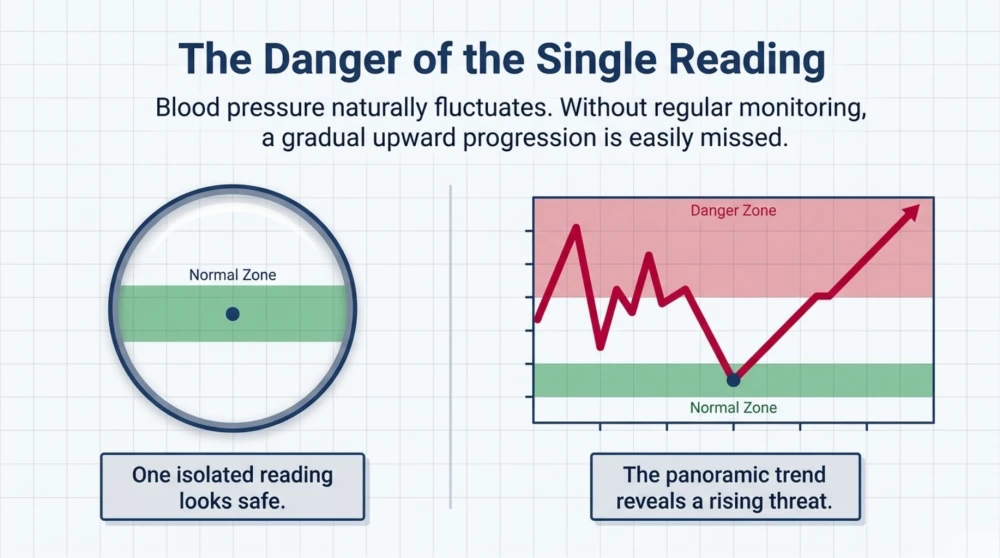
Blood pressure is influenced by multiple factors, including:
- Dietary habits
- Physical activity
- Stress levels
- Sleep patterns
This is why readings can vary from day to day. Without regular monitoring, these variations can go unnoticed until the condition becomes more serious.
1. Early Detection of Hypertension
One of the most important benefits of blood pressure monitoring is early detection. Hypertension usually develops gradually.
Initially, readings may be:
- Normal
- Borderline
- Occasionally elevated
Without monitoring, this progression is missed.
Why Early Detection Matters
Detecting rising trends early allows for:
- Lifestyle modification
- Prevention of disease progression
- Reduced risk of complications
This is especially important because early-stage hypertension is often reversible with proper intervention.
2. Identifying Fluctuating Blood Pressure Patterns
Many patients do not have consistently high blood pressure. Instead, they have fluctuating readings. This may include:
- Normal readings at home
- High readings during stress
- Occasional spikes
These patterns are important because they indicate underlying physiological changes.
3. Detecting “Masked Hypertension”
Masked hypertension is a condition where blood pressure appears normal in clinical settings but is elevated in daily life.
Why This Happens
- Stress-free environment in clinics
- Differences in activity levels
- Lifestyle-related fluctuations
Without home monitoring, this condition can remain undetected. Over time, masked hypertension can lead to the same complications as sustained high blood pressure.
4. Recognizing Early Signs of Cardiovascular Risk
Blood pressure is not just a number—it is an indicator of overall cardiovascular health. Gradual increases in BP may signal:
- Vascular stiffness
- Metabolic imbalance
- Early cardiovascular risk
Regular monitoring helps identify these changes before symptoms develop.
Why Silent Risks Are Dangerous
The biggest challenge with blood pressure-related risks is that they develop silently. In early stages, most individuals do not experience:
- Headache
- Dizziness
- Chest discomfort
This creates a false sense of security. By the time symptoms appear, significant damage may already have occurred.
Why This Matters in Clinical Practice
In many patients, the first clue of a problem comes from a routine BP reading. Regular monitoring allows us to:
- Track trends over time
- Identify early abnormalities
- Intervene before complications develop
This is why structured approaches like the Lifestyle Modification Program emphasize regular monitoring along with lifestyle correction.
5. Identifying “White Coat Hypertension”
Not all elevated readings in a clinic reflect true hypertension. Some individuals experience higher blood pressure only in medical settings due to anxiety. This is known as white coat hypertension.
Why This Matters
- Clinic readings may appear high
- Home readings may remain normal
- Misinterpretation can lead to unnecessary concern or treatment
Regular home blood pressure monitoring helps differentiate between true hypertension and temporary anxiety-related elevations.
6. Monitoring Response to Lifestyle Changes
One of the biggest advantages of blood pressure monitoring is the ability to track how your body responds to lifestyle modifications.
When patients improve:
- Diet quality
- Physical activity
- Sleep patterns
- Stress management
These changes are reflected in blood pressure trends.
Why This Is Important
Seeing improvement in BP readings reinforces positive behavior and helps maintain long-term consistency.
7. Preventing Long-Term Complications
Uncontrolled blood pressure can lead to serious complications over time. These include:
- Heart disease
- Stroke
- Kidney damage
- Eye problems
Regular monitoring helps detect rising trends early, allowing timely intervention.
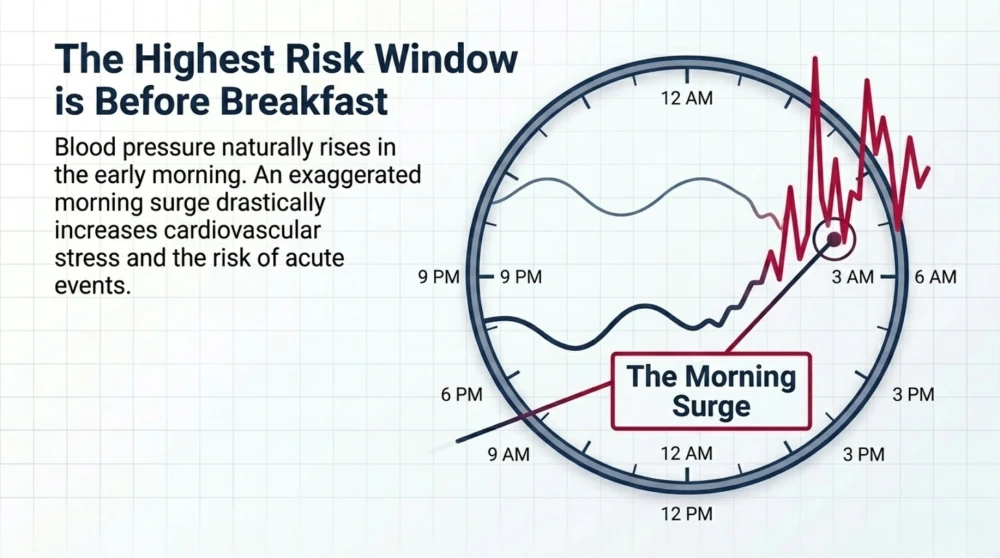
8. Detecting Morning Blood Pressure Surges
Blood pressure often rises in the early morning hours. In some individuals, this rise is exaggerated, leading to what is called a morning surge.
Why It Matters
- Higher risk of heart attack and stroke in the morning
- Increased cardiovascular stress
Without regular monitoring, these patterns remain undetected.
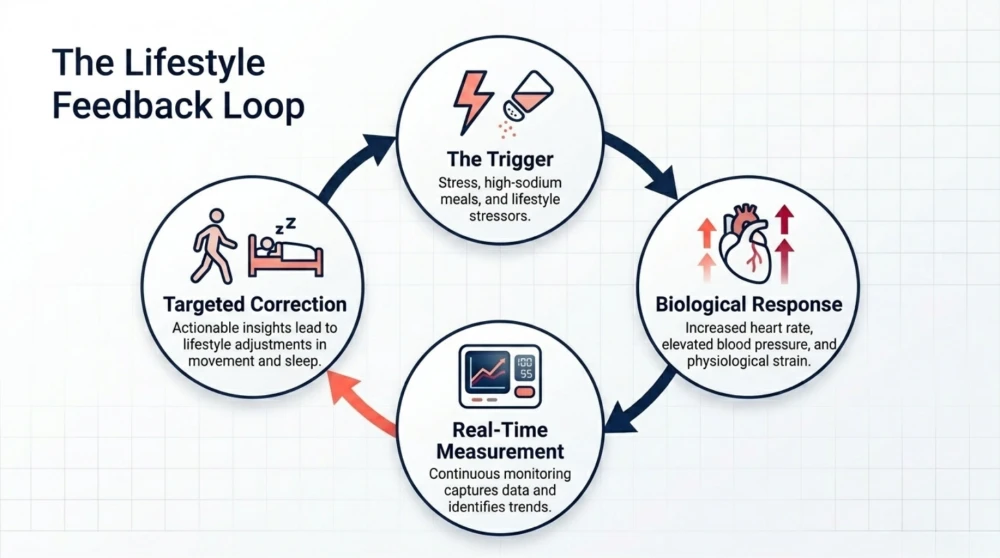
9. Understanding Lifestyle Impact in Real Time
Blood pressure monitoring provides immediate feedback on how daily habits affect your body.
Examples
- High-salt meal → temporary increase in BP
- Stressful day → elevated readings
- Good sleep → improved readings
This helps patients understand the direct link between lifestyle and health.
10. Detecting Early Metabolic Changes
Blood pressure changes often occur alongside other metabolic disturbances. Gradual increases in BP may indicate:
- Insulin resistance
- Weight gain
- Early metabolic syndrome
This makes BP monitoring a useful tool for identifying broader health risks.
Common Mistakes in Blood Pressure Monitoring
1. Checking Only When Symptoms Appear
Most people check BP only when they feel unwell, missing silent changes.
2. Inconsistent Measurement Timing
Irregular timing makes it difficult to identify trends.
3. Incorrect Technique
Improper cuff size or posture can lead to inaccurate readings.
4. Ignoring Trends
Focusing on single readings instead of patterns reduces the value of monitoring.
Connecting the Dots: Why Monitoring Is Essential
If you look at all these factors together, it becomes clear that blood pressure monitoring is not just about numbers.
It is about understanding:
- Your body’s response to lifestyle
- Early signs of disease
- Long-term health trends
This is why regular monitoring plays a crucial role in preventive healthcare.
What Actually Works: How to Monitor Blood Pressure Effectively
Knowing that blood pressure monitoring helps detect silent risks is only useful if it is done correctly. Many patients monitor BP, but due to incorrect methods or inconsistent tracking, they do not get meaningful insights.
The goal is not just to check BP occasionally, but to understand trends over time.
1. Follow a Consistent Monitoring Routine
Consistency is the most important factor in BP monitoring.
Best practice:
- Measure BP at the same time daily
- Prefer morning and evening readings
- Take 2 readings and calculate the average
This helps reduce variability and improves accuracy.
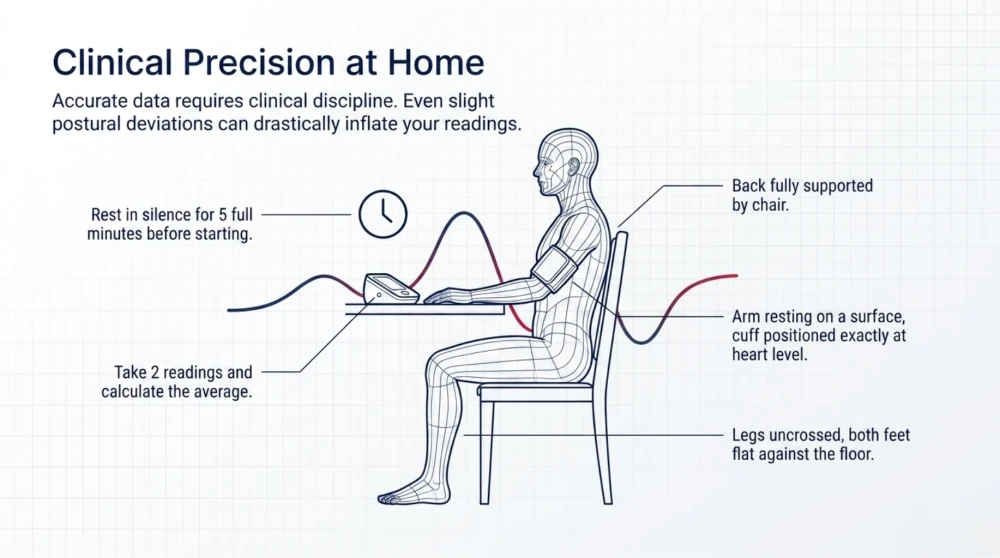
2. Use Proper Technique
Incorrect measurement technique is a common reason for misleading readings.
Key guidelines:
- Sit comfortably with back supported
- Keep feet flat on the floor
- Place the cuff at heart level
- Rest for 5 minutes before measuring
Following these steps ensures reliable results.
3. Track Trends, Not Individual Numbers
One of the biggest mistakes is focusing on a single reading.
Blood pressure varies throughout the day. What matters is the overall pattern.
Look for:
- Gradual increase over weeks
- Consistent borderline readings
- Frequent spikes
These trends provide more meaningful information than isolated values.
4. Correlate BP with Lifestyle Habits
Use BP monitoring as a feedback tool. Observe how your readings change with:
- Diet (especially salt intake)
- Physical activity
- Stress levels
- Sleep quality
This helps identify triggers and improve lifestyle decisions.
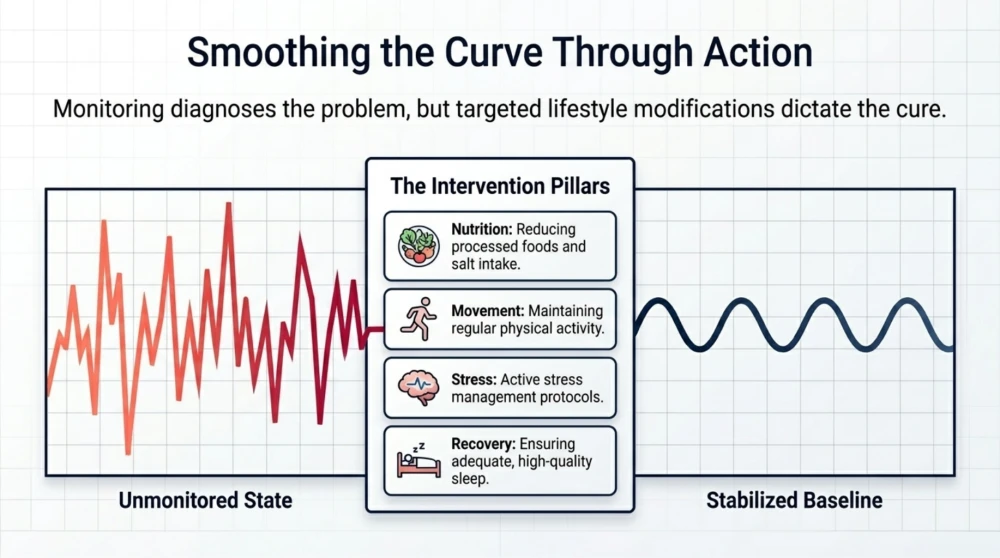
5. Combine Monitoring with Lifestyle Correction
Monitoring alone is not enough. It must be combined with appropriate action. Key lifestyle interventions include:
- Reducing salt and processed food intake
- Maintaining regular physical activity
- Managing stress effectively
- Ensuring adequate sleep
These changes improve blood pressure trends over time.
6. Know When to Seek Medical Advice
Regular monitoring helps identify when professional evaluation is needed. Consult a doctor if you notice:
- Consistently elevated readings
- Frequent fluctuations
- Rising trend over time
Early intervention can prevent complications. You can book a consultation here: Book Appointment
7. Follow a Structured Monitoring Plan
A structured plan improves both monitoring and management.
This includes:
- Regular tracking schedule
- Diet and activity alignment
- Long-term consistency
Expected Benefits of Regular Monitoring
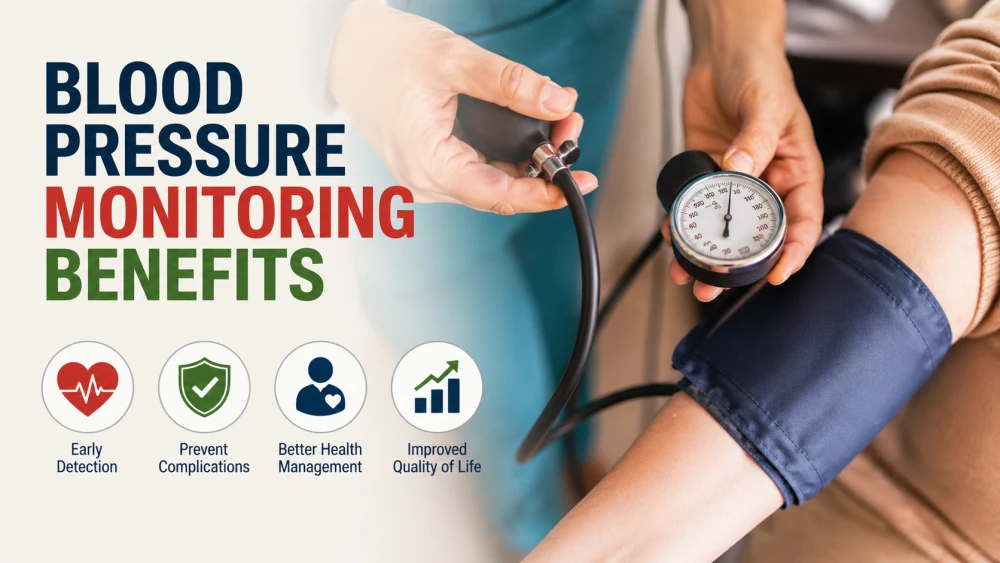
When done correctly, blood pressure monitoring provides multiple benefits:
- Early detection of hypertension
- Better control of BP trends
- Reduced risk of complications
- Improved awareness of lifestyle impact
Over time, this leads to better overall health outcomes.
Real-Life Clinical Insight
Patients who monitor their BP regularly often have better control compared to those who check only occasionally.
They are able to:
- Identify triggers early
- Make timely lifestyle adjustments
- Avoid sudden complications
This highlights the importance of proactive health monitoring.
Key Takeaways: What You Should Remember
- Blood pressure monitoring helps detect silent risks early
- Hypertension often develops without symptoms
- Tracking trends is more important than single readings
- Correct technique is essential for accurate results
- Lifestyle habits directly influence BP trends
- Regular monitoring supports preventive healthcare
- Early action can prevent long-term complications
You can book a consultation here: Book Appointment
Written by Dr. Pankaj Kumar, General & Lifestyle Physician, Dwarka, New Delhi