
















- 19th May 2026
Table of Contents
- The Thyroid Gland Functions Like a Metabolic Control Center
- Why Energy Levels Change So Dramatically
- Why Weight Regulation Becomes Difficult
- The Brain Is Highly Sensitive to Thyroid Hormones
- Digestive Function Slows Down Too
- Skin, Hair, and Nails Reflect Thyroid Health
- Why the Cardiovascular System Is Also Affected
- Why Symptoms Often Feel “Disconnected”
- Why Early Recognition Matters
- The Thyroid and Metabolism Are Deeply Connected
- Why Insulin Resistance Commonly Overlaps with Thyroid Dysfunction
- The Liver-Thyroid Connection Is Often Ignored
- Hormonal Systems Constantly Influence Each Other
- Why Sleep Quality Changes in Thyroid Dysfunction
- Stress Amplifies Thyroid-Related Symptoms
- Autoimmune Thyroid Disease Affects the Entire Body
- Why Symptoms Vary So Much Between Individuals
- The Biggest Problem: Symptoms Develop So Gradually That Patients Normalize Them
- What Actually Helps: A Smarter Approach to Thyroid-Related Metabolic Dysfunction
- Why Extreme Dieting Often Backfires in Thyroid Dysfunction
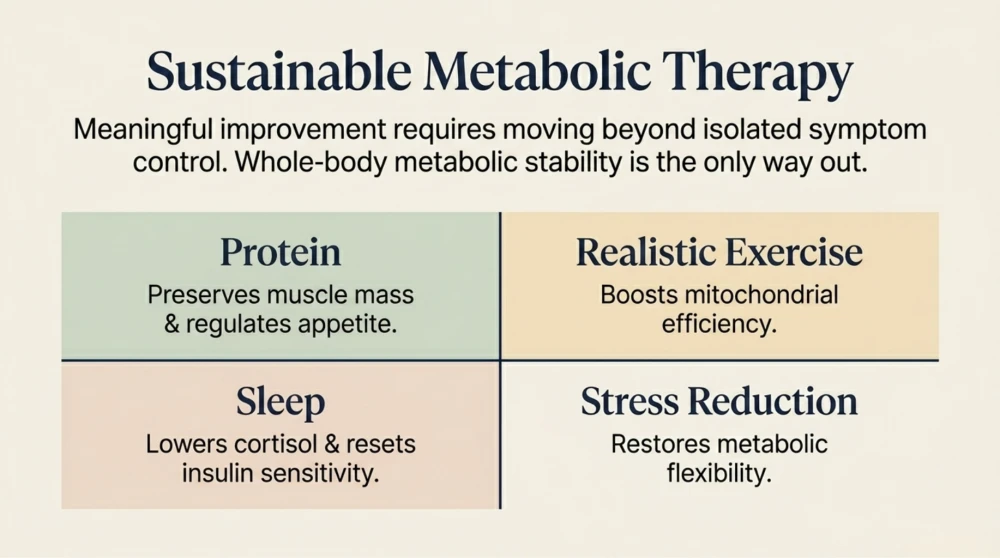
- Protein Intake Becomes Extremely Important
- Exercise Is a Metabolic Therapy, Not Just a Weight Loss Tool
- Sleep Is One of the Most Underrated Hormonal Therapies
- Stress Reduction Is a Clinical Necessity, Not a Luxury
- Why Weight Loss Becomes Emotionally Difficult in Thyroid Dysfunction
- Why “Quick Fix” Supplements Usually Disappoint
- The Goal Should Be Whole-Body Metabolic Stability
- What I Commonly Observe in Clinical Practice
- Key Takeaways: What You Should Remember
- When Should You Consider Evaluation?
One of the most confusing aspects of thyroid disorders is that the symptoms often seem completely unrelated to each other.
A patient may initially complain about fatigue, but over time also notice:
- Weight gain
- Hair fall
- Constipation
- Low mood
- Poor concentration
- Irregular periods
This creates a situation where many individuals start consulting different specialists for different symptoms without realizing that all the changes may actually be connected to a single underlying hormonal imbalance.
This is exactly why understanding why thyroid imbalance can affect multiple body systems is so important. The thyroid gland may be small, but its hormonal influence extends throughout the entire body.
In clinical practice, many patients are surprised when they discover that their energy levels, metabolism, digestion, skin, mood, sleep, and even cardiovascular function are all interconnected through thyroid physiology.
The Thyroid Gland Functions Like a Metabolic Control Center
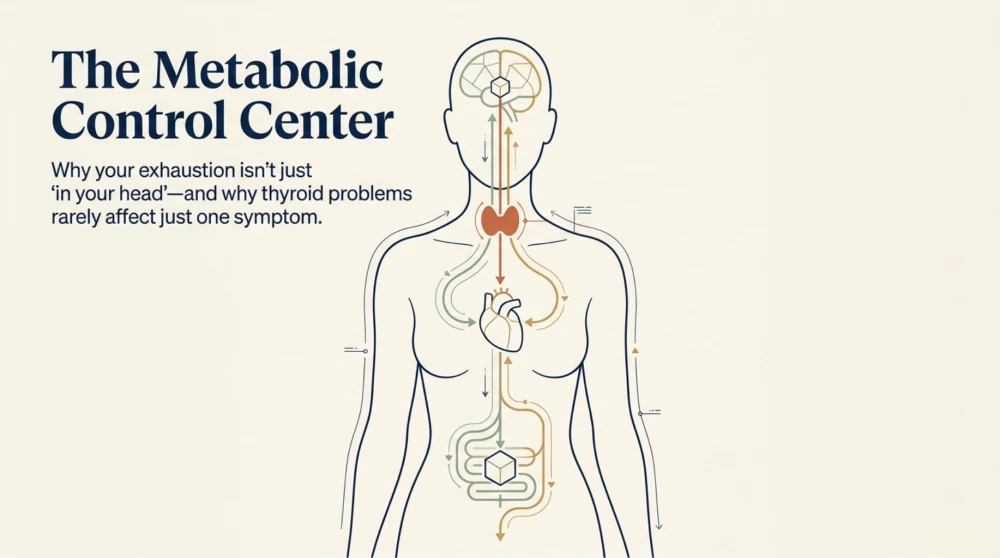
Thyroid hormones regulate how efficiently cells produce and utilize energy. This means the thyroid gland influences nearly every major organ system.
The primary thyroid hormones — T3 (triiodothyronine) and T4 (thyroxine) — affect:
- Metabolic rate
- Heart function
- Brain activity
- Digestive speed
- Muscle performance
- Temperature regulation
- Hormonal balance
Because these hormones work throughout the body, even mild thyroid imbalance can create widespread symptoms. And since the changes usually happen gradually, many patients fail to connect the symptoms initially.
Why Energy Levels Change So Dramatically
One of the earliest and most common effects of thyroid dysfunction is reduced energy production. Thyroid hormones help cells generate energy efficiently.
When thyroid hormone levels become inadequate, metabolism slows down and cellular energy production decreases.
This is why many thyroid patients describe:
- Persistent tiredness
- Low stamina
- Reduced exercise tolerance
- Mental exhaustion
But because fatigue is so common in modern life, patients often assume the problem is simply stress or overwork. Meanwhile, thyroid imbalance may already be contributing silently.
Why Weight Regulation Becomes Difficult
Another major system affected by thyroid imbalance is metabolism.
Thyroid hormones strongly influence:
- Calorie utilization
- Fat oxidation
- Basal metabolic rate
When metabolism slows down, the body becomes more efficient at conserving energy.
This often leads to:
- Gradual weight gain
- Increasing belly fat
- Difficulty losing weight
- Water retention
Many patients become frustrated because they feel they are eating similarly to before, yet their body composition keeps changing. This happens because thyroid imbalance affects how the body handles energy internally.
The Brain Is Highly Sensitive to Thyroid Hormones
One of the most underestimated effects of thyroid dysfunction involves the brain and nervous system.
Thyroid hormones influence:
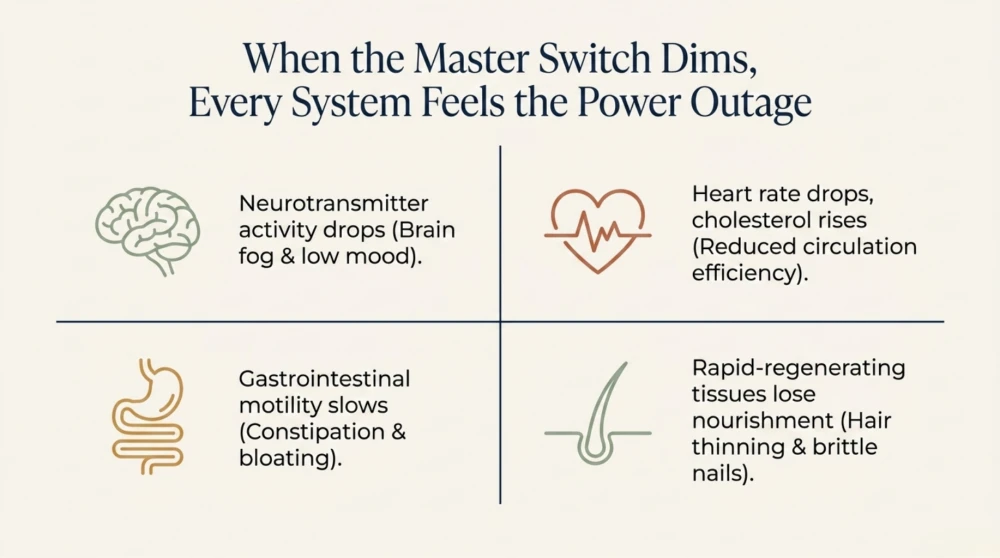
- Neurotransmitter activity
- Mental clarity
- Concentration
- Mood regulation
As thyroid imbalance develops, patients may experience:
- Brain fog
- Forgetfulness
- Poor focus
- Reduced motivation
- Mood changes
Since these symptoms overlap heavily with stress and burnout, thyroid dysfunction is frequently overlooked initially. This creates a situation where patients gradually adapt to feeling mentally slower without understanding why.
Digestive Function Slows Down Too
The digestive system is another body system strongly influenced by thyroid hormones. Thyroid imbalance can slow gastrointestinal motility, meaning food moves more slowly through the digestive tract.
This commonly leads to:
- Constipation
- Bloating
- Heaviness after meals
- Reduced digestive efficiency
Many patients repeatedly try digestive medications without realizing the underlying hormonal connection.
Skin, Hair, and Nails Reflect Thyroid Health
Tissues that regenerate continuously are highly sensitive to hormonal imbalance.
This is why thyroid dysfunction often affects:
- Hair growth
- Skin hydration
- Nail quality
Patients may notice:
- Hair thinning
- Dry skin
- Brittle nails
- Reduced sweating
These symptoms usually develop gradually and are often mistaken for cosmetic or nutritional issues.
Why the Cardiovascular System Is Also Affected
The heart and blood vessels are deeply influenced by thyroid hormones.
Thyroid imbalance can affect:
- Heart rate
- Blood pressure trends
- Circulation efficiency
- Cholesterol metabolism
For example, hypothyroidism may contribute to:
- Slow heart rate
- Elevated cholesterol
- Reduced circulation efficiency
Meanwhile, hyperthyroidism may cause:
- Palpitations
- Anxiety
- Increased heart rate
This demonstrates how thyroid hormones influence multiple systems simultaneously.
Why Symptoms Often Feel “Disconnected”
One reason thyroid disorders become confusing is because the symptoms appear across different body systems at the same time.
A patient may develop:
- Fatigue
- Constipation
- Hair fall
- Weight gain
- Mood changes
over several months.
Because the symptoms seem unrelated, patients often fail to recognize the common hormonal link. This is why thyroid imbalance frequently remains undiagnosed until symptoms become more obvious.
Why Early Recognition Matters
Understanding these widespread effects is important because thyroid dysfunction affects much more than body weight alone.
Early recognition helps prevent:
- Progressive metabolic slowing
- Cardiovascular risk increase
- Persistent fatigue and reduced quality of life
- Hormonal complications
This is why structured metabolic approaches like the Lifestyle Modification Program focus not only on symptoms, but also on identifying deeper hormonal and metabolic contributors.
The Thyroid and Metabolism Are Deeply Connected
One of the biggest reasons thyroid imbalance affects multiple body systems is because thyroid hormones regulate the body’s overall metabolic efficiency. Metabolism is not simply about burning calories.
It includes:
- Energy production
- Fat utilization
- Glucose handling
- Hormonal signaling
- Cellular repair
When thyroid hormones become imbalanced, these systems begin slowing down or functioning inefficiently. This is why patients often describe feeling as if their “entire body has slowed down.”
Why Insulin Resistance Commonly Overlaps with Thyroid Dysfunction
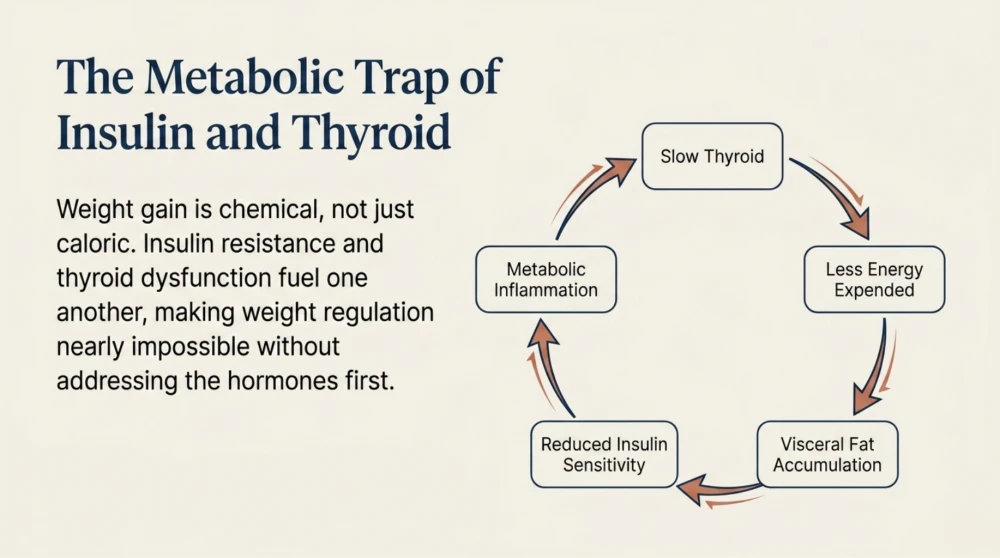
One of the most important but under-recognized connections is the relationship between thyroid imbalance and insulin resistance.
When thyroid function slows:
- Energy expenditure decreases
- Fat oxidation becomes less efficient
- Physical activity tolerance reduces
Over time, this creates a metabolic environment that promotes:
- Visceral fat accumulation
- Increasing belly fat
- Reduced insulin sensitivity
This explains why many patients with thyroid dysfunction also struggle with:
- Weight gain
- Fatty liver
- High triglycerides
- Difficulty losing weight
The relationship works both ways. Insulin resistance itself can worsen metabolic inflammation and hormonal imbalance, creating a cycle where multiple systems become affected simultaneously.
If you want to understand this deeper, you may also explore Why Thyroid Disorders Can Develop Gradually: 7 Hidden Early Changes.
The Liver-Thyroid Connection Is Often Ignored
The liver and thyroid gland work very closely together.
The liver helps:
- Convert thyroid hormones into active forms
- Regulate cholesterol metabolism
- Manage fat processing
At the same time, thyroid hormones influence how efficiently the liver handles fat and energy. When thyroid imbalance develops, liver metabolism may also become impaired.
This can contribute to:
- Fatty liver
- High triglycerides
- Elevated cholesterol
- Metabolic slowing
This is one reason many patients with hypothyroidism also develop fatty liver-related metabolic changes.
Hormonal Systems Constantly Influence Each Other
The endocrine system functions like an interconnected network rather than isolated organs. This means thyroid hormones influence — and are influenced by — other hormonal systems.
For example, thyroid dysfunction may overlap with:
- PCOS (Polycystic Ovary Syndrome)
- Menstrual irregularity
- Perimenopausal hormonal changes
- Stress hormone imbalance
This is why many women with thyroid dysfunction experience symptoms beyond metabolism alone.
They may notice:
- Cycle irregularity
- Hair thinning
- Mood fluctuation
- Fluid retention
- Difficulty managing body weight
Because these symptoms overlap heavily with other hormonal conditions, thyroid imbalance may remain undiagnosed for long periods.
Why Sleep Quality Changes in Thyroid Dysfunction
Another major system influenced by thyroid hormones is sleep regulation. Both hypothyroidism and hyperthyroidism can affect sleep patterns differently.
Hypothyroidism May Cause:
- Excessive daytime fatigue
- Low energy despite adequate sleep
- Non-refreshing sleep
Hyperthyroidism May Cause:
- Difficulty sleeping
- Restlessness
- Nighttime anxiety
- Increased heart rate
This demonstrates again how thyroid hormones influence multiple body systems simultaneously.
Stress Amplifies Thyroid-Related Symptoms
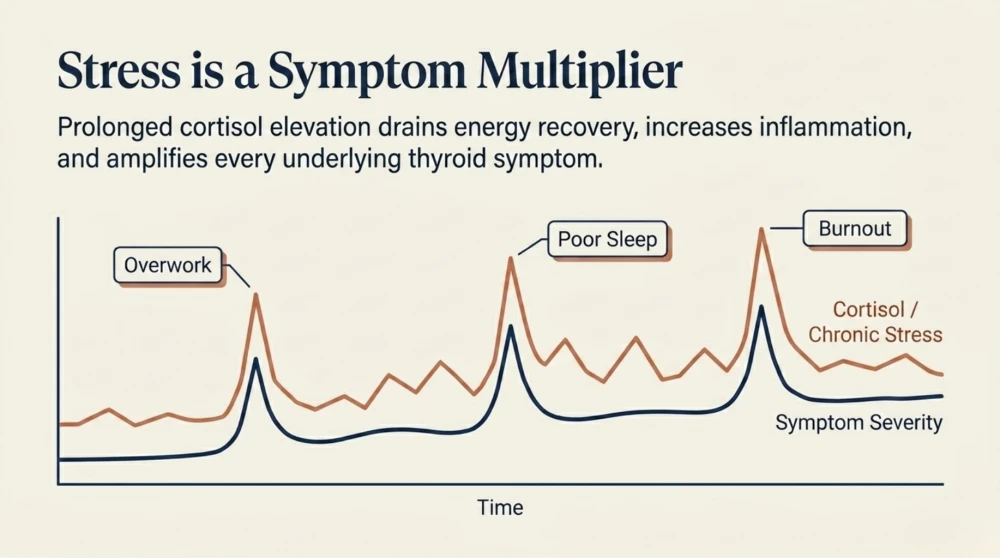
Modern chronic stress significantly worsens hormonal imbalance.
When stress remains prolonged:
- Cortisol levels stay elevated
- Sleep quality deteriorates
- Inflammation increases
- Energy recovery declines
This creates additional strain on the endocrine system.
Many patients report that thyroid-related symptoms worsen during periods of:
- Emotional stress
- Overwork
- Poor recovery
- Burnout
This overlap makes the condition feel even more complex because patients start experiencing symptoms across multiple body systems simultaneously.
Autoimmune Thyroid Disease Affects the Entire Body
In many patients, thyroid dysfunction develops due to autoimmune conditions such as Hashimoto’s thyroiditis. In these disorders, the immune system gradually attacks thyroid tissue. But autoimmune inflammation rarely remains limited to one symptom alone.
Patients may also experience:
- Generalized fatigue
- Body heaviness
- Mental slowing
- Reduced stress tolerance
This is one reason autoimmune thyroid disease often feels like a “whole body problem” rather than just a hormonal issue.
Why Symptoms Vary So Much Between Individuals
One of the most confusing aspects of thyroid disorders is that symptoms vary dramatically between patients.
Some individuals develop:
- Severe fatigue
- Weight gain
- Hair fall
while others mainly experience:
- Anxiety
- Palpitations
- Sleep disturbance
This variation happens because:
- Hormonal sensitivity differs between individuals
- Genetics influence metabolism
- Lifestyle factors modify symptoms
- Stress and insulin resistance alter presentation
This is why thyroid disorders should never be approached as a “one symptom disease.”
The Biggest Problem: Symptoms Develop So Gradually That Patients Normalize Them
Perhaps the most important reason thyroid imbalance affects so many systems before diagnosis is that the progression is usually slow.
Patients gradually adapt to:
- Fatigue
- Weight changes
- Mental fog
- Digestive slowing
- Low stamina
until the symptoms eventually become impossible to ignore. By this stage, multiple body systems may already be affected simultaneously.
What Actually Helps: A Smarter Approach to Thyroid-Related Metabolic Dysfunction
Once patients understand that thyroid imbalance can affect multiple body systems, the next important question becomes:
“What should I actually focus on to improve my health?”
The answer is not simply “taking thyroid medicine” or blindly following internet advice.
Thyroid health is deeply connected with overall metabolic balance, recovery, lifestyle rhythm, sleep quality, stress exposure, body composition, and liver function. This means successful management usually requires a broader and more sustainable approach.
Why Extreme Dieting Often Backfires in Thyroid Dysfunction
One of the biggest mistakes many patients make is aggressively restricting food after noticing weight gain.
They often try:
- Crash dieting
- Very low-calorie plans
- Extreme fasting
- Eliminating entire food groups
But severe restriction can sometimes worsen metabolic slowing.
When calorie intake becomes excessively low:
- The body conserves energy more aggressively
- Fatigue worsens
- Muscle loss increases
- Recovery becomes poorer
This creates a frustrating cycle where patients feel increasingly exhausted while weight loss becomes even harder. This is why thyroid-related metabolic dysfunction requires balance and sustainability rather than extreme restriction.
Protein Intake Becomes Extremely Important
Many individuals with thyroid dysfunction unknowingly consume inadequate protein.
This becomes problematic because protein supports:
- Muscle preservation
- Metabolic activity
- Hormonal balance
- Satiety and appetite regulation
When protein intake remains low:
- Muscle mass declines more easily
- Metabolism slows further
- Fatigue increases
- Weight regulation becomes more difficult
This is why balanced nutrition usually works better than simply reducing calories aggressively.
Exercise Is a Metabolic Therapy, Not Just a Weight Loss Tool
Many thyroid patients avoid exercise because they already feel tired. But completely avoiding physical activity often worsens metabolic slowing further.
Properly structured exercise improves:
- Insulin sensitivity
- Mitochondrial efficiency
- Muscle activity
- Fat oxidation
- Energy regulation
This is especially important because thyroid imbalance frequently overlaps with:
- Insulin resistance
- Fatty liver
- Visceral fat accumulation
- Reduced stamina
However, the exercise strategy must remain realistic. Overtraining an already exhausted body can increase stress instead of improving metabolism. This is why gradual progression usually works better than aggressive intensity.
Sleep Is One of the Most Underrated Hormonal Therapies
Sleep quality has a massive effect on endocrine health.
When sleep becomes poor:
- Cortisol levels rise
- Energy recovery declines
- Insulin sensitivity worsens
- Inflammatory pathways increase
This creates additional stress across multiple hormonal systems simultaneously.
Patients with thyroid dysfunction often notice:
- More fatigue after poor sleep
- Worse brain fog
- Higher cravings
- Reduced motivation
This is why improving sleep timing and recovery patterns often produces surprisingly significant metabolic improvement.
Stress Reduction Is a Clinical Necessity, Not a Luxury
Modern chronic stress continuously affects hormonal regulation.
When the body remains in prolonged stress mode:
- Cortisol remains elevated
- Recovery mechanisms weaken
- Inflammation increases
- Metabolic flexibility declines
This amplifies many thyroid-related symptoms.
Patients commonly notice worsening during periods of:
- Overwork
- Sleep deprivation
- Emotional stress
- Burnout
This is why long-term thyroid management should always include recovery-focused lifestyle correction.
Why Weight Loss Becomes Emotionally Difficult in Thyroid Dysfunction
One of the hardest emotional experiences for thyroid patients is feeling that the body is “not responding normally anymore.”
Many patients compare themselves with others and wonder: “Why am I trying so hard and still losing weight slowly?”
The answer is that thyroid imbalance changes:
- Energy expenditure
- Metabolic efficiency
- Water balance
- Fat oxidation
This means progress may become slower — but not impossible.
The key is shifting focus from:
- Rapid weight loss
to:
- Long-term metabolic improvement
- Muscle preservation
- Fat reduction
- Better energy regulation
Patients who adopt sustainable habits usually achieve far more stable long-term outcomes.
Why “Quick Fix” Supplements Usually Disappoint
Social media has created enormous confusion around thyroid supplements and detox products.
Patients are often exposed to promises of:
- “Natural thyroid reset”
- “Metabolism boosters”
- “Rapid hormonal correction”
But most thyroid-related metabolic dysfunction develops gradually over years. This means meaningful improvement also requires gradual and sustainable correction. In most cases, long-term consistency works far better than temporary supplementation trends.
The Goal Should Be Whole-Body Metabolic Stability
One of the most important concepts patients need to understand is this:
Thyroid health cannot be separated from overall metabolic health.
Because thyroid hormones influence:
- Energy systems
- Liver metabolism
- Body composition
- Brain function
- Digestive efficiency
- Cardiovascular regulation
successful management requires improving the body as a whole. This is why structured metabolic approaches often work better than isolated symptom-based strategies.
You can explore this broader approach through the Lifestyle Modification Program.
What I Commonly Observe in Clinical Practice
Many patients with thyroid dysfunction spend years feeling progressively worse before proper evaluation happens.
During this time, they often normalize symptoms such as:
- Fatigue
- Poor concentration
- Weight gain
- Hair fall
- Digestive slowing
Eventually they realize the issue was never just “stress” or “aging.” The thyroid imbalance had already been affecting multiple body systems simultaneously. This is why early recognition and metabolic correction matter so much.
Key Takeaways: What You Should Remember
- Thyroid hormones influence nearly every major body system
- Symptoms often appear gradual and disconnected initially
- Energy, metabolism, digestion, mood, sleep, and cardiovascular function may all be affected
- Insulin resistance and fatty liver commonly overlap with thyroid dysfunction
- Stress and poor sleep significantly worsen symptoms
- Sustainable lifestyle correction works better than extreme dieting
- The goal should be whole-body metabolic improvement rather than isolated symptom control
When Should You Consider Evaluation?
You should consider professional evaluation if you experience:
- Persistent fatigue
- Weight changes
- Hair fall
- Brain fog
- Constipation
- Low motivation or reduced stamina
Early recognition can help prevent progressive metabolic complications.
You can book a consultation here:
Book Appointment
Written by Dr. Pankaj Kumar, General & Lifestyle Physician, Dwarka, New Delhi