















- 28th April 2026
Table of Contents
- Why Your Blood Pressure Is Not Constant
- The Science Behind Blood Pressure Regulation
- 1. Diet Directly Affects Blood Pressure
- 2. Physical Activity and Vascular Health
- 3. Stress and the Nervous System
- 4. Sleep and Blood Pressure Patterns
- Why Blood Pressure Changes Over Time
- Why This Matters in Clinical Practice
- 5. Body Weight and Fat Distribution
- 6. Insulin Resistance and Blood Pressure
- 7. Salt Sensitivity Varies Between Individuals
- 8. Dehydration and Fluid Balance
- 9. Alcohol, Caffeine, and Stimulants
- 10. Irregular Monitoring and Measurement Variability
- Connecting the Dots: Why BP Trends Change Gradually
- What Actually Works: How to Stabilize Blood Pressure Trends
- 1. Optimize Your Diet Pattern
- 2. Maintain Regular Physical Activity
- 3. Manage Stress Effectively
- 4. Improve Sleep Quality
- 5. Monitor Blood Pressure Correctly
- 6. Maintain Healthy Body Composition
- 7. Limit Alcohol and Caffeine Intake
- 8. Follow a Structured Lifestyle Plan
- Expected Timeline: When Will Blood Pressure Improve?
- Real-Life Clinical Insight
- Key Takeaways: What You Should Remember
- When Should You Take It Seriously?
Why Your Blood Pressure Is Not Constant
Many patients are confused when they see fluctuating blood pressure readings. One day it is normal, another day it is slightly high, and sometimes it crosses the borderline range.
The common question is: “Doctor, why is my blood pressure changing?”
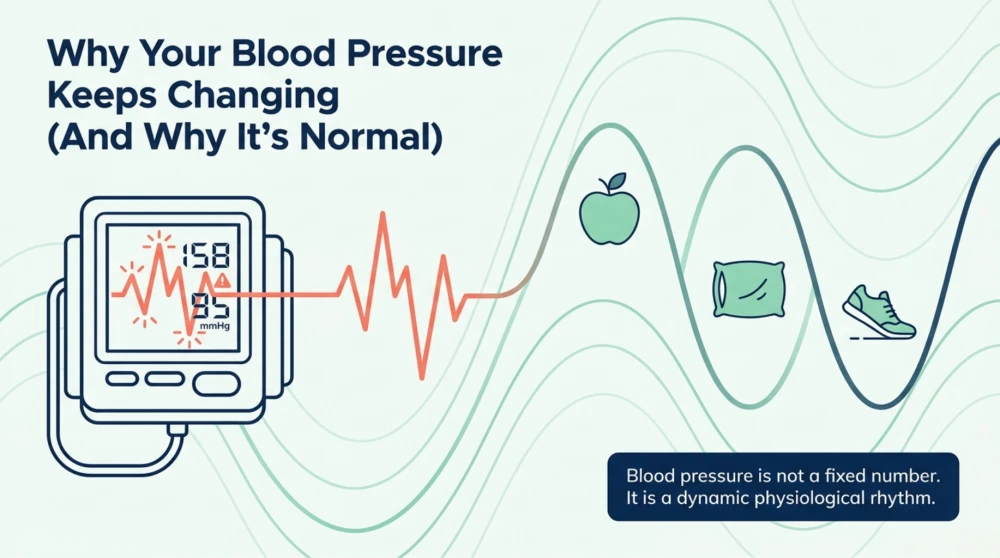
The answer is simple but often overlooked — blood pressure is not a fixed number. It is a dynamic parameter that changes based on your daily habits, environment, and internal physiology.
This is why understanding how lifestyle habits influence blood pressure trends is essential for long-term cardiovascular health.
In clinical practice, I often see patients with:
- Borderline or fluctuating blood pressure
- Normal readings at times, high at others
- No clear symptoms but gradual changes over time
These variations are rarely random. They usually reflect underlying lifestyle patterns.
The Science Behind Blood Pressure Regulation
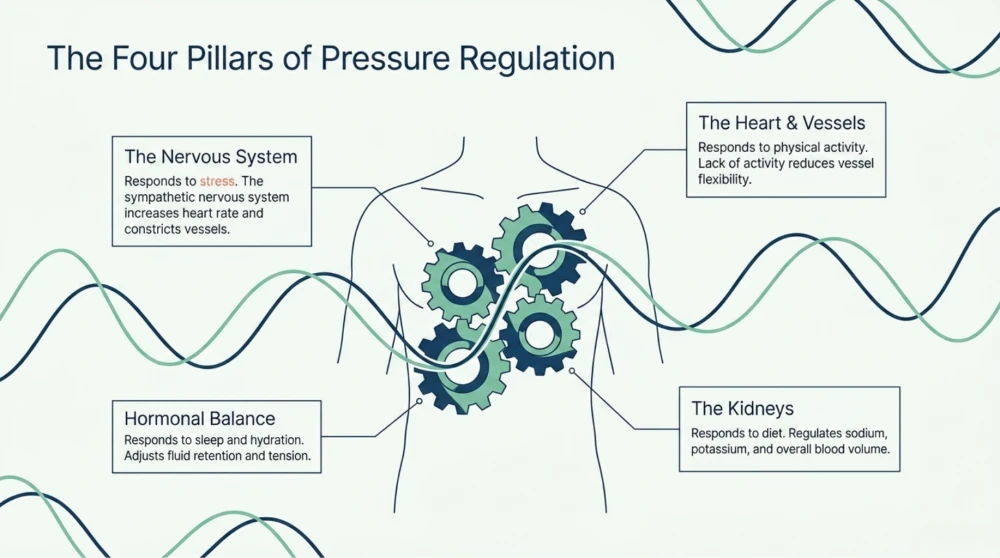
Blood pressure is regulated by multiple systems in the body, including:
- The heart and blood vessels
- The nervous system
- The kidneys
- Hormonal balance
All these systems respond continuously to your lifestyle habits. This is why even small daily changes can influence blood pressure over time.
1. Diet Directly Affects Blood Pressure
Diet plays a central role in blood pressure regulation.
Key dietary factors include:
- Salt intake
- Processed food consumption
- Overall nutrient balance
How Diet Influences BP
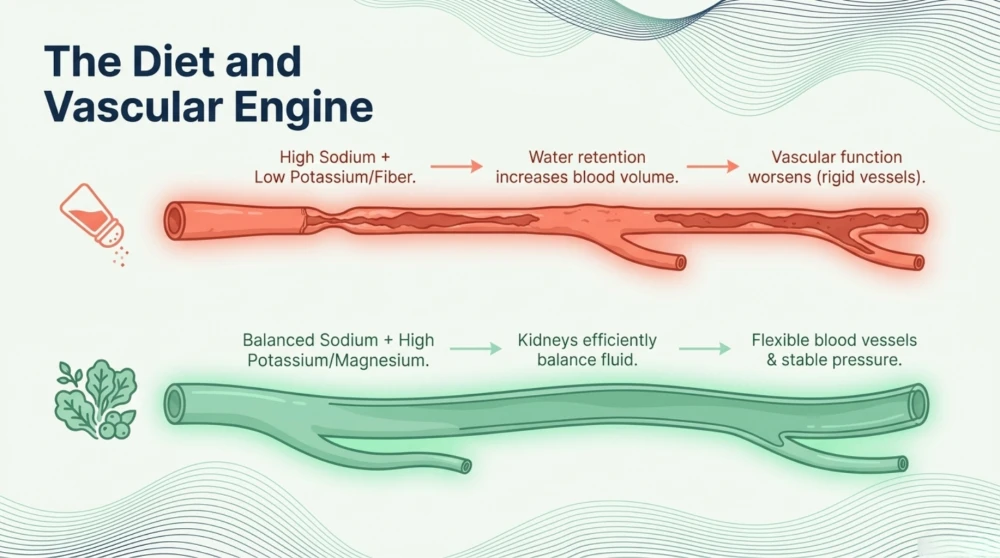
High sodium intake leads to water retention, increasing blood volume and pressure on blood vessels.
At the same time, diets low in potassium, magnesium, and fiber can worsen vascular function.
This explains why individuals consuming processed foods often experience gradual increases in blood pressure.
2. Physical Activity and Vascular Health
Regular physical activity improves blood vessel flexibility and heart efficiency.
When activity levels are low:
- Blood vessels become less flexible
- Circulation efficiency decreases
- Blood pressure tends to rise
Even moderate daily activity can significantly improve blood pressure control.
3. Stress and the Nervous System
Stress is one of the most underestimated factors affecting blood pressure.
When you are stressed:
- The sympathetic nervous system is activated
- Heart rate increases
- Blood vessels constrict
This leads to temporary increases in blood pressure. When stress becomes chronic, these changes can become persistent.
4. Sleep and Blood Pressure Patterns
Sleep plays a crucial role in regulating blood pressure. Normally, blood pressure decreases during sleep (a phenomenon called “nocturnal dipping”).
However, poor sleep or irregular sleep patterns can disrupt this cycle.
Effects of Poor Sleep
- Higher nighttime blood pressure
- Increased morning readings
- Greater cardiovascular risk
This is why individuals with inadequate sleep often have fluctuating BP readings.
Why Blood Pressure Changes Over Time
Blood pressure trends change gradually due to cumulative lifestyle effects.
This includes:
- Dietary habits
- Activity levels
- Stress patterns
- Sleep quality
Each factor may have a small effect, but together they create a significant impact over time.
Why This Matters in Clinical Practice
Many patients focus only on individual readings. But what matters more is the trend over time.
Understanding lifestyle influence helps in:
- Early identification of risk
- Preventing progression to hypertension
- Reducing dependence on medications
This is why structured approaches like the Lifestyle Modification Program focus on long-term habit correction.
5. Body Weight and Fat Distribution
One of the most consistent observations in clinical practice is the relationship between body weight, fat distribution, and blood pressure trends.
It is not just overall weight that matters, but where the fat is stored.
Why Belly Fat Matters More
- Abdominal fat increases pressure on blood vessels
- It releases inflammatory substances
- It worsens insulin resistance
These changes gradually increase blood pressure over time. This is why even individuals with moderate weight but higher belly fat may experience rising BP trends.
6. Insulin Resistance and Blood Pressure
Another important but often overlooked factor is insulin resistance.
When the body becomes less sensitive to insulin:
- Sodium retention increases
- Blood vessel function is affected
- Sympathetic nervous system activity rises
This leads to a gradual increase in blood pressure.
Why It Goes Unnoticed
In early stages, blood sugar may still be normal, so patients do not suspect any metabolic issue.
However, insulin resistance can silently influence blood pressure trends.
7. Salt Sensitivity Varies Between Individuals
Not everyone responds to salt intake in the same way.
Some individuals are salt-sensitive, meaning their blood pressure increases significantly with higher sodium intake.
Factors Affecting Salt Sensitivity
- Genetics
- Kidney function
- Metabolic health
This is why two people with similar diets may have different blood pressure patterns.
8. Dehydration and Fluid Balance
Hydration status also affects blood pressure.
When the body is dehydrated:
- Blood volume decreases initially
- Hormonal systems activate to retain sodium and water
- Blood pressure may fluctuate
Chronic imbalance in fluid intake can contribute to unstable BP trends.
9. Alcohol, Caffeine, and Stimulants
Common lifestyle substances can also influence blood pressure.
Effects Include
- Alcohol can raise BP when consumed regularly
- Caffeine can cause temporary spikes
- Energy drinks may significantly increase BP
These effects may seem temporary but can contribute to long-term changes when habits are repeated.
10. Irregular Monitoring and Measurement Variability
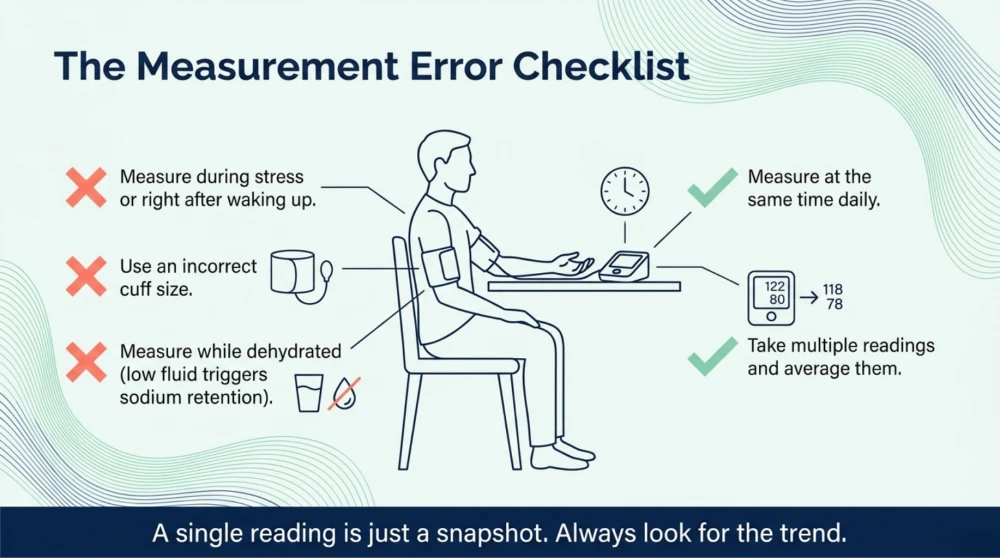
Sometimes, changes in blood pressure readings are influenced by how and when measurements are taken.
Common Factors
- Measuring BP during stress or anxiety
- Incorrect cuff size or technique
- Different times of the day
This can create the impression of fluctuating BP, even when the underlying trend is gradual.
Connecting the Dots: Why BP Trends Change Gradually
If you look at all these factors together, a clear pattern emerges.
Blood pressure trends change due to cumulative lifestyle effects:
- Dietary habits
- Physical activity levels
- Stress and sleep patterns
- Metabolic health
Each factor contributes a small effect, but together they create noticeable changes over time. This is why blood pressure rarely changes suddenly without a reason—it reflects long-term lifestyle patterns.
What Actually Works: How to Stabilize Blood Pressure Trends
Once you understand that blood pressure changes with lifestyle habits, the next step is practical: how can you stabilize it?
The goal is not just lowering a single reading but improving the overall trend over time. In clinical practice, I focus on correcting daily habits rather than chasing numbers.
1. Optimize Your Diet Pattern
Diet has a direct and sustained impact on blood pressure.
Key principles include:
- Reduce salt intake, especially from processed foods
- Increase potassium-rich foods (vegetables, fruits)
- Limit packaged and ultra-processed foods
- Maintain balanced meals with adequate protein and fiber
This improves vascular health and helps stabilize BP levels.
2. Maintain Regular Physical Activity
Exercise improves blood vessel flexibility and reduces pressure within the vascular system.
Recommended routine:
- 30–40 minutes brisk walking daily
- Strength training 3–4 times per week
Regular activity helps maintain consistent blood pressure levels.
3. Manage Stress Effectively
Stress management is essential for BP control.
Practical approaches include:
- Daily relaxation techniques
- Regular physical activity
- Limiting excessive screen exposure
Reducing stress helps lower sympathetic nervous system activation.
4. Improve Sleep Quality
Sleep is often ignored but plays a major role in BP regulation.
Key targets:
- 7–8 hours of sleep
- Consistent sleep schedule
- Avoiding late-night screen exposure
This helps restore normal blood pressure patterns.
5. Monitor Blood Pressure Correctly
Accurate monitoring is important to understand trends.
Best practices:
- Measure blood pressure at the same time daily
- Use proper technique and cuff size
- Take multiple readings and average them
This provides a more reliable picture of your BP trend.
6. Maintain Healthy Body Composition
Reducing excess body fat, especially abdominal fat, helps improve BP control.
Even modest weight loss can:
- Reduce vascular resistance
- Improve insulin sensitivity
- Lower BP levels
7. Limit Alcohol and Caffeine Intake
Moderation is key when it comes to stimulants.
Recommendations:
- Limit alcohol consumption
- Avoid excessive caffeine intake
- Monitor your individual response
This helps prevent unnecessary BP fluctuations.
8. Follow a Structured Lifestyle Plan
Random changes often do not produce lasting results.
A structured approach focuses on:
- Consistent daily habits
- Balanced diet and activity
- Long-term sustainability
You can explore this through the Lifestyle Modification Program.
Expected Timeline: When Will Blood Pressure Improve?
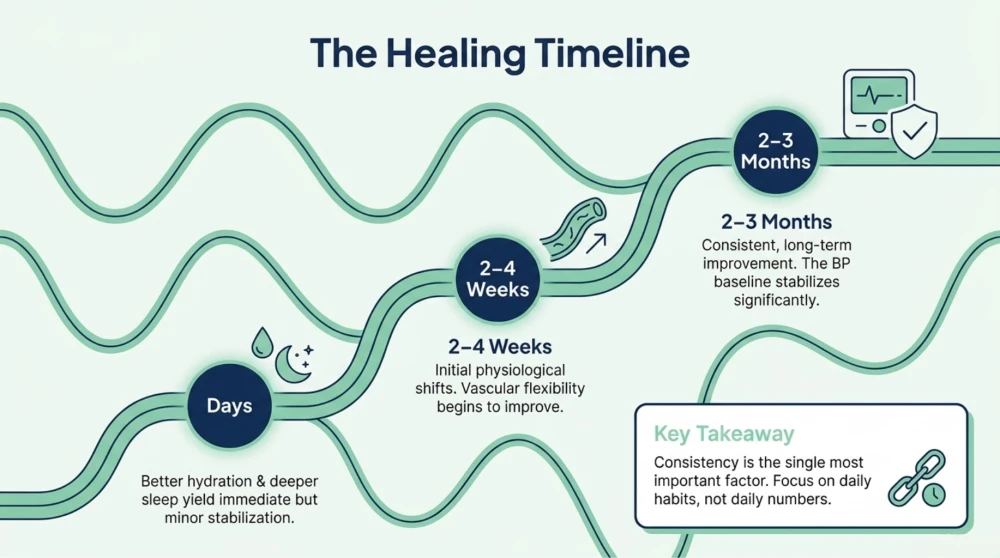
Blood pressure trends improve gradually with lifestyle correction.
Typical expectations:
- 2–4 weeks for initial changes
- 2–3 months for consistent improvement
Consistency is the most important factor.
Real-Life Clinical Insight
Many patients focus only on medication or individual readings. But when we correct lifestyle factors, BP becomes more stable over time.
They often report:
- Less fluctuation in readings
- Improved energy levels
- Better overall health
This highlights the importance of addressing root causes rather than just symptoms.
Key Takeaways: What You Should Remember
- Blood pressure is a dynamic parameter influenced by lifestyle habits
- Diet, activity, stress, and sleep all play important roles
- Small daily habits create long-term BP trends
- Fluctuations are often due to cumulative lifestyle effects
- Consistent lifestyle correction improves BP stability
- Monitoring trends is more important than single readings
- Early intervention prevents progression to hypertension
When Should You Take It Seriously?
You should seek medical advice if you have:
- Consistently elevated BP readings
- Frequent fluctuations
- Associated symptoms like headaches or dizziness
- Risk factors like obesity or diabetes
Early evaluation helps prevent complications.
You can book a consultation here: Book Appointment
Written by Dr. Pankaj Kumar, General & Lifestyle Physician, Dwarka, New Delhi