

















- 9th May 2026
Table of Contents
- Why High Triglycerides Are Increasing Today
- What Are Triglycerides?
- 1. Excess Refined Carbohydrates: The Primary Driver
- 2. High Sugar Intake (Especially Hidden Sugars)
- 3. Frequent Eating and Snacking Pattern
- 4. Low Protein Intake in Modern Diets
- Why This Happens Gradually
- Why This Matters in Clinical Practice
- 5. Insulin Resistance: The Central Driver
- 6. Sedentary Lifestyle and Reduced Fat Burning
- 7. Excess Visceral Fat (Belly Fat)
- 8. Alcohol Consumption
- 9. Poor Sleep and Chronic Stress
- 10. Hidden Calories and Liquid Intake
- Connecting the Dots: Why Triglycerides Are Rising
- What Actually Works: How to Reduce High Triglycerides
- 1. Reduce Refined Carbohydrates and Sugar
- 2. Increase Protein Intake
- 3. Improve Meal Timing and Frequency
- 4. Increase Physical Activity
- 5. Reduce Belly Fat Gradually
- 6. Limit Alcohol Intake
- 7. Improve Sleep and Manage Stress
- 8. Avoid Quick Fixes and Fad Diets
- 9. Follow a Structured Plan
- Expected Timeline: When Will Triglycerides Improve?
- Real-Life Clinical Insight
- Key Takeaways: What You Should Remember
- When Should You Take It Seriously?
Why High Triglycerides Are Increasing Today
Over the past few years, one pattern has become very common in routine blood reports — high triglycerides.
Many patients come with confusion:
“Doctor, my cholesterol is not very high, but triglycerides are elevated. What does this mean?” This is an important observation.
High triglycerides are strongly linked to modern diet patterns, and in many cases, they are one of the earliest signs of metabolic imbalance.
Unlike cholesterol, which may take time to change, triglycerides respond quickly to dietary habits.
This is why understanding why high triglycerides are increasing in modern diets is essential for preventing long-term health issues.
What Are Triglycerides?
Triglycerides are a type of fat found in the blood. After you eat, the body converts excess calories — especially from carbohydrates — into triglycerides and stores them for later use.
This is a normal physiological process. However, when this process is continuously overactivated, triglyceride levels start rising.
Why High Triglycerides Matter
- They indicate excess energy storage
- They are linked to insulin resistance
- They increase cardiovascular risk
In many patients, high triglycerides appear before diabetes or major cholesterol problems.
1. Excess Refined Carbohydrates: The Primary Driver
The biggest reason for high triglycerides in modern diets is excess intake of refined carbohydrates.
Common sources include:
- White bread and bakery products
- Refined flour (maida-based foods)
- Processed snacks
What Happens in the Liver
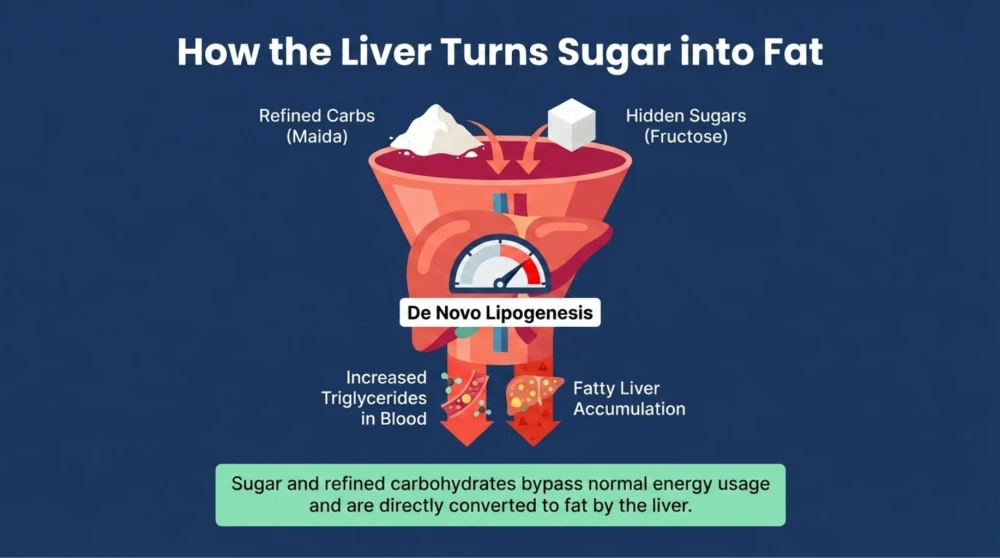
When you consume excess carbohydrates, the liver converts them into fat through a process called de novo lipogenesis.
This leads to:
- Increased triglyceride production
- Higher circulating triglyceride levels
- Fat accumulation in the liver
This is why patients with high triglycerides often also have fatty liver.
2. High Sugar Intake (Especially Hidden Sugars)
Modern diets are not just high in carbohydrates but also loaded with hidden sugars.
Common sources include:
- Sugary beverages
- Packaged juices
- Flavored drinks and desserts
Why Sugar Raises Triglycerides Quickly
Sugar, especially fructose, is processed in the liver and directly converted into fat. This results in:
- Rapid increase in triglyceride levels
- Increased fat storage
- Worsening insulin resistance
This effect is often faster compared to other dietary components.
3. Frequent Eating and Snacking Pattern
Another major shift in modern diets is frequent eating. Many individuals eat:
- Every 2–3 hours
- Multiple snacks daily
- Sugary tea or coffee several times
Why This Is a Problem
This pattern keeps insulin levels elevated throughout the day. As a result:
- The body remains in storage mode
- Fat breakdown decreases
- Triglyceride production increases
Over time, this leads to persistently high triglyceride levels.
4. Low Protein Intake in Modern Diets
Many modern diets are heavily carbohydrate-based but low in protein.
Why Protein Matters
Protein helps regulate metabolism and improves satiety. When protein intake is low:
- Cravings increase
- Carbohydrate intake rises
- Fat metabolism becomes inefficient
This indirectly contributes to elevated triglycerides.
Why This Happens Gradually
One important point is that high triglycerides do not develop overnight. They increase gradually due to:
- Repeated dietary habits
- Continuous excess calorie intake
- Long-term metabolic imbalance
This is why many patients feel surprised when they see elevated levels in reports.
Why This Matters in Clinical Practice
High triglycerides are not just a lab abnormality — they are a metabolic warning signal. They indicate that the body is struggling to manage excess energy.
The good news is that this stage is reversible with proper lifestyle correction. This is why structured approaches like the Lifestyle Modification Program focus on correcting diet patterns and metabolism together.
5. Insulin Resistance: The Central Driver
One of the most important reasons for high triglycerides in modern diet patterns is insulin resistance. This condition develops gradually and often goes unnoticed in early stages.
What Happens in the Body
- Cells become less responsive to insulin
- The liver produces more glucose than required
- Excess glucose is converted into triglycerides
This leads to a continuous rise in triglyceride levels.
Why It Is Often Missed
In early stages:
- Fasting blood sugar may still be normal
- No obvious symptoms are present
This is why many patients are surprised when triglycerides are elevated.
6. Sedentary Lifestyle and Reduced Fat Burning
Modern lifestyle has significantly reduced daily physical activity. Even individuals who are not completely inactive may still have low overall movement.
Impact on Triglycerides
- Reduced fat oxidation
- Lower calorie expenditure
- Increased fat storage
This leads to gradual accumulation of triglycerides in the blood. This is why physical inactivity is strongly linked with both high triglycerides and fatty liver.
7. Excess Visceral Fat (Belly Fat)
Visceral fat plays a major role in triglyceride metabolism.
How It Affects the Body
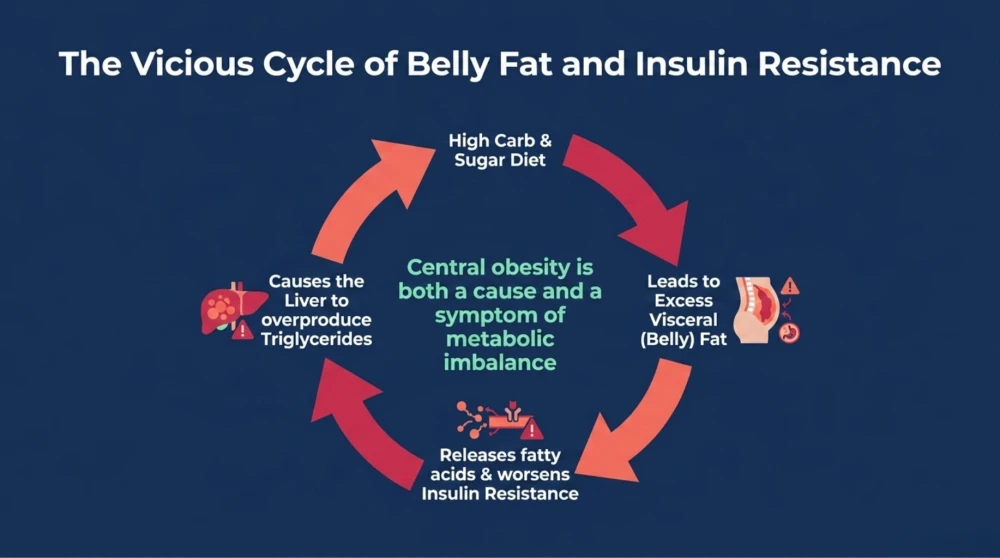
- Releases fatty acids into the bloodstream
- Increases liver fat production
- Worsens insulin resistance
This creates a cycle:
- Belly fat increases triglycerides
- High triglycerides worsen metabolic health
This is why individuals with central obesity are more prone to elevated triglycerides.
8. Alcohol Consumption
Even moderate alcohol intake can significantly increase triglyceride levels.
Why Alcohol Raises Triglycerides
- Alcohol is metabolized in the liver
- It increases fat production
- It reduces fat breakdown
This effect is more pronounced in individuals with existing metabolic imbalance.
9. Poor Sleep and Chronic Stress
Modern lifestyle often includes inadequate sleep and high stress levels.
Hormonal Impact
Poor sleep and stress increase cortisol levels, which can:
- Promote fat storage
- Increase cravings for sugary foods
- Worsen insulin resistance
This indirectly contributes to rising triglyceride levels.
10. Hidden Calories and Liquid Intake
Many individuals underestimate calorie intake, especially from liquids.
Common sources include:
- Sugary tea or coffee multiple times a day
- Packaged beverages
- Sweetened drinks
These calories are rapidly absorbed and converted into triglycerides. This is one of the most common hidden causes seen in clinical practice.
Connecting the Dots: Why Triglycerides Are Rising
If you look at all these factors together, a clear pattern emerges.
High triglycerides in modern diet patterns are the result of multiple small factors acting together:
- Excess carbohydrates and sugar
- Frequent eating
- Low physical activity
- Insulin resistance
- Stress and poor sleep
Each factor contributes a small effect, but together they create a significant metabolic burden. This is why triglycerides are rising even in individuals who may not appear at high risk.
What Actually Works: How to Reduce High Triglycerides
Once you understand that high triglycerides are increasing due to modern diet patterns, the next step is practical: how do you bring them down?
The key is not temporary dieting but correcting the metabolic imbalance that caused the rise in the first place.
In clinical practice, I focus on sustainable, structured changes rather than quick fixes.
1. Reduce Refined Carbohydrates and Sugar
The most effective step is controlling excess carbohydrate and sugar intake. Practical approach:
- Limit bakery items and refined flour (maida)
- Avoid sugary beverages and packaged juices
- Reduce sweets and desserts
This directly reduces triglyceride production in the liver.
2. Increase Protein Intake
Protein helps improve metabolic balance and reduces cravings. Benefits include:
- Better satiety
- Improved blood sugar control
- Reduced overall calorie intake
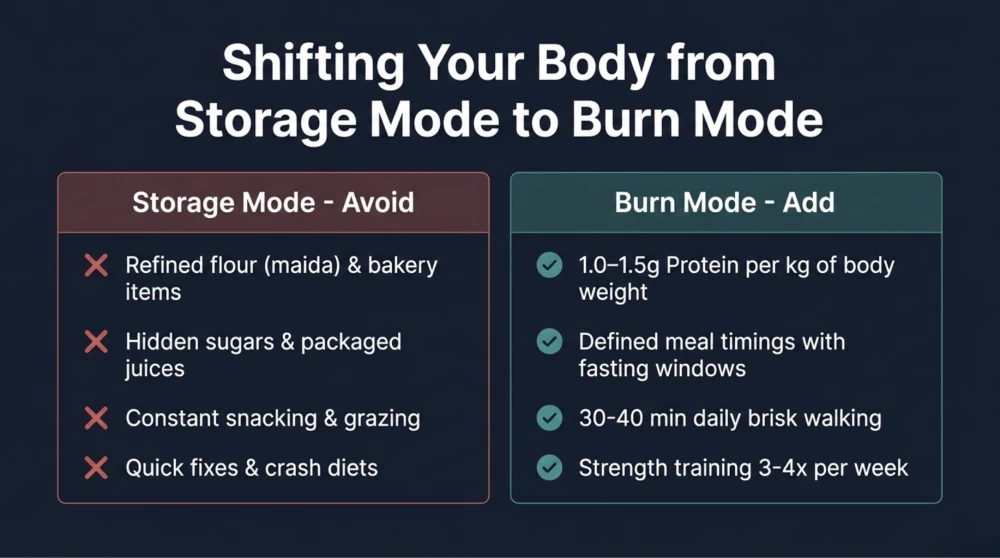
A general target is 1.0–1.5 g protein per kg body weight, depending on individual health status.
3. Improve Meal Timing and Frequency
Frequent eating keeps insulin levels elevated and promotes fat storage.
Key strategies:
- Avoid constant snacking
- Maintain defined meal timings
- Reduce late-night eating
This helps shift the body from storage mode to fat utilization.
4. Increase Physical Activity
Exercise plays a critical role in lowering triglycerides. Recommended routine:
- 30–40 minutes brisk walking daily
- Strength training 3–4 times per week
This improves fat burning and reduces circulating triglycerides.
5. Reduce Belly Fat Gradually
Reducing visceral fat significantly improves triglyceride levels. Even modest weight loss can:
- Improve insulin sensitivity
- Reduce liver fat
- Lower triglycerides
Focus on gradual and sustainable weight reduction.
6. Limit Alcohol Intake
If triglycerides are elevated, alcohol intake should be minimized or avoided. This is especially important in individuals with fatty liver or metabolic syndrome.
7. Improve Sleep and Manage Stress
Sleep and stress management are often overlooked but play a major role. Key targets:
- 7–8 hours of sleep
- Consistent sleep schedule
- Stress reduction techniques
This helps improve hormonal balance and metabolic health.
8. Avoid Quick Fixes and Fad Diets
Many patients look for rapid solutions to reduce triglycerides. In reality:
- Crash diets are not sustainable
- Detox trends lack strong evidence
- Short-term changes often lead to rebound
The most effective approach is consistent lifestyle correction.
9. Follow a Structured Plan
Random dietary changes often do not produce lasting results. A structured approach focuses on:
- Personalized diet planning
- Lifestyle correction
- Long-term sustainability
You can explore this through the Lifestyle Modification Program.
Expected Timeline: When Will Triglycerides Improve?
Triglyceride levels respond relatively quickly to lifestyle changes.
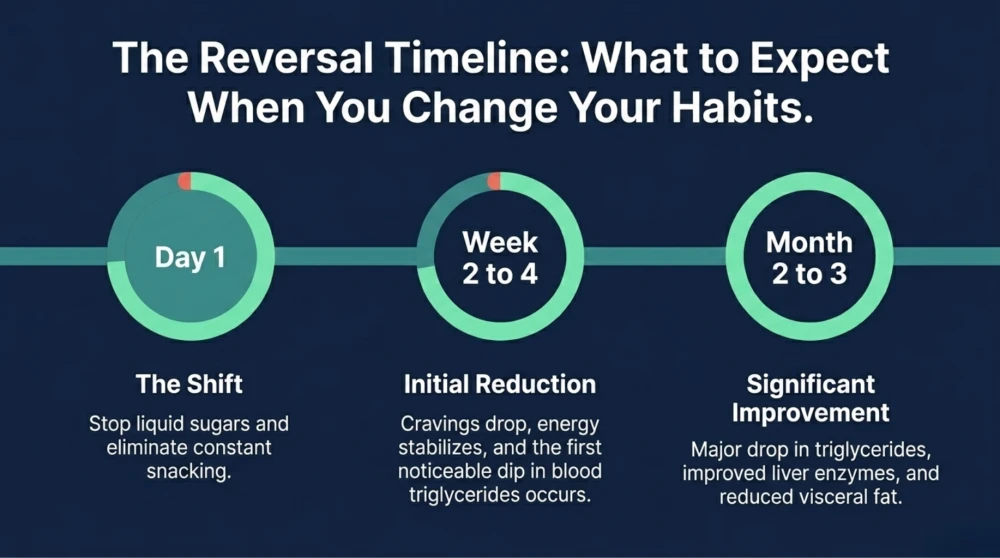
Typical expectations:
- 2–4 weeks for initial reduction
- 2–3 months for significant improvement
Consistency is the most important factor.
Real-Life Clinical Insight
Many patients are surprised at how quickly triglycerides improve once dietary patterns are corrected.
They often report:
- Better energy levels
- Reduced cravings
- Improved weight control
- Better metabolic parameters
This reinforces the idea that triglycerides are highly responsive to lifestyle changes.
Key Takeaways: What You Should Remember
- High triglycerides are strongly linked to modern diet patterns
- Excess carbohydrates and sugar are the main drivers
- Frequent eating and sedentary lifestyle worsen the problem
- Insulin resistance plays a central role
- Early stages are reversible with lifestyle correction
- Consistency is more important than intensity
- Small changes can produce significant results
When Should You Take It Seriously?
You should focus on triglyceride control if you have:
- Elevated triglycerides in reports
- Fatty liver
- Increasing belly fat
- Difficulty losing weight
Early intervention can prevent long-term complications.
You can book a consultation here: Book Appointment
Written by Dr. Pankaj Kumar, General & Lifestyle Physician, Dwarka, New Delhi