
















- 15th May 2026
Table of Contents
- The Thyroid Gland Controls Much More Than People Realize
- Why Thyroid Disorders Usually Develop Slowly
- The “Slow Metabolism” Phase Often Starts First
- Weight Gain Is Usually Gradual, Not Sudden
- Mental and Emotional Symptoms Are Frequently Missed
- Hair, Skin, and Digestive Changes Often Appear Slowly
- The Modern Lifestyle Makes Thyroid Symptoms Harder to Recognize
- Why Early Recognition Matters
- Why Thyroid Symptoms Often Appear Before Reports Become “Abnormal”
- The Body Tries to Maintain Balance for a Long Time
- Subclinical Thyroid Dysfunction Is More Common Than People Realize
- Autoimmune Thyroid Disease Usually Develops Slowly
- The Stress-Thyroid Connection Is Often Ignored
- Insulin Resistance and Thyroid Dysfunction Often Overlap
- Modern Lifestyle Masks Early Thyroid Dysfunction
- Why Women Often Notice Symptoms Earlier
- The Biggest Problem: Patients Gradually Adapt to Feeling Unwell
- What Actually Helps: A Smarter Approach to Thyroid Health
- Why Extreme Dieting Often Makes Things Worse
- Sleep Is One of the Most Important Metabolic Therapies
- Physical Activity Improves Thyroid-Related Metabolic Dysfunction
- Weight Loss in Thyroid Disease Requires Patience
- Stress Reduction Is Not “Optional” in Thyroid Health
- The Goal Is Metabolic Stability, Not Just “Normal Reports”
- Why Long-Term Lifestyle Correction Works Better Than Temporary Fixes
- What I Commonly Observe in Clinical Practice
- Key Takeaways: What You Should Remember
- When Should You Seek Medical Evaluation?
One of the most confusing things about thyroid disorders is how silently they can develop.
Many patients look back and realize that symptoms had actually started long before diagnosis. But because the changes were gradual, they never seemed serious enough to attract attention.
In clinical practice, I often hear statements like:
“Doctor, I thought it was just stress.”
Or “I assumed the tiredness was because of my lifestyle.”
This is exactly why understanding why thyroid disorders can develop gradually is so important.
Unlike sudden illnesses that create obvious symptoms quickly, thyroid dysfunction usually evolves slowly over months or even years. The body adapts gradually to the hormonal changes, making the symptoms appear “normal” or easy to ignore.
By the time the diagnosis is finally made, many patients have already been experiencing subtle metabolic and hormonal changes for a long time.
The Thyroid Gland Controls Much More Than People Realize
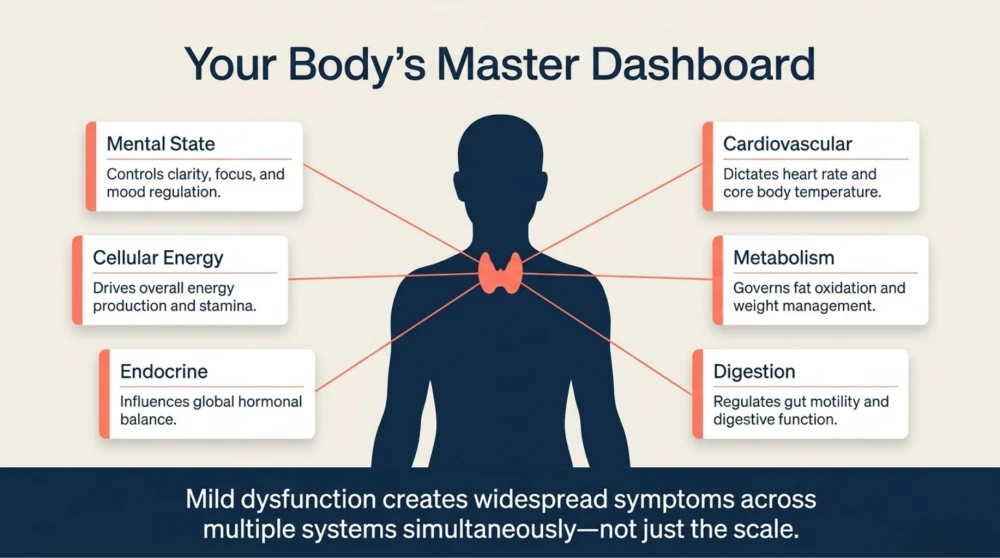
Most people think the thyroid only affects weight. But the thyroid gland actually influences almost every major metabolic process inside the body.
Thyroid hormones regulate:
- Energy production
- Body temperature
- Heart rate
- Metabolism
- Digestive function
- Hormonal balance
- Mental clarity and mood
This means even mild thyroid dysfunction can create widespread symptoms. And because these symptoms involve multiple systems simultaneously, they are often mistaken for stress, aging, poor lifestyle, or vitamin deficiency.
Why Thyroid Disorders Usually Develop Slowly
The thyroid gland has remarkable compensatory ability.
In the early stages of dysfunction, the body continuously tries to maintain balance despite hormonal fluctuation.
This adaptation process is one of the biggest reasons thyroid disorders develop gradually instead of producing dramatic symptoms immediately.
For example, in hypothyroidism, thyroid hormone production slowly declines over time. But the body compensates initially by increasing thyroid stimulating hormone (TSH).
This means symptoms may begin subtly long before the laboratory abnormalities become severe.
The same gradual pattern can occur in several thyroid conditions, including:
- Hypothyroidism
- Hashimoto’s thyroiditis
- Subclinical thyroid dysfunction
- Certain hyperthyroid states
The “Slow Metabolism” Phase Often Starts First
One of the earliest changes many patients experience is a subtle slowing of metabolism. But because this change develops gradually, people usually adjust to it unconsciously.
They may notice:
- Reduced energy levels
- Feeling tired more easily
- Difficulty losing weight
- Reduced exercise tolerance
Yet these symptoms are often blamed on busy schedules or lack of sleep. This is why thyroid disorders can remain undiagnosed for long periods.
Weight Gain Is Usually Gradual, Not Sudden
One of the biggest misconceptions about thyroid disease is the expectation of rapid weight gain. In reality, thyroid-related weight changes are often slow and progressive.
Patients frequently notice:
- Increasing belly fat
- Water retention
- Reduced metabolic efficiency
- Difficulty maintaining previous body weight
Because these changes happen slowly, many individuals simply assume their metabolism is “getting weaker with age.”
But underlying thyroid dysfunction may already be contributing.
Mental and Emotional Symptoms Are Frequently Missed
Another reason thyroid disorders remain undetected is because the early symptoms are often emotional or cognitive rather than physical.
Patients may experience:
- Brain fog
- Low motivation
- Poor concentration
- Mild depressive symptoms
- Increased irritability
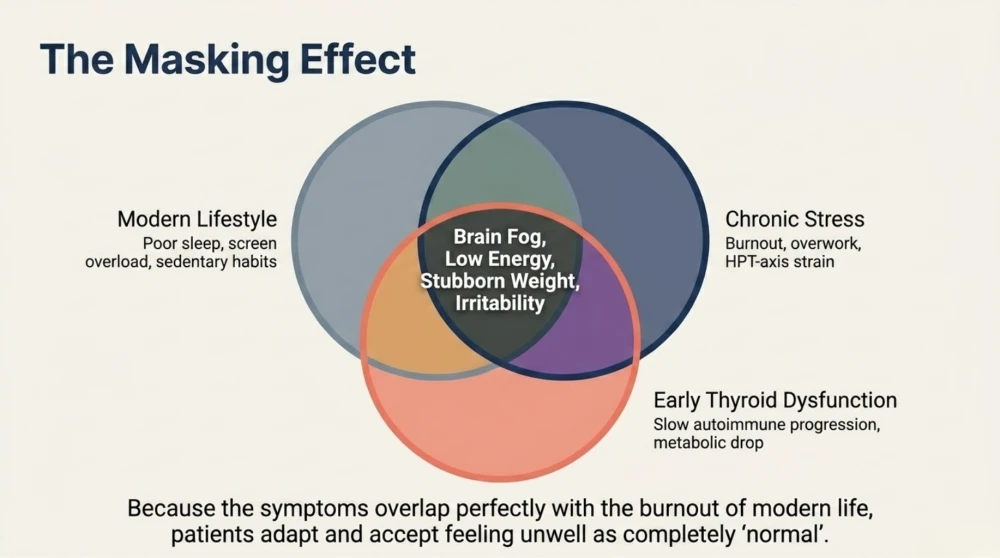
Since these symptoms overlap heavily with stress and modern lifestyle burnout, thyroid dysfunction is frequently overlooked initially.
This creates a situation where patients continue functioning while gradually feeling “less like themselves.”
Hair, Skin, and Digestive Changes Often Appear Slowly
Thyroid hormones also affect tissues that regenerate continuously, such as skin, hair, and the digestive tract.
Over time, patients may begin noticing:
- Dry skin
- Hair thinning
- Constipation
- Reduced sweating
- Puffy face or mild swelling
Again, because these changes develop gradually, they are often dismissed as cosmetic or lifestyle-related issues rather than hormonal signals.
The Modern Lifestyle Makes Thyroid Symptoms Harder to Recognize
Modern life itself creates symptoms that overlap strongly with thyroid dysfunction.
Today many individuals already experience:
- Poor sleep
- Stress
- Sedentary lifestyle
- Irregular eating patterns
- Mental fatigue
This overlap makes thyroid disorders even more difficult to identify early. The symptoms blend into everyday life.
As a result, patients often normalize symptoms for years before evaluation finally happens.
Why Early Recognition Matters
The gradual nature of thyroid disease is exactly why early awareness is important.
When thyroid dysfunction is identified earlier:
- Metabolic complications can be reduced
- Weight management becomes easier
- Energy levels improve more effectively
- Long-term hormonal imbalance may be prevented
This is why structured metabolic approaches like the Lifestyle Modification Program focus not only on weight and diet, but also on identifying underlying hormonal and metabolic contributors.
Why Thyroid Symptoms Often Appear Before Reports Become “Abnormal”
One of the most confusing aspects of thyroid disorders is that many patients start experiencing symptoms even before laboratory values become dramatically abnormal.
This creates a frustrating situation. The patient clearly feels that something is changing inside the body, yet routine reports may still appear “within range.”
As a result, symptoms are often dismissed or attributed entirely to stress and lifestyle. This is especially common in early or subclinical thyroid dysfunction.
In these stages, the thyroid gland is already struggling, but the body is still compensating enough to maintain near-normal hormone levels. That compensation delays diagnosis.
The Body Tries to Maintain Balance for a Long Time
The endocrine system is designed to preserve stability. When thyroid hormone production starts declining, the brain responds by increasing TSH (thyroid stimulating hormone) in an attempt to push the thyroid gland harder.
This means the body may remain in a compensated state for months or years.
During this phase, patients may experience:
- Fatigue
- Reduced stamina
- Mild weight gain
- Cold intolerance
- Brain fog
Yet because the hormonal imbalance is still partial, the laboratory changes may not appear dramatic initially.
This is one reason thyroid disorders can remain hidden for long periods.
Subclinical Thyroid Dysfunction Is More Common Than People Realize
One of the most misunderstood thyroid conditions is subclinical hypothyroidism.
In this condition:
- TSH may be mildly elevated
- T3 and T4 levels may still appear within range
Patients often feel confused because technically the thyroid hormones are “normal,” yet symptoms continue. This happens because thyroid physiology is much more complex than simply reading one number on a report.
Some individuals are more sensitive to hormonal fluctuations than others. Even mild dysfunction can create noticeable metabolic effects in susceptible individuals.
Autoimmune Thyroid Disease Usually Develops Slowly
Another major reason thyroid disorders develop gradually is the slow progression of autoimmune thyroid disease. The most common example is Hashimoto’s thyroiditis.
In this condition, the immune system gradually attacks thyroid tissue over time. But this process is usually very slow.
The thyroid gland may continue functioning reasonably well during early stages, even while subtle inflammation and damage are already occurring internally. This means symptoms may appear gradually over several years.
Patients may go through long periods of:
- Unexplained fatigue
- Weight fluctuation
- Hair thinning
- Mood changes
- Irregular energy levels
before thyroid dysfunction becomes obvious on routine testing.
The Stress-Thyroid Connection Is Often Ignored
Modern lifestyle stress significantly affects hormonal balance. Chronic stress influences the hypothalamic-pituitary-thyroid (HPT) axis, which regulates thyroid function.
When stress remains prolonged:
- Cortisol levels remain elevated
- Metabolic flexibility decreases
- Hormonal signaling becomes altered
This does not always “cause” thyroid disease directly, but it can worsen symptoms and increase metabolic strain.
In clinical practice, many patients report worsening thyroid-related symptoms during:
- Periods of emotional stress
- Sleep deprivation
- Chronic overwork
- Burnout phases
This overlap makes thyroid symptoms even harder to recognize because patients assume stress is the only issue.
Insulin Resistance and Thyroid Dysfunction Often Overlap
Another important metabolic connection that is frequently overlooked is the relationship between thyroid function and insulin resistance.

When metabolism slows down:
- Fat oxidation decreases
- Weight regulation becomes harder
- Visceral fat accumulation may increase
Over time, this contributes to worsening insulin sensitivity. At the same time, insulin resistance itself can worsen metabolic inflammation and create additional hormonal stress.
This creates a cycle where:
- Metabolism becomes slower
- Energy production decreases
- Weight gain becomes easier
- Fatigue increases further
This is why many thyroid patients also struggle with:
- Belly fat
- Fatty liver
- Difficulty losing weight
- Borderline blood sugar changes
Modern Lifestyle Masks Early Thyroid Dysfunction
One of the biggest challenges today is that modern lifestyle itself produces symptoms similar to thyroid dysfunction.
For example:
- Poor sleep causes fatigue
- Stress causes brain fog
- Sedentary lifestyle causes weight gain
- Screen overload reduces mental clarity
This creates a dangerous situation where thyroid-related symptoms become normalized. Patients often continue functioning for years while assuming:
“Maybe this is just normal aging.”
Or: “I think I’m just tired because life is busy.”
Meanwhile, gradual thyroid dysfunction continues progressing silently.
Why Women Often Notice Symptoms Earlier
Although thyroid disorders affect both men and women, women often notice symptoms earlier because thyroid hormones strongly influence reproductive and hormonal systems.
Symptoms may include:
- Menstrual irregularity
- Hair fall
- Weight fluctuation
- Mood changes
- Reduced energy
These symptoms frequently overlap with:
- PCOS
- Stress-related hormonal imbalance
- Perimenopausal changes
This overlap further delays recognition.
The Biggest Problem: Patients Gradually Adapt to Feeling Unwell
Perhaps the most important reason thyroid disorders develop gradually is psychological adaptation. Humans adapt surprisingly well to slow physiological change.
When symptoms appear slowly over years, patients unconsciously adjust their expectations and routines.
They begin accepting:
- Constant tiredness
- Low motivation
- Reduced exercise capacity
- Poor concentration
as “normal life.”
This adaptation delays medical evaluation even further.
What Actually Helps: A Smarter Approach to Thyroid Health
Once patients understand that thyroid disorders can develop gradually, the next question naturally becomes:
“What should I do if I suspect my metabolism or thyroid function is changing?”
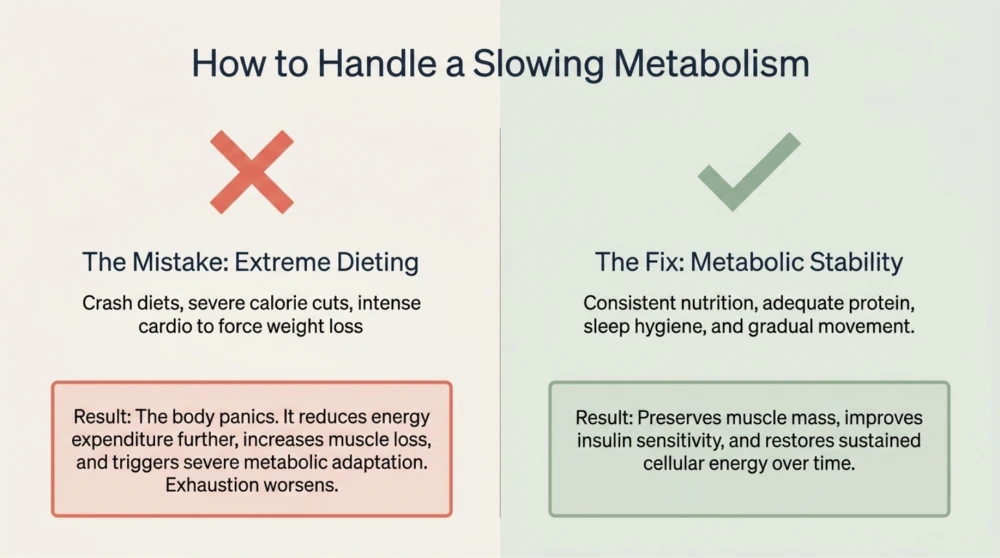
The answer is not panic, crash dieting, or blindly starting supplements from social media. The real solution lies in understanding that thyroid health is deeply connected with overall metabolic balance.
This means the goal should not only be correcting one hormone level on a report. The goal should be improving the entire physiological environment in which the thyroid functions.
Why Extreme Dieting Often Makes Things Worse
One of the biggest mistakes patients make after developing thyroid-related weight gain is aggressive calorie restriction.
Many individuals become frustrated with slow metabolism and attempt:
- Crash diets
- Very low-calorie plans
- Extreme carbohydrate restriction
- Unrealistic detox programs
Unfortunately, severe dieting can sometimes worsen metabolic stress.
When calorie intake becomes excessively low:
- The body reduces energy expenditure further
- Fatigue worsens
- Muscle loss increases
- Metabolic adaptation becomes stronger
This creates a cycle where patients feel increasingly exhausted while weight loss becomes even harder.
This is why thyroid-related metabolic issues require a structured and sustainable approach rather than extreme restriction.
Sleep Is One of the Most Important Metabolic Therapies
Many patients underestimate how deeply sleep affects hormonal regulation. Consistently poor sleep creates physiological stress throughout the endocrine system.
When sleep quality deteriorates:
- Cortisol levels rise
- Insulin sensitivity worsens
- Appetite regulation changes
- Energy production becomes less efficient
All these factors increase metabolic strain.
In individuals already vulnerable to thyroid dysfunction, poor sleep can significantly worsen symptoms such as:
- Fatigue
- Brain fog
- Weight gain
- Reduced motivation
This is why improving sleep quality often produces noticeable improvement in overall metabolic well-being.
Physical Activity Improves Thyroid-Related Metabolic Dysfunction
One of the biggest misconceptions is that thyroid patients should avoid exercise because they feel tired.
In reality, properly structured physical activity often improves metabolic efficiency significantly.
Exercise helps by:
- Improving insulin sensitivity
- Increasing mitochondrial efficiency
- Supporting muscle preservation
- Reducing visceral fat accumulation
This is especially important because thyroid dysfunction frequently overlaps with:
- Fatty liver
- Insulin resistance
- Reduced muscle activity
- Progressive metabolic slowing
However, the approach must be realistic. Excessive exercise in severely fatigued individuals can sometimes worsen exhaustion. This is why gradual progression works better than extreme intensity.
Weight Loss in Thyroid Disease Requires Patience
One of the most emotionally difficult aspects of thyroid dysfunction is the feeling that the body no longer responds normally. Patients often compare themselves with others and wonder:
“Why am I working so hard and still losing weight slowly?”
The answer is that thyroid-related metabolic slowing changes how efficiently the body uses energy. This means progress may become slower, but not impossible.
The key is focusing on:
- Consistency
- Body composition improvement
- Muscle preservation
- Metabolic health restoration
rather than expecting dramatic short-term transformation.
In clinical practice, patients who succeed long term are usually the ones who stop chasing rapid weight loss and start building sustainable metabolic habits.
Stress Reduction Is Not “Optional” in Thyroid Health
Modern stress exposure is now one of the biggest hidden contributors to hormonal dysfunction.
Continuous psychological stress affects:
- Cortisol balance
- Sleep quality
- Inflammatory pathways
- Metabolic regulation
This does not mean stress alone causes thyroid disease, but chronic stress significantly worsens the body’s ability to maintain hormonal balance efficiently.
Many patients notice improvement in symptoms only after improving:
- Recovery patterns
- Sleep timing
- Work-life balance
- Mental overload
This is why thyroid management should always include lifestyle rhythm correction.
The Goal Is Metabolic Stability, Not Just “Normal Reports”
Another important point patients need to understand is this “Health is not determined by one laboratory value alone”.
Sometimes thyroid reports improve, but patients still feel unwell because:
- Sleep remains poor
- Stress remains high
- Insulin resistance continues
- Physical inactivity persists
Similarly, some individuals feel dramatically better even before achieving “perfect” laboratory values because the overall metabolic environment improves.
This is why successful thyroid care requires looking beyond isolated numbers.
Why Long-Term Lifestyle Correction Works Better Than Temporary Fixes
One of the biggest problems today is the expectation of rapid hormonal correction.
Patients often try:
- Quick-fix supplements
- Internet detox plans
- Extreme diet strategies
- Social media thyroid “hacks”
But the thyroid gland and metabolic system usually respond much better to gradual, consistent improvement.
This includes:
- Balanced nutrition
- Adequate protein intake
- Regular physical activity
- Good sleep hygiene
- Stress management
This is why structured metabolic approaches are often more sustainable and clinically effective long term.
What I Commonly Observe in Clinical Practice
Many thyroid patients spend years feeling progressively worse before finally seeking proper evaluation.
By the time they arrive, they often describe:
- Years of fatigue
- Weight struggle
- Mental exhaustion
- Poor sleep
- Reduced motivation
And almost all of them say the same thing:
“I thought this was just normal life.”
This is exactly why awareness matters. Early recognition and gradual lifestyle correction can significantly improve long-term metabolic health and quality of life.
Key Takeaways: What You Should Remember
- Thyroid disorders often develop slowly over months or years
- Early symptoms are frequently mistaken for stress or lifestyle fatigue
- The body compensates for hormonal changes for a long time
- Sleep, stress, insulin resistance, and fatty liver strongly influence thyroid-related metabolism
- Weight gain is usually gradual rather than sudden
- Sustainable lifestyle correction works better than extreme dieting
- The goal should be long-term metabolic stability, not quick fixes
When Should You Seek Medical Evaluation?
You should consider evaluation if you experience:
- Persistent fatigue
- Unexplained weight gain
- Hair fall
- Constipation
- Cold intolerance
- Brain fog or reduced concentration
Early recognition can prevent long-term metabolic complications.
You can book a consultation here:
Book Appointment
Written by Dr. Pankaj Kumar, General & Lifestyle Physician, Dwarka, New Delhi