

















- 29th July 2026
Table of Contents
- What Is Urine Microalbumin?
- Why Is Urine Microalbumin Important in Diabetes?
- Who Should Have a Urine Microalbumin Test?
- How Is the Urine Microalbumin Test Performed?
- Can a Single Abnormal Urine Microalbumin Result Confirm Kidney Disease?
- Why Early Detection Matters
- What Is a Normal Urine Microalbumin Result?
- Urine Microalbumin, eGFR, and Serum Creatinine: Why All Three Matter
- Can Urine Microalbumin Be Reduced?
- Medicines That Help Reduce Urine Microalbumin
- Lifestyle Changes That Protect Kidney Health
- Common Myths About Urine Microalbumin
- Myth 1: Normal Creatinine Means My Kidneys Are Fine
- Myth 2: I Feel Well, So My Kidneys Must Be Healthy
- Myth 3: An Abnormal Result Means Dialysis Is Inevitable
- Key Takeaways About Urine Microalbumin
- References
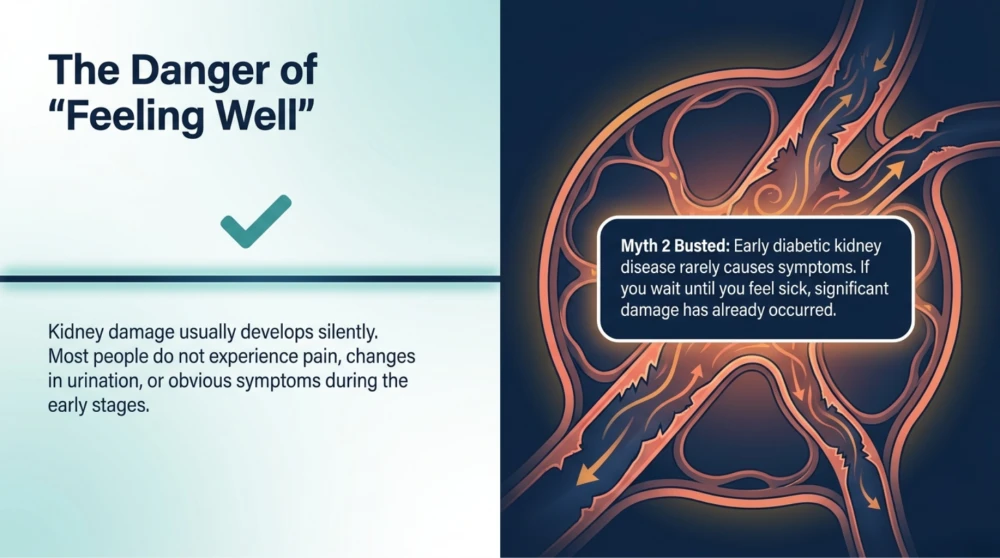
Kidney disease is one of the most common long-term complications of diabetes. The challenge is that kidney damage usually develops silently. Most people do not experience pain, changes in urination, or other obvious symptoms during the early stages.
By the time symptoms appear, significant kidney damage may already have occurred. This is why routine screening plays such an important role in diabetes care.
One of the simplest and most valuable screening tests is the urine microalbumin test. It can detect very small amounts of albumin leaking into the urine long before standard urine tests become abnormal.
Understanding the importance of urine microalbumin testing allows people with diabetes to identify kidney problems early, when lifestyle changes and appropriate treatment are most effective.
What Is Urine Microalbumin?
Albumin is a protein that normally remains in the bloodstream because healthy kidneys prevent it from passing into the urine.
When the tiny filtering units of the kidneys begin to sustain damage, small quantities of albumin may start leaking into the urine. These amounts are too low to be detected by routine urine dipstick tests but can be measured by a urine microalbumin test.
This makes urine microalbumin one of the earliest indicators of diabetic kidney disease, often years before kidney function begins to decline.
Why Is Urine Microalbumin Important in Diabetes?
Persistently elevated blood glucose levels can gradually damage the delicate blood vessels inside the kidneys. High blood pressure further accelerates this process.
Because early kidney damage is usually symptom-free, many people believe their kidneys are healthy simply because they feel well.
A urine microalbumin test helps identify kidney injury at a stage when intervention may slow or even prevent further progression.
Detecting abnormal urine microalbumin levels early allows healthcare professionals to optimise blood sugar control, manage blood pressure, review medications, and recommend lifestyle measures that protect kidney function.

Who Should Have a Urine Microalbumin Test?
Most clinical guidelines recommend regular urine microalbumin testing for people with diabetes because early kidney disease often develops without symptoms.
Your doctor may recommend the test if you have:
- Type 1 diabetes (usually beginning five years after diagnosis).
- Type 2 diabetes (starting at diagnosis).
- High blood pressure.
- A history of kidney disease.
- Persistently elevated blood sugar levels.
- Other cardiovascular risk factors.
Even when previous results have been normal, repeat urine microalbumin testing is important because kidney damage can develop over time.
How Is the Urine Microalbumin Test Performed?
The urine microalbumin test is simple, non-invasive, and usually requires only a urine sample. In many situations, an early morning urine sample is preferred because it provides more consistent results.
Rather than measuring albumin alone, laboratories often report the urine albumin-to-creatinine ratio (UACR), which adjusts for differences in urine concentration and provides a more reliable assessment of albumin loss.
Your healthcare professional will interpret the results in the context of your overall medical history, kidney function, blood pressure, and diabetes control.
Can a Single Abnormal Urine Microalbumin Result Confirm Kidney Disease?
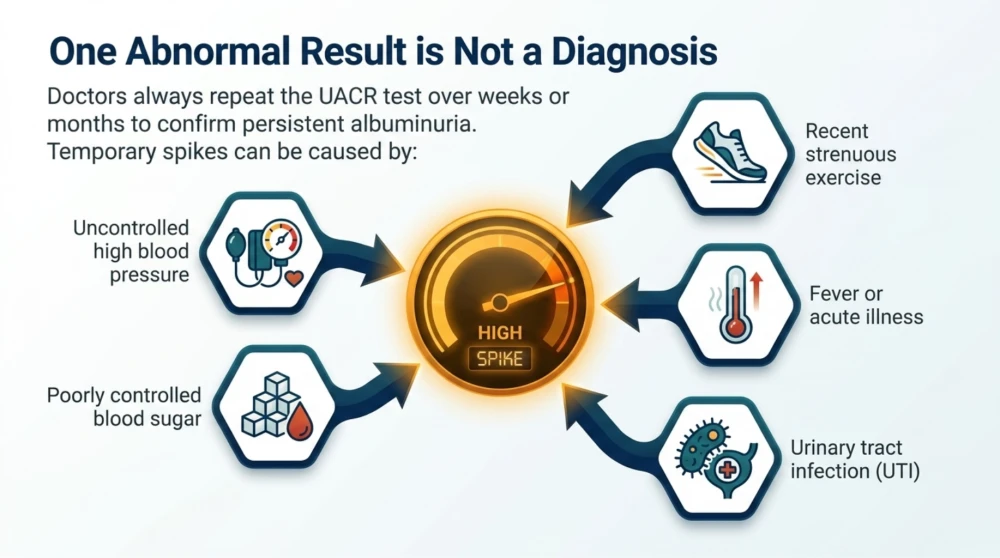
Not always. An elevated urine microalbumin result does not automatically mean permanent kidney damage has occurred.
Temporary increases in urine albumin may occur because of:
- Recent strenuous exercise.
- Fever or acute illness.
- Urinary tract infection.
- Poorly controlled blood sugar.
- Uncontrolled high blood pressure.
For this reason, doctors usually repeat the urine microalbumin test over several weeks or months before confirming persistent albuminuria.
Why Early Detection Matters
The greatest value of urine microalbumin testing lies in identifying kidney injury before symptoms develop.
Early treatment may help:
- Slow the progression of diabetic kidney disease.
- Reduce albumin leakage.
- Protect long-term kidney function.
- Lower cardiovascular risk.
- Reduce the likelihood of dialysis or kidney transplantation in the future.
This is why routine urine microalbumin screening remains an essential part of comprehensive diabetes care.
What Is a Normal Urine Microalbumin Result?
The urine microalbumin test is commonly reported as the urine albumin-to-creatinine ratio (UACR). This measurement helps account for differences in urine concentration and provides a more reliable assessment than measuring urine albumin alone.
Although reference ranges may vary slightly between laboratories, the following values are commonly used:
- Normal: Less than 30 mg/g (less than 3 mg/mmol).
- Moderately increased albuminuria: 30–300 mg/g (3–30 mg/mmol).
- Severely increased albuminuria: More than 300 mg/g (more than 30 mg/mmol).
A single abnormal urine microalbumin result should always be interpreted carefully. Doctors usually repeat the test to confirm persistent albumin leakage before diagnosing diabetic kidney disease.
Urine Microalbumin, eGFR, and Serum Creatinine: Why All Three Matter
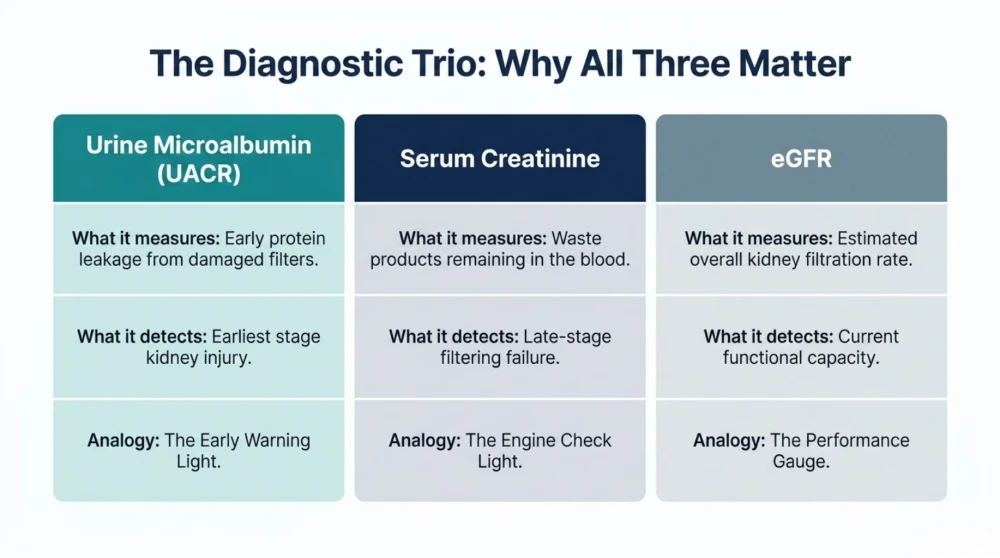
Many people assume that a normal serum creatinine level means their kidneys are completely healthy. Unfortunately, this is not always true.
Urine microalbumin and kidney function tests provide different information.
- Urine microalbumin (UACR) detects early leakage of protein from damaged kidney filters.
- Serum creatinine measures a waste product filtered by the kidneys.
- Estimated Glomerular Filtration Rate (eGFR) estimates how well the kidneys are filtering blood.
It is entirely possible for someone to have an abnormal urine microalbumin result while serum creatinine and eGFR remain within the normal range. This is why routine urine testing is essential for detecting kidney disease at its earliest stage.
Can Urine Microalbumin Be Reduced?
In many individuals, yes.
An abnormal urine microalbumin result does not necessarily mean kidney damage will continue to worsen. Early intervention often helps reduce albumin leakage and slow disease progression.
Effective management focuses on addressing the underlying causes of kidney injury rather than simply treating the laboratory result.
Medicines That Help Reduce Urine Microalbumin
Several medications have been shown to reduce urine microalbumin and protect kidney function in people with diabetes.
Your doctor may recommend one or more of the following, depending on your overall health:
ACE Inhibitors
Medicines such as ramipril and perindopril help reduce pressure inside the kidney's filtering units and decrease albumin leakage.
Angiotensin Receptor Blockers (ARBs)
Medicines such as telmisartan, losartan, and olmesartan are commonly used when ACE inhibitors are unsuitable or not well tolerated.
Both ACE inhibitors and ARBs may reduce urine microalbumin even in some people whose blood pressure is not markedly elevated.
SGLT2 Inhibitors
Newer diabetes medications such as empagliflozin, dapagliflozin, and canagliflozin have demonstrated important kidney-protective benefits.
In appropriate patients, these medicines may reduce progression of diabetic kidney disease and improve long-term kidney outcomes in addition to helping control blood glucose.
Medication choices should always be individualised and discussed with a qualified healthcare professional.
Lifestyle Changes That Protect Kidney Health
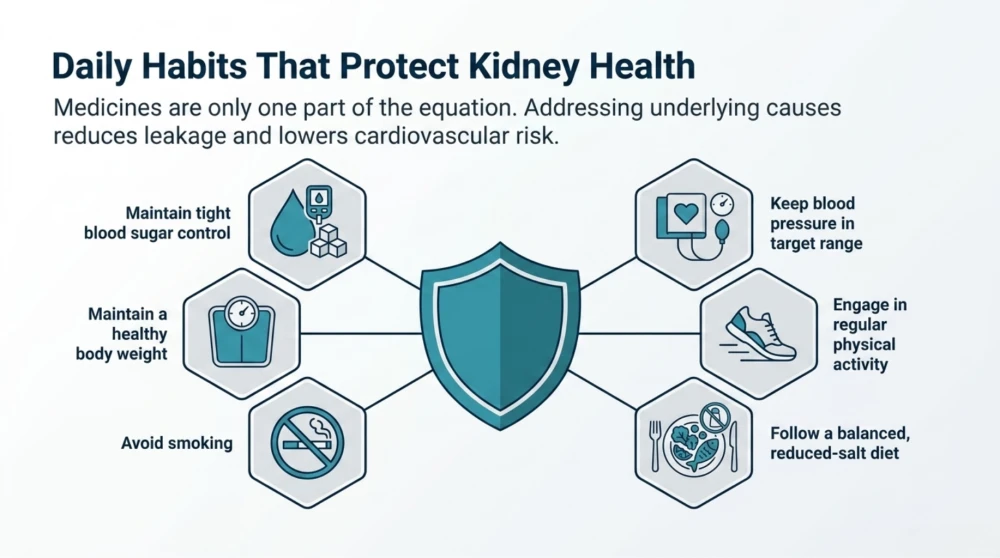
Medicines are only one part of protecting the kidneys. Daily habits have a major influence on urine microalbumin levels and long-term kidney function.
Important lifestyle measures include:
- Maintaining good blood sugar control.
- Keeping blood pressure within the recommended range.
- Engaging in regular physical activity.
- Following a balanced eating pattern.
- Reducing excess salt intake.
- Avoiding smoking.
- Maintaining a healthy body weight.
- Taking prescribed medicines regularly.
These measures not only improve urine microalbumin but also reduce the risk of cardiovascular disease, which commonly accompanies diabetic kidney disease.
Common Myths About Urine Microalbumin
Myth 1: Normal Creatinine Means My Kidneys Are Fine
This is false. An abnormal urine microalbumin result may appear years before serum creatinine becomes abnormal.
Myth 2: I Feel Well, So My Kidneys Must Be Healthy
Early diabetic kidney disease rarely causes symptoms. Regular urine microalbumin testing is often the only way to detect early damage.
Myth 3: An Abnormal Result Means Dialysis Is Inevitable
Fortunately, this is incorrect. Many people with elevated urine microalbumin maintain good kidney function for many years when diabetes and blood pressure are managed appropriately.
Key Takeaways About Urine Microalbumin
- Urine microalbumin is one of the earliest markers of diabetic kidney disease.
- An abnormal urine microalbumin result often appears before serum creatinine becomes abnormal.
- Routine UACR testing is recommended for most people with diabetes.
- Blood pressure control and good glucose management are essential for protecting kidney health.
- ACE inhibitors, ARBs, and SGLT2 inhibitors may reduce urine microalbumin in appropriate patients.
- Early diagnosis allows treatment before significant kidney damage develops.
- Regular follow-up with both urine microalbumin and eGFR testing provides a more complete assessment of kidney health.
You can book a consultation here:
Book an Appointment
References
- American Diabetes Association. Standards of Care in Diabetes. 2025.
- KDIGO Clinical Practice Guideline for the Evaluation and Management of Chronic Kidney Disease. 2024 Update.
- National Kidney Foundation. Albuminuria and Chronic Kidney Disease.
- American Kidney Fund. Understanding Urine Albumin Testing.
- Kidney Disease: Improving Global Outcomes (KDIGO). Diabetes Management in CKD Guideline.
- National Institute of Diabetes and Digestive and Kidney Diseases (NIDDK). Diabetic Kidney Disease.
Written by Dr. Pankaj Kumar, General & Lifestyle Physician, Dwarka, New Delhi